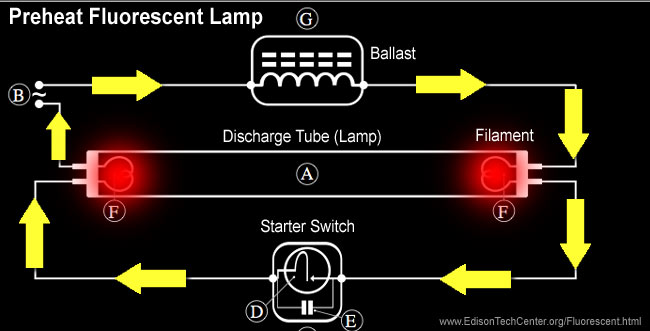
Ever wondered why a fluorescent lamp’s glow seems almost otherworldly? It’s not just the phosphor coating that creates this effect, but a combination of mercury vapor and an intricate dance of electrons. This fascinating interplay results in the ethereal light we take for granted in our everyday spaces.
First developed in the early 20th century, fluorescent lamps have since revolutionized lighting by being 75% more energy-efficient than incandescent bulbs. They operate by emitting ultraviolet light when an electric current passes through mercury vapor, which then excites the phosphor coating on the inside of the tube. This process generates visible light, making these lamps both cost-effective and long-lasting.
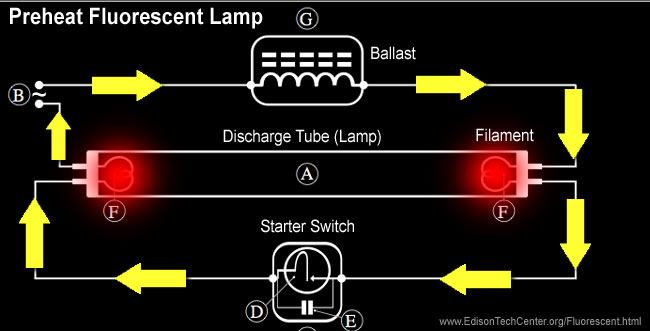
Source: edisontechcenter.org
How Does a Fluorescent Lamp Work?
A fluorescent lamp creates light differently compared to incandescent bulbs. Inside the tube, there’s a small amount of mercury vapor. An electric current passes through the mercury, exciting its electrons. This process generates ultraviolet (UV) light. The inside of the bulb is coated with phosphor, which absorbs the UV light and re-emits it as visible light.
According to this post, choosing the right lamp can greatly impact your room’s atmosphere. For fluorescent lamps, the type of phosphor coating can affect the color of the light. Different coatings give off various shades of white, from cool to warm. This makes them versatile for different settings.
Fluorescent lamps are more energy-efficient than traditional incandescent bulbs. They use about 75% less energy, which means lower electricity bills. This energy efficiency also results in less heat production. So, they are safer to use in confined spaces.
However, fluorescent lamps do contain a small amount of mercury. This makes disposal a bit tricky. Special recycling programs are usually available to handle this safely. This process ensures the mercury doesn’t contaminate the environment.
The Role of Mercury Vapor in Fluorescent Lamps
Mercury vapor plays a crucial role in the functioning of fluorescent lamps. When the lamp is switched on, an electric current flows through the tube. This current excites the mercury atoms, causing them to release ultraviolet (UV) light. This UV light is invisible to the human eye, but it is the essential first step in creating visible light. The next stage involves the special phosphor coating on the inside of the tube.
What’s interesting is the way mercury vapor contributes to the lamp’s overall efficiency. The energy used to excite the mercury vapor is considerably less than what is required for incandescent bulbs to produce light. According to the this expert opinion, fluorescent lamps can convert about 20% more energy into visible light. This increased efficiency means not only brighter light but also a longer lifespan for the lamp.
However, the use of mercury vapor comes with some environmental concerns. Mercury is a toxic substance, and if a fluorescent lamp breaks, it can pose health risks. Proper disposal and recycling of these lamps are essential to minimize this impact. Many recycling programs are put in place to handle fluorescent lamps specifically.
Despite the environmental challenges, the benefits of using mercury vapor in fluorescent lamps are substantial. They offer a balance between energy efficiency and long-lasting performance. Mercury vapor, combined with the phosphor coating, ensures that we have bright, effective lighting that consumes less electricity.
The Science behind the Phosphor Coating
The phosphor coating inside a fluorescent lamp is key to converting ultraviolet (UV) light into visible light. When the mercury vapor inside the tube emits UV light, it strikes the phosphor coating. This coating, made of various compounds, absorbs the UV light and re-emits it as visible light. The color and quality of the light depend on the specific blend of phosphor materials used. Different blends can produce different shades, from cool white to warm white.
Phosphor coatings are carefully engineered to optimize the light output and efficiency of the lamp. Some common phosphor materials include yttrium oxide, europium, and terbium. These materials are chosen for their ability to absorb UV light and emit it efficiently as visible light. For example, a mix that includes europium can enhance red hues, making the light appear warmer. This meticulous engineering ensures a consistent and pleasant light quality.
The efficiency of phosphor coatings is one reason fluorescent lamps are so energy-efficient. Since the phosphors efficiently convert UV light to visible light, less energy is wasted. Over time, this makes fluorescent lamps more economical than their incandescent counterparts. It also contributes to their longer lifespan, saving both energy and money.
However, the phosphors can degrade over time, causing the light output to diminish. This is why older fluorescent lamps may appear dimmer or have a different color. Regular maintenance and timely replacement are essential to maintain optimal lighting conditions. Despite this, the benefits of using phosphor coatings continue to make fluorescent lamps a preferred choice for many applications.
Fluorescent Lamps vs. Incandescent Bulbs: A Comparison of Energy Efficiency
Fluorescent lamps are known for their energy efficiency compared to incandescent bulbs. Incandescent bulbs generate light by heating a filament until it glows. This process wastes a lot of energy as heat. Fluorescent lamps, on the other hand, use an electric current to excite mercury vapor, which then produces UV light. The phosphor coating inside the tube converts this UV light into visible light, making the process more efficient.
The energy consumption of each type of bulb is quite different. A typical incandescent bulb uses about 60 watts of power. In contrast, a fluorescent lamp that produces the same amount of light only uses about 15 watts. This means fluorescent lamps consume about 75% less energy. Lower energy consumption translates to lower electricity bills.
Here’s a quick comparison of energy use:
| Type of Bulb | Wattage | Energy Savings |
|---|---|---|
| Incandescent Bulb | 60 watts | – |
| Fluorescent Lamp | 15 watts | 75% |
Fluorescent lamps also have a longer lifespan compared to incandescent bulbs. A typical incandescent bulb lasts about 1,000 hours. In contrast, a fluorescent lamp can last up to 10,000 hours. This longevity reduces the frequency of replacements, further saving costs.
However, the initial cost of fluorescent lamps can be higher. But when you factor in energy savings and longer lifespan, they are more cost-effective in the long run. Although incandescent bulbs are cheaper upfront, they end up costing more over time due to their short lifespan and high energy consumption. For a deeper understanding, check out this post on the technology behind these lamps.
The Environmental Impact of Fluorescent Lamps
Fluorescent lamps offer significant energy savings, which can reduce the carbon footprint. They are more efficient than incandescent bulbs, using about 75% less energy. This efficiency helps in lowering greenhouse gas emissions from power plants. However, their environmental impact isn’t entirely positive. These lamps contain a small amount of mercury, which can be harmful if not disposed of properly.
Mercury is a toxic substance that can contaminate water and soil, posing a risk to wildlife and human health. When fluorescent lamps are thrown away in regular trash, they can break and release mercury into the environment. Special recycling programs are needed to handle these lamps safely. Many communities offer designated recycling centers for fluorescent lamps to mitigate this risk.
The production of fluorescent lamps also has environmental challenges. Manufacturing involves processes that produce waste and emissions. However, the long lifespan of these lamps means fewer replacements and less waste over time. This extended use can offset some of the environmental costs of production.
Here’s a comparison of environmental impacts:
| Aspect | Fluorescent Lamps | Incandescent Bulbs |
|---|---|---|
| Energy Usage | Low | High |
| Mercury Content | Yes | No |
| Recyclability | Special Programs Needed | Regular Trash |
Despite the presence of mercury, fluorescent lamps are still considered better for the environment in the long run. Their energy efficiency reduces reliance on fossil fuels, cutting down overall emissions. By participating in recycling programs and proper disposal, the negative impacts can be minimized. Balancing these factors is crucial for making environmentally responsible choices.
Frequently Asked Questions
Fluorescent lamps are an essential part of modern lighting technology. Here, we answer some common questions to help you understand these efficient light sources better.
1. What is the lifespan of a fluorescent lamp?
A typical fluorescent lamp lasts between 7,000 and 15,000 hours. This duration depends on factors like usage patterns and quality of the lamp.
In contrast, incandescent bulbs generally last about 1,000 hours. This makes fluorescent lamps a more cost-effective option over time due to fewer replacements.
2. Are fluorescent lamps safe for the environment?
Fluorescent lamps are more energy-efficient than incandescent bulbs, reducing greenhouse gas emissions. However, they contain a small amount of mercury, which requires special disposal methods.
Recycling programs can mitigate these environmental risks by properly handling mercury waste. Thus, their overall environmental impact is relatively positive when disposed of correctly.
3. Can fluorescent lamps be used with dimmer switches?
Standard fluorescent lamps are not compatible with dimmer switches. Using them this way could damage both the lamp and the switch.
You can find specially designed dimmable fluorescent lamps that work well with dimmer switches. These options provide flexibility in lighting while maintaining efficiency.
4. How energy-efficient are fluorescent lamps?
Fluorescent lamps use about 75% less energy compared to incandescent bulbs for the same light output. This substantial saving translates into lower electricity bills over time.
Their higher energy efficiency also means reduced heat production and longer operating life. So, they are both economical and better for the environment.
5. Do fluorescent lamps emit UV radiation?
Yes, fluorescent lamps do emit some ultraviolet (UV) radiation but it’s at very low levels that are harmless under normal usage conditions in homes and offices
The phosphor coating inside the tube absorbs most of this UV radiation and converts it into visible light< By using newer models with improved phosphors people ensure minimal exposure to UV rays页面进一步优化了安全性。</动作严控ivative的,最新情况下交通经纪持。】
Conclusion
Fluorescent lamps have revolutionized lighting by offering significant energy savings and a longer lifespan compared to incandescent bulbs. Their efficient use of mercury vapor and phosphor coatings provides bright, consistent light. Although they contain mercury, proper recycling programs can mitigate environmental risks effectively.
Despite some challenges, the benefits of fluorescent lamps make them a preferred choice in various settings. Their blend of efficiency, durability, and versatility offers a practical solution for modern lighting needs. By understanding their workings, you’re better equipped to make informed decisions about their use.

I’m Emily Johnson, an affiliate marketer and blogger focused on lamps and lighting. I share honest reviews, simple buying guides, and practical tips. My goal is to help readers choose the right lamp for their space, style, and budget with confidence.