
Light up a room with remarkable efficiency was once a distant dream until one inventive mind brought the fluorescent lamp to life. The story of this innovation is a fascinating journey, steeped in scientific curiosity and perseverance. How did this efficient light source come to replace the energy-hungry incandescent bulbs of the past?
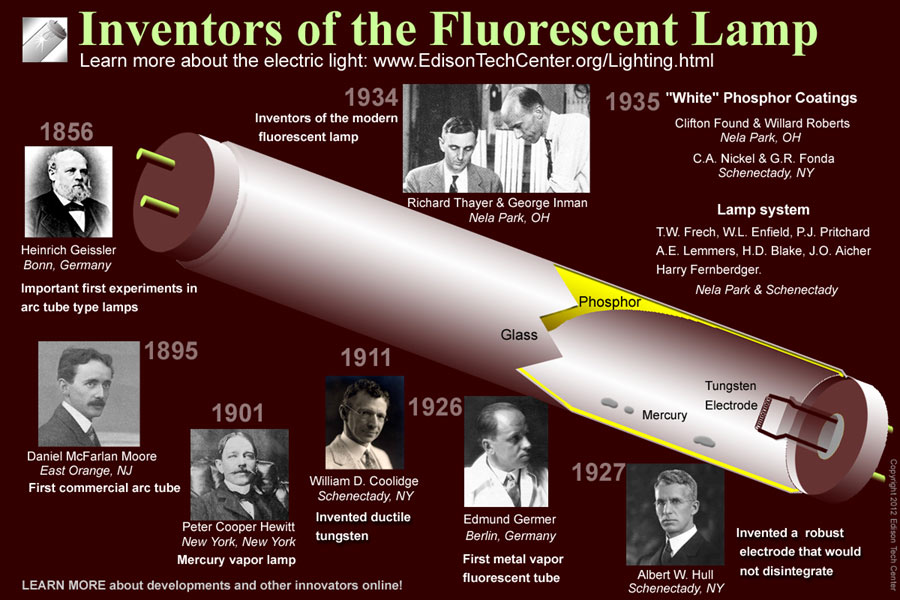
The creation of the fluorescent lamp can be traced back to the work of several inventors, but it was George Inman, alongside General Electric, who perfected and commercialized it in the 1930s. Fluorescent lamps gained popularity rapidly due to their energy efficiency, consuming approximately 75% less energy than incandescent lighting. This innovation not only revolutionized lighting but also contributed significantly to energy conservation efforts worldwide.
Source: edisontc.org
Who Invented the Fluorescent Lamp
Fluorescent lamps lit up our world in ways that incandescent bulbs never could. The journey of who invented the fluorescent lamp involves multiple brilliant minds. While many contributed, it was George Inman working with General Electric who is often credited. This innovation brought about significant energy efficiency. According to the article, it transformed the lighting industry forever.
Early research into fluorescent light spanned several decades and involved scientists like Alexandre E. Becquerel in the 19th century. These early pioneers laid the groundwork but couldn’t make a viable product. Fluorescent lamps became practical in the early 1930s. By then, the technology had advanced enough for commercial use. This was when George Inman made his mark.
George Inman’s contributions, working alongside General Electric, were pivotal in creating a commercially viable fluorescent lamp. Inman brought together existing research and technology to develop the first practical and marketable model. This collaboration led to mass production. If you’re curious about other types of lamps, you can read more about plasma lamps in this post.
The impact of fluorescent lamps extends beyond just lighting homes and offices. They consume significantly less energy, resulting in cost savings and a smaller carbon footprint. This innovation was a boon for both consumers and environmental enthusiasts. For more detailed explanations on different kinds of lamps, here is the article that can give you more insights.
The Early Histories of the Fluorescent Lamp
The history of the fluorescent lamp dates back to the 19th century. Alexandre E. Becquerel was among the first to explore fluorescent properties. He experimented with different gases and electrical currents. These early investigations laid the groundwork. Though practical applications were still decades away.
In the late 1800s, Thomas Edison also explored fluorescent lighting. However, his focus remained on incandescent bulbs. Other scientists continued to build on Becquerel’s work. By the early 20th century, the concept of fluorescent light was well understood. But turning it into a practical product was challenging.
In the 1920s, Edmund Germer made significant advancements. He improved the internal coating and gas composition. This led to brighter and more reliable fluorescent lamps. Germer’s contributions were crucial. They came closer to a commercial product.
Discussions about who actually invented the fluorescent lamp often spark debates. Some myths exist, such as the claim by Agapito Flores. However, according to this post, he did not invent the fluorescent lamp. Historical records favor established scientists and engineers.
The Role of George Inman in the Development of Fluorescent Lamp
George Inman played a pivotal role in advancing the fluorescent lamp. In the early 1930s, Inman worked closely with General Electric. He aimed to make the technology more efficient and practical. His work culminated in a commercially viable product. This marked a significant milestone in lighting history.
Inman focused on solving technical issues that had stalled earlier efforts. He improved the coating inside the lamp and the gas mixture. These enhancements made the lamp brighter and longer-lasting. Thanks to Inman’s dedication, the fluorescent lamp became a marketable product. General Electric saw its potential and supported mass production.
Collaboration was key to Inman’s success. He worked with other experts and utilized a team approach. This helped to tackle multiple challenges simultaneously. Inman’s work significantly contributed to the lamp’s reliability. It soon became a popular choice for both home and industrial lighting.
The innovations led by Inman had lasting impacts. As a result, fluorescent lamps became synonymous with energy efficiency. According to General Electric’s history, these lamps saved up to 75% more energy than incandescent bulbs. Inman’s contributions are widely celebrated in the field of lighting technology.
The Commercialisation of the Fluorescent Lamp by General Electric
The commercialisation of the fluorescent lamp was a game-changer. General Electric looked at its potential and decided to invest in it heavily. They put together a dedicated team, including George Inman. With the refinements made, GE was ready to bring it to market. This marked the start of widespread fluorescent lighting.
General Electric launched the first commercially viable fluorescent lamps in the late 1930s. The company focused on making the lamp both affordable and reliable. Marketing efforts emphasized the benefits of energy efficiency and long life spans. Public and industrial interests grew quickly. Soon, these lamps were everywhere from homes to factories.
Marketing was crucial in the successful commercialisation effort. General Electric used various strategies to introduce the new technology. They held demonstrations and provided detailed brochures. Their message was clear: save energy and lower costs. This approach garnered significant attention and acceptance.
Sales numbers rose rapidly as the benefits became clear. Fluorescent lamps offered substantial savings on electricity. Industries saw immediate cost reductions. Consumers enjoyed the bright, durable light. General Electric had successfully transformed the lighting market.
General Electric’s efforts had a global impact. Fluorescent lamps began to replace incandescent bulbs worldwide. Countries adopted the technology for its efficiency and cost-effectiveness. This shift significantly reduced global energy consumption. It marked a new era in lighting innovation.
Collaborative efforts were behind this achievement. Engineers, scientists, and marketers all played vital roles. Their combined expertise accelerated the lamp’s success. Today, General Electric is often credited with the widespread adoption of fluorescent lighting. Their innovative steps defined a new standard in the industry.
The Impact of the Fluorescent Lamp on Energy Conservation
The fluorescent lamp revolutionized energy conservation. One of its major benefits is its efficiency. Fluorescent lamps use about 75% less energy than incandescent bulbs. This massive energy savings has wide-reaching effects. Both consumers and industries have benefited.
For households, fluorescent lamps mean lower electricity bills. When families switch their home lighting to fluorescent, the savings are evident. The longer lifespan of these lamps also reduces replacement costs. Over time, these benefits add up. This makes fluorescent lighting a popular choice among consumers.
- Lowers energy bills
- Longer lifespan
- Reduced maintenance costs
- Environmental benefits
In industrial settings, the impact is even more profound. Large facilities switched to fluorescent lamps to cut down on energy costs. The savings allowed for investment in other areas. It also helped industries meet energy regulations. This shift has been crucial for sustainable industrial growth.
The environmental impact of fluorescent lamps is also notable. Reduced energy consumption means lower carbon emissions. Fluorescent lighting conserves electricity, which has a positive effect on the environment. It aligns with global energy conservation goals. Fluorescent lamps play a key role in reducing our carbon footprint.
Government initiatives also play a part. Many governments encourage the use of fluorescent lamps through incentives and rebates. These programs aim to promote energy-efficient lighting. They also help to reach national energy-saving targets. This collective effort supports a more sustainable future.
Frequently Asked Questions
Fluorescent lamps have a rich history and significant impact. Here are some common questions answered to help you understand more.
1. How does a fluorescent lamp work?
A fluorescent lamp works by passing an electric current through mercury vapor. This process produces ultraviolet light, which then interacts with the phosphor coating inside the tube, resulting in visible light.
This method is much more efficient than incandescent bulbs. It converts more of the energy into light rather than heat, contributing to its popularity and energy-saving benefits.
2. What are the advantages of using fluorescent lamps?
The primary advantage of fluorescent lamps is their energy efficiency. They use about 75% less electricity compared to traditional incandescent bulbs, reducing both costs and environmental impact.
Fluorescent lamps also last longer, typically around 10 times more than incandescent lamps. This reduces the need for frequent replacements, saving money and resources over time.
3. Are there any disadvantages to using fluorescent lamps?
One disadvantage is that they contain mercury, which can be harmful if not disposed of properly. Proper recycling methods are essential to minimize environmental risks associated with broken or discarded lamps.
Additionally, some people find the light produced by fluorescents too harsh or flickering. However, advancements in technology have mitigated many of these issues with improved designs.
4. How do you dispose of a fluorescent lamp safely?
Safely disposing of a fluorescent lamp involves taking it to a specialized recycling facility. These facilities have processes in place to handle and neutralize any hazardous materials like mercury found within the lamp.
You should never throw them in regular trash bins. Many local authorities provide guidelines on where and how to recycle your old fluorescent lamps safely.
5. Can I replace fluorescent lamps with LED lights?
Yes, replacing fluorescent lamps with LED lights is highly recommended due to LEDs’ superior energy efficiency and lifespan. LED lights consume even less power and last longer than fluorescents while offering similar or better lighting quality.
The conversion process can be straightforward depending on your fixtures but may sometimes require switching components or using compatible products designed for easy replacement.
Conclusion
The fluorescent lamp remains a landmark in lighting technology, thanks to the ingenuity of early innovators and the extensive work of George Inman and General Electric. Its energy efficiency and cost-effectiveness have made it a staple in both residential and industrial settings.
While new technologies like LEDs are now taking center stage, the impact of fluorescent lighting on energy conservation and environmental sustainability cannot be overlooked. Its legacy continues to influence advancements in lighting solutions today.

I’m Emily Johnson, an affiliate marketer and blogger focused on lamps and lighting. I share honest reviews, simple buying guides, and practical tips. My goal is to help readers choose the right lamp for their space, style, and budget with confidence.