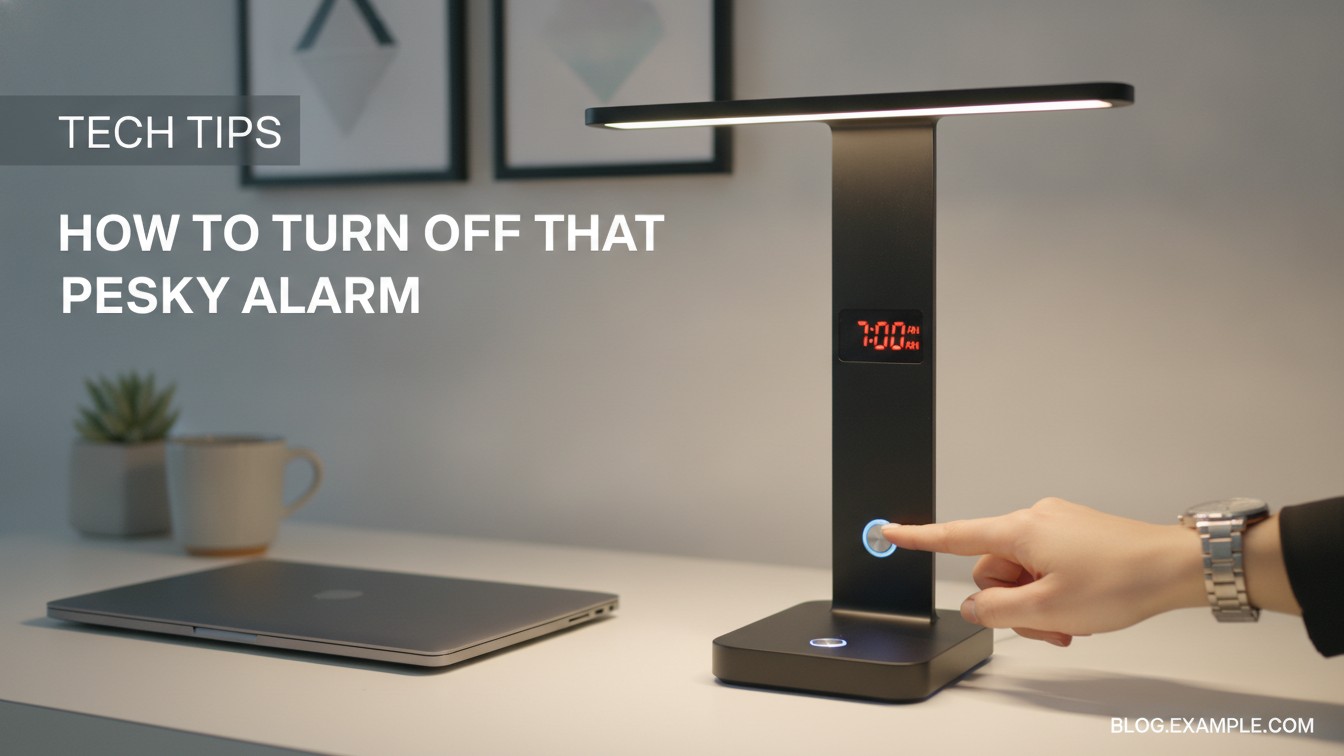

Welcome, friends! We’ve all been there. That sudden, loud sound that jolts us awake. But wait, it’s not our phone. It’s our desk lamp! Yes, many modern desk lamps come with a built-in alarm feature. This can be super handy. It helps us remember tasks. It can even wake us up gently with light.
But what if it’s going off at the wrong time? Or maybe we just want to turn it off for good. Don’t worry, we’re here to help. This guide will show you exactly how to quiet that noisy lamp. We’ll make sure you understand every step. We’ll get rid of that alarm sound together.
Understanding Your Desk Lamp Alarm
Before we dive in, let’s talk about why your lamp has an alarm. Many smart desk lamps are more than just lights. They have clocks, timers, and even alarm functions. These features are often built into a control panel. This panel might be on the base of the lamp. Or it could be on the lamp’s arm.
Sometimes, we accidentally set an alarm. Or maybe a family member did it. It’s easy to do! Knowing where the controls are is the first step. We’ll explore common places to find these buttons. Then we can tackle turning the alarm off.
Types of Desk Lamp Alarms
There are a few kinds of alarms. Some just make a sound. Others might use light to wake you up. They get brighter slowly. Some lamps do both. They make noise and get brighter. We’ll cover how to stop both types of alarms.
Pro Tip: Always check your lamp’s user manual first! It has specific instructions for your model. If you can’t find it, don’t fret. Our guide will still help most common lamps.
Prerequisites and Tools
You won’t need many fancy tools for this task. Most of what you need is already there. Let’s look at what we might need.
What You’ll Need
- Your Desk Lamp: Of course! This is the main item.
- Your Eyes and Hands: You’ll need to see the buttons and press them.
- A Clear Workspace: Make sure you have space around the lamp. This helps you move it easily.
- Good Lighting: If your lamp’s light is off, use another light. You need to see the small buttons.
- Patience: Some lamps have tricky menus. A little patience goes a long way.
Optional Tools
- Your Lamp’s User Manual: This is always the best guide. It’s made just for your lamp.
- A Magnifying Glass: For very small buttons or text.
- A Soft Cloth: To clean off any dust. This helps you see the buttons better.
Here’s a quick look at what you might need:
| Item | Necessity | Why It Helps |
|---|---|---|
| Desk Lamp | Required | The item we are trying to fix. |
| Your Hands & Eyes | Required | To interact with the lamp’s controls. |
| Clear Workspace | Required | Provides room to maneuver the lamp and see buttons. |
| Good Lighting | Required | Helps identify small buttons and display icons. |
| Lamp’s User Manual | Optional | Best source for model-specific instructions. |
| Magnifying Glass | Optional | For tiny buttons or display text. |
| Soft Cloth | Optional | To clean dust and improve visibility. |
Step-by-Step Instructions: Silencing Your Desk Lamp Alarm
Now, let’s get down to business! We’ll go through this process step by step. Remember, lamps can be different. But these steps cover most common types.
1. Locate the Control Panel
First things first, find the control panel. This is where all the buttons are. It’s usually on the base of the lamp. Sometimes, it’s on the lamp’s arm. Look for a flat area with several buttons. It might also have a small screen.
 An image showing common locations of control panels on different desk lamp types (base, arm, touch panel)
Note: Some lamps have touch controls. You don’t press buttons. You just touch specific spots. Look for symbols or small lights.
2. Identify Alarm-Related Buttons
Once you find the panel, look for specific buttons. We are searching for anything that says “Alarm,” “Set,” “Clock,” or has a bell icon. A bell icon is a very common symbol for an alarm.
- Look for buttons labeled “Alarm Set.”
- Find buttons that say “Mode” or “Function.”
- Search for a small bell drawing.
3. Enter Alarm Setting Mode
Most lamps need you to enter a special “alarm setting mode.” This is how you change or turn off the alarm. You usually do this by:
- Pressing and holding the “Alarm” button.
- Pressing the “Mode” button until you see an alarm icon flash.
- Quickly pressing the “Alarm” button a few times.
When you’re in this mode, you’ll often see the alarm time flashing on a small screen. Or a bell icon might start blinking.
4. Navigate Through Alarm Options
Now you’re in the alarm settings. You need to find the “off” option. Use the up and down arrows or plus and minus buttons. These buttons usually adjust the time. They also help you move through menu choices.
- Press the arrow buttons to cycle through options like “Alarm 1,” “Alarm 2,” or “Alarm On/Off.”
- Look for an option that says “OFF” or shows a crossed-out bell icon.
5. Turn the Alarm Off
When you find the “OFF” option, you need to select it. This usually means pressing a “Set,” “OK,” or “Confirm” button. On some lamps, simply moving past the “On” setting to “Off” is enough.
- Select “OFF” if it’s an option.
- If you see the alarm time, try to set it to “00:00” or press a button that says “Disable.”
- Sometimes, just pressing the “Alarm” button again will toggle it off.
6. Confirm the Alarm is Disabled
How do you know it’s off? Look at the lamp’s display. The bell icon should disappear. Or it should no longer be lit up. If there’s no display, try to remember if the alarm was set. Then wait to see if it goes off again.
Key Takeaway: A visible bell icon usually means the alarm is active. No bell icon means it’s off.
7. Exit the Setting Mode
After turning off the alarm, you need to exit the setting mode. If you don’t, your changes might not save. You usually exit by:
- Pressing the “Mode” button until you return to the main clock display.
- Pressing the “Set” or “Alarm” button until the display stops flashing.
- Waiting a few seconds. Many lamps will automatically exit if you don’t press any buttons.
8. Test Your Work (Optional but Recommended)
To be sure, you can wait for the time the alarm was set to go off. Or, if your lamp has a snooze/test button, try that. If the alarm was a light alarm, check if the light still brightens slowly.
If the alarm still goes off:
- Go back to Step 3.
- You might have missed a step.
- Or there could be more than one alarm set.
9. Power Cycle (If All Else Fails)
Sometimes, a simple restart helps. This is called a power cycle. Unplug the lamp from the wall outlet. Wait about 30 seconds. Then plug it back in. This can clear any temporary glitches.
- Unplug the lamp.
- Count to 30 slowly.
- Plug the lamp back in.
- Then, check the display again for the alarm icon.
10. Consult the User Manual or Manufacturer
If you’ve tried everything and the alarm is still ringing, it’s time for the user manual. If you don’t have it, search online. Type in your lamp’s brand and model number. Look for “user manual” or “alarm settings.” If you still can’t find it, contact the lamp’s manufacturer. They can give you specific help.
Common Pitfalls and Troubleshooting
We’ve covered the main steps. But sometimes, things don’t go as planned. Here are some common problems and how to fix them.
1. Problem: Can’t Find Any Alarm Buttons
- Solution: Check the entire lamp. Some lamps have hidden buttons. They might be on the side or even underneath. Also, remember some lamps use touch controls. Look for symbols.
- Solution: Check if your lamp is a “smart” lamp. It might use an app on your phone to control it.
2. Problem: The Alarm Icon Won’t Go Away
- Solution: You might have multiple alarms set. Many lamps let you set Alarm 1, Alarm 2, etc. Make sure you turn all of them off. Go back to step 4 and cycle through all alarm options.
- Solution: Make sure you pressed “Set” or “Confirm” after turning it off. Otherwise, the change might not save.
3. Problem: The Alarm Still Rings After Turning It Off
- Solution: Did you power cycle the lamp (Step 9)? Sometimes, a fresh start is all it needs.
- Solution: Double-check that you are in the correct alarm setting mode. It’s easy to accidentally adjust the clock time instead of the alarm time.
4. Problem: My Lamp Uses a Phone App
- Solution: Open the app that controls your lamp. Look for “Alarm Settings” or “Timer Settings.” This is where you’ll find the option to turn off the alarm. The app usually has a very clear “On/Off” switch.
 A diagram showing a flowchart for troubleshooting common alarm issues
Conclusion
Turning off an alarm on your desk lamp can seem tricky at first. But with these steps, we know you can do it! We started by finding the control panel. Then we identified the right buttons. We navigated through settings. And finally, we turned that noisy alarm off.
Remember to confirm your changes. And don’t be afraid to power cycle the lamp if needed. Now, you can enjoy peace and quiet. Or, you can set the alarm exactly how you want it. Great job!
Frequently Asked Questions
Can all desk lamps have an alarm?
No, not all desk lamps have alarms. Only some modern or “smart” desk lamps come with this feature. Older or simpler lamps usually do not.
What if my lamp doesn’t have a screen?
If your lamp doesn’t have a screen, you’ll need to rely on indicator lights or sound cues. A small LED light might turn off when the alarm is disabled. Or you might hear a confirmation beep.
Is it possible my lamp has more than one alarm?
Yes, many lamps allow you to set multiple alarms. For example, Alarm 1 and Alarm 2. Make sure you check and turn off all active alarms.
Will unplugging the lamp turn off the alarm permanently?
Unplugging the lamp will stop the current alarm from sounding. However, some lamps have a battery backup. This means the alarm setting might still be saved. You might need to turn it off using the buttons once it’s plugged back in.
What if I accidentally changed the clock time instead of the alarm?
Don’t worry! Just go back into the setting mode. Use the same buttons to adjust the clock time back to normal. Then, be careful to enter the alarm setting mode next time.

I’m Emily Johnson, an affiliate marketer and blogger focused on lamps and lighting. I share honest reviews, simple buying guides, and practical tips. My goal is to help readers choose the right lamp for their space, style, and budget with confidence.