
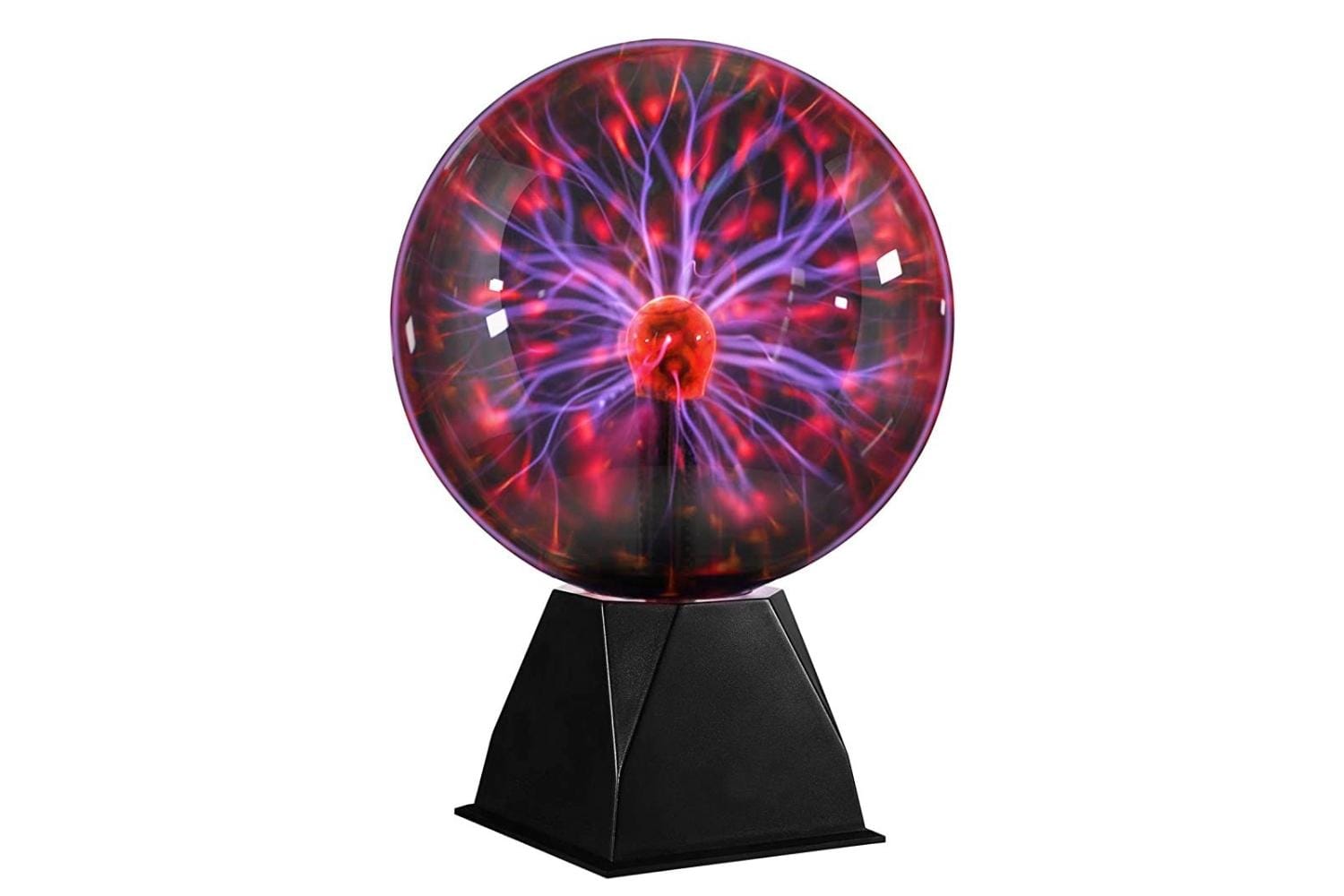
A plasma lamp, also known as a plasma globe or plasma ball, is a clear glass container filled with a mixture of noble gases, typically neon, krypton, and xenon. When the lamp is turned on, high voltage is applied to the gases, creating a plasma inside the globe.
The plasma consists of ionized gas particles that emit colored light and move in response to electric fields. Plasma lamps are commonly used as decorative lighting and educational tools to demonstrate the properties of electricity and gases. They were originally invented by Nikola Tesla for the study of high voltage phenomena.
Plasma lamps are safe to use, but caution is advised for individuals with certain types of heart pacemakers.
What Is A Plasma Lamp?
A plasma lamp, also known as a plasma ball or plasma globe, is an intriguing and mesmerizing lighting device. It consists of a clear glass container filled with noble gases, typically a mixture of neon, krypton, and xenon. The gases inside are at a low pressure, making it similar to the gas in fluorescent lights.
When electricity is applied to the lamp, it creates a high voltage difference between the electrode at the center and the glass. This phenomenon results in the creation of beautiful electrical discharges or plasma filaments within the lamp.
Interaction
One of the most fascinating aspects of a plasma lamp is how it interacts with human touch. When you place your hand on the glass surface, the electrical discharges are attracted to your fingertips, creating a stunning visual display.
These filaments of plasma follow the paths of the electric field, tracing your every movement like tiny lightning bolts. It’s an exhilarating experience to witness the whirling patterns of light responding to your touch, which adds a playful and interactive element to the lamp’s allure.
Construction
The construction of a plasma lamp is relatively simple yet innovative. Within the glass container, there is a gas mixture at a reduced pressure. In the center, there is a round electrode connected to a high-frequency power source. Surrounding the central electrode are a series of smaller electrode coils.
Between these coils and the outer glass surface, an insulating material acts as a barrier. A noble gas is filled into the chamber, and when the lamp is turned on, the power source excites the gas atoms, causing them to emit light and generate the mesmerizing plasma filaments.
History
The invention of the plasma lamp is credited to the brilliant inventor Nikola Tesla. He developed it during his experimentation with high-frequency currents and evacuated glass tubes for both lighting purposes and the study of high voltage phenomena.
Since Tesla’s time, plasma lamps have become popular as both decorative pieces and interactive scientific tools. They are often found in science museums, educational settings, and even as unique home decor items. The fusion of art and science in a plasma lamp continues to captivate and inspire people of all ages.
In conclusion, a plasma lamp is an enchanting lighting device that creates captivating electrical discharges or plasma filaments within a glass container filled with noble gases. Its interactive nature, innovative construction, and intriguing history make it a fascinating invention that combines science and art in a mesmerizing way.
How Do Plasma Lamps Work?
Plasma lamps are intriguing and mesmerizing decorative items that have become quite popular in recent times. While they may seem like magical orbs of light, the science behind their operation is fascinating. In this section, we will dive into the inner workings of these mesmerizing lamps and explore the various phenomena that make them come alive.
Explanation Of Plasma Ball
A plasma lamp, also known as a plasma ball or plasma globe, consists of a clear glass container filled with noble gases such as neon, krypton, and xenon. At the center of the globe, there is a metal electrode, typically a small metal sphere or a coiled wire, which is connected to a high-frequency, high-voltage power source. The electrode is surrounded by a cluster of thin, transparent electrodes that are evenly distributed within the glass globe.
Radio Frequency Electromagnetic Waves
The magic of plasma lamps begins with the generation of radio frequency electromagnetic waves. These waves are created by the power source connected to the central electrode. The power source produces high-frequency alternating current (AC), which, in turn, generates radio waves in the range of a few megahertz.
Ionization
Now, here’s where things get interesting. The radio frequency electromagnetic waves induce an electric field within the glass globe. This electric field causes the electrons in the noble gases to oscillate rapidly. As a result, electrons gain enough energy to escape from the gas atoms, a process known as ionization. The freed electrons, now known as ions, move freely within the globe.
Magnetic Focusing
While the ionized gas particles create a vibrant display of colorful streams and tendrils, the magnetic focusing phenomenon further enhances the visual spectacle. The cluster of transparent electrodes surrounding the central electrode acts as a series of magnets. These magnets help focus and guide the movement of the ions, creating intricate patterns and lightning-like tendrils that dance within the plasma lamp.
Plasma lamps provide a captivating visual experience that is both educational and entertaining. The combination of radio frequency electromagnetic waves, ionization, and magnetic focusing results in the stunning display of lights and movement that we see in these lamps.

Credit: www.amazon.com
The Purpose And Uses Of Plasma Lamps
Plasma lamps, also known as plasma globes or plasma balls, have a fascinating history and are widely used for various purposes. Let’s explore the different applications of these mesmerizing devices:
Invention By Nikola Tesla
Nikola Tesla, a renowned inventor and electrical engineer, invented the internal-electrodeless lamp, which later came to be known as the plasma lamp. His experimentation with high-frequency currents in evacuated glass tubes led to the creation of this unique lighting device. Tesla’s curiosity about high voltage phenomena and his innovative spirit birthed the incredible plasma lamp.
High Voltage Study
One of the primary purposes of plasma lamps is the study of high voltage phenomena. These lamps provide a visually striking display of electrical discharges, allowing researchers to investigate the behavior of high voltage in a controlled environment. Scientists and students alike use plasma lamps to learn about the principles of electricity and observe the fascinating patterns and movements of the plasma within the lamp.
Lighting
While plasma lamps are primarily used for scientific exploration, they also serve the purpose of providing unique and captivating lighting. The glowing tendrils of plasma within the lamp create an enchanting visual effect that can enhance the ambiance of any space.
Plasma lamps are often used as decorative lighting pieces in homes, offices, and entertainment venues, adding a touch of elegance and intrigue to the surroundings.
Other Applications
In addition to their role in high voltage studies and lighting, plasma lamps find application in other areas as well. Here are a few examples:
- Education: Plasma lamps are valuable teaching aids in physics and chemistry classrooms, helping students grasp concepts related to electricity, electromagnetism, and plasma physics.
- Entertainment: Plasma lamps are commonly used as eye-catching props in stage performances, music videos, and artistic installations. Their vibrant and dynamic display adds a captivating element to visual storytelling.
- Relaxation and Meditation: The soft hues and gentle movements of the plasma within the lamp have a calming effect on the mind. Many individuals use plasma lamps as a source of relaxation and to create an atmosphere conducive to meditation.
Overall, plasma lamps are versatile devices that serve both practical and aesthetic purposes. From scientific exploration to decorative lighting, they continue to captivate and inspire people across various fields.
Credit: www.arborsci.com
Safety Considerations
A plasma lamp, also known as a plasma ball, is a clear glass container filled with noble gases that creates a mesmerizing visual display of electric bolts when touched. Although generally safe, plasma lamps should be kept away from individuals with certain types of heart pacemakers.
When it comes to using a plasma lamp, it’s important to be aware of safety considerations. While these lamps are generally safe to use, there are a few potential dangers and precautions to keep in mind. Let’s take a closer look at them:
Potential Dangers
While plasma lamps are generally considered safe, there are a few potential dangers to be aware of. The glass container of the lamp is fragile, so it’s important to handle it with care to avoid breakage. If the lamp is broken, it will stop working, but there is no risk of explosion or any harm, unless you come into direct contact with the broken glass.
Electromagnetic Fields
Plasma globes emit electromagnetic fields (EMFs) as a result of the electrical currents and ionization processes happening within. While the EMFs generated by plasma lamps are generally considered safe for most people, individuals with certain types of heart pacemakers should take precautions. It is recommended that they stay at least a few meters away from plasma globes and Tesla Coils to avoid any potential interference.
Pacemaker Interference
Individuals who have pacemakers should be cautious when using a plasma lamp. The electromagnetic fields emitted by the lamp may interfere with the functioning of the pacemaker, which can be harmful. It is advisable to consult with a healthcare professional or the pacemaker manufacturer to determine the safe distance and precautions to take when using a plasma lamp.
Breaking The Lamp
If the unfortunate event occurs and the plasma lamp gets broken, there is no need to panic. The lamp will simply stop functioning, and there is no risk of any harmful gases or substances being released. However, it’s essential to handle the broken glass with care to avoid any potential injury from sharp edges. Dispose of the broken lamp properly to ensure safety.
How To Use A Plasma Lamp
A plasma lamp is an intriguing and mesmerizing decorative item that can add a touch of magic to any space. With its swirling electric currents and vibrant colors, a plasma lamp is not only visually captivating but also offers a unique interactive experience. In this section, we will explore how to use a plasma lamp, including touching the lamp, creating electric bolts, and other interactions.
Touching The Lamp
One of the simplest ways to interact with a plasma lamp is by touching its glass surface. When the lamp is turned on, gently place your hand on the glass. You will witness an astonishing phenomenon as the colorful electric filaments follow the movement of your fingertips.
Whether you move your hand slowly or quickly, the electric beams will dance and flicker, providing a fascinating sensory experience.
Creating Electric Bolts
Another exciting interaction you can have with a plasma lamp is creating electric bolts. To do this, start by turning on the lamp and placing your hand on its surface. As the electric currents react to your touch, wait for a few seconds and then turn off the lamp while keeping your hand in contact with it.
With a sudden burst of energy, electric bolts will shoot up from the glass surface and reach towards your hand, creating a mesmerizing and slightly electrifying display.
Other Interactions
A plasma lamp offers various other ways to engage with its captivating electric display. For instance, clapping your hands near the lamp can generate a burst of electric bolts from the glass surface.
You can also experiment with different objects, such as metal utensils or even your own hair, to see how the electric currents react and follow their path. These interactions provide a hands-on experience that allows you to explore the fascinating world of electricity.
Remember to exercise caution when handling a plasma lamp and follow the manufacturer’s instructions to ensure safety. Additionally, plasma lamps can serve as excellent conversation starters and decorative pieces for your home or office, invoking a sense of wonder and curiosity in anyone who encounters them.

Credit: www.ebay.com
Frequently Asked Questions Of What Is A Plasma Lamp
What Is The Purpose Of Plasma Lamps?
The purpose of plasma lamps is to provide lighting and study high voltage phenomena. Invented by Nikola Tesla, these lamps use high-frequency currents in evacuated glass tubes to produce mesmerizing plasma effects. They are not dangerous due to radiation, but caution is advised for individuals with certain types of heart pacemakers.
Are Plasma Lamps Safe?
Plasma lamps are generally safe and not dangerous in terms of electromagnetic field radiation. However, individuals with certain types of heart pacemakers should keep a distance of a few meters from plasma globes and Tesla Coils. Breaking a plasma ball lamp will not cause any harm but will result in the lamp no longer functioning.
What Happens If You Break A Plasma Ball Lamp?
If you break a plasma ball lamp, it will stop working. It won’t explode or cause any harm unless you touch the broken glass.
How Do You Use A Plasma Lamp?
To use a plasma lamp, turn it on and place your hand on the glass surface. Then, turn it off and place your hand back on to see electric bolts. You can also clap near the lamp to create flashes.
Remember, plasma lamps are safe unless you have certain types of heart pacemakers.
Conclusion
To summarize, a plasma lamp, also known as a plasma globe, is a glass container filled with noble gases that produce striking visual effects when high voltage is applied. Invented by Nikola Tesla, these lamps have applications in lighting and the study of high voltage phenomena.
While they are generally safe, precautions should be taken for individuals with certain medical devices. Overall, a plasma lamp is an intriguing and visually captivating decorative piece that adds a touch of excitement to any room.

I’m Emily Johnson, an affiliate marketer and blogger focused on lamps and lighting. I share honest reviews, simple buying guides, and practical tips. My goal is to help readers choose the right lamp for their space, style, and budget with confidence.