Choosing the right desk lamp can make a huge difference in your daily life. It affects your comfort, your productivity, and even your eye health. Many people wonder, How Many Lumens Should a Desk Lamp Have to be truly effective?
This article will help you understand lumens and guide you to pick the perfect brightness for your workspace. Getting it right means less eye strain and more focus. Let’s dive into making your desk lighting work for you.
What Exactly Are Lumens? Understanding Brightness
Before we talk about specific numbers, let’s clarify what lumens mean. Lumens measure the total amount of visible light from a light source. Think of it as the total light output of a bulb.
It’s different from watts. Watts measure how much energy a bulb uses. Lumens tell you how bright it actually is.
> Lumens are the true measure of a light bulb’s brightness. More lumens mean more light.
For example, an old 60-watt incandescent bulb might give you about 800 lumens. A modern LED bulb can give you 800 lumens using only 9-10 watts. This shows why lumens are so important.

Why Desk Lamp Lumens Matter for Your Eyes
Your eyes work hard all day, especially when you’re focused on tasks. Poor lighting can lead to serious discomfort. Too little light, and your eyes strain to see details.
Too much light, and you might experience glare. This can also cause discomfort and headaches. The right amount of light helps your eyes stay relaxed and focused.
Proper desk lamp lumens help prevent:
- Eye strain: Your eyes don’t have to work as hard.
- Fatigue: You can work longer without feeling tired.
- Headaches: Glare and dimness are common headache triggers.
- Reduced productivity: When you’re uncomfortable, your work suffers.
Investing in good lighting is an investment in your well-being. It’s about creating a healthy and productive environment.
Key Factors That Influence Ideal Lumens
There isn’t a single “perfect” lumen number for everyone. Several things change how many lumens you need. Understanding these factors will help you make the best choice.
Consider these points carefully:
- The task you’re doing: Reading, computer work, or detailed crafts all need different light levels.
- Your age: Older eyes often need more light to see clearly.
- Room’s natural and ambient light: How bright is the room already?
- Personal preference: Some people simply like more or less light.
Let’s look at each of these in more detail.
Understanding Your Task: Different Activities, Different Needs
The activity you do at your desk is perhaps the most important factor. A general rule is: the more detailed the task, the more lumens you’ll need.
Here’s a quick guide:
- General Computer Work: You don’t want too much light directly on your screen. This can cause glare.
- Reading Physical Books/Documents: You need enough light to see text clearly without straining.
- Writing or Drawing: Good, even light is crucial for precision.
- Crafting or Hobbies (e.g., model building, jewelry making): These detailed tasks demand higher lumen levels.
Think about what you do most often at your desk. This will be your starting point for lumen choices.

Your Age and Its Impact on Lumens
It’s a simple fact that our eyes change as we get older. The lenses in our eyes become less flexible and let in less light. This means older individuals often need more light to see the same level of detail as younger people.
As we age, our eyes need more light. A 60-year-old might need twice as much light as a 20-year-old for the same task.
This isn’t just about reading glasses. It’s about the overall brightness required for comfort. If you’re over 40, consider aiming for the higher end of lumen recommendations.
Room’s Ambient Light and Natural Light
Your desk lamp doesn’t work in a vacuum. The light already present in your room plays a big role. Is your office filled with natural sunlight? Or is it a dimly lit corner?
Bright Room: If your room has good natural light or bright overhead lighting, your desk lamp can provide *task lighting. It just needs to supplement the existing light.
Dim Room: In a darker room, your desk lamp might need to work harder. It could be your main light source for your workspace.
Always consider the overall lighting environment. You want a balanced setup, not just a bright spot in a dark room.

How Many Lumens Should a Desk Lamp Have: Specific Recommendations
Now, let’s get to the numbers. While personal preference varies, here are some general guidelines for How Many Lumens Should a Desk Lamp Have for common tasks. Remember, these are starting points.
| Task Category | Recommended Lumens | Notes |
|---|---|---|
| General Reading | 450–800 lumens | For books, magazines. Enough to see text clearly. |
| Computer Work | 250–500 lumens | Lower to avoid screen glare. Focus on indirect light. |
| Studying / Writing | 600–900 lumens | Good for note-taking, homework. Needs clear visibility. |
| Detailed Crafting | 800–1200+ lumens | For hobbies like drawing, model making, jewelry. May need adjustable. |
| Elderly Users (any task) | 800–1500+ lumens | Higher range to compensate for age-related vision changes. |
These ranges give you a good idea. Many modern desk lamps come with adjustable brightness, which is a great feature.
Adjustable Lumens: The Best of Both Worlds
A desk lamp with dimmable settings is incredibly useful. It allows you to change the brightness to suit your needs at any moment. You might need more light for detailed work in the evening. Then, you can dim it down for casual computer browsing.
Dimmable lamps offer flexibility. You can adjust the light for different tasks and times of day.
Look for lamps that offer a wide range of lumen output. This flexibility ensures your lamp can adapt to various situations. It makes your lighting setup much more versatile.

Beyond Lumens: Color Temperature (Kelvin) and CRI
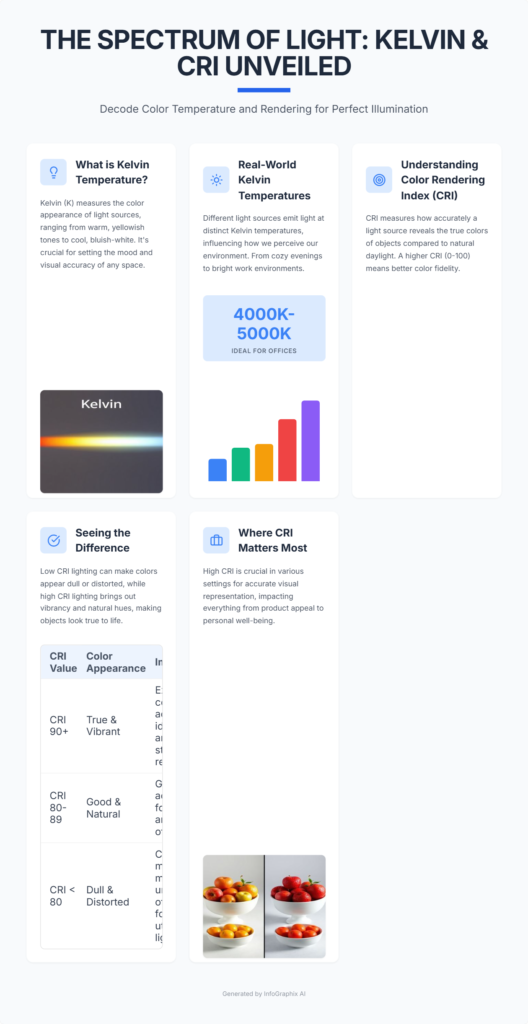
While lumens are about brightness, other factors also impact your lighting experience. Color temperature and Color Rendering Index (CRI) are very important. They affect how colors look and how your eyes feel.
Color Temperature (Kelvin – K): This describes the “warmth” or “coolness” of the light.
- Warm Light (2700K-3000K): Yellowish, like traditional incandescent bulbs. Good for relaxing.
- Neutral White (3500K-4500K): Balanced, good for general tasks.
- Cool White/Daylight (5000K-6500K): Bluish-white, like natural daylight. Great for focus and detailed work.
For a desk lamp, many experts recommend a color temperature between 4000K and 6500K. This range is best for alertness and seeing fine details.
Color Rendering Index (CRI): This measures how accurately a light source shows true colors. It’s scored from 0 to 100. A CRI of 100 is like natural daylight.
- High CRI (80+): Colors look vibrant and true. Important for artists, designers, or anyone working with colors.
- Low CRI (below 80): Colors might look dull or distorted.
Always aim for a desk lamp with a CRI of 80 or higher. For tasks requiring extreme color accuracy, look for 90+.
Types of Desk Lamp Bulbs and Their Lumen Efficiency
The type of bulb in your desk lamp also matters. Each type has different lumen outputs and energy uses.
LED (Light Emitting Diode):
- Pros: Very energy-efficient, long-lasting, often dimmable, wide range of color temperatures.
- Cons: Higher upfront cost.
- * Lumen Output: Excellent, very bright for their wattage.
CFL (Compact Fluorescent Lamp):
- Pros: More efficient than incandescent, moderate lifespan.
- Cons: Contains mercury, slower to reach full brightness, limited dimming options.
- Lumen Output: Good, but less efficient than LED.
Incandescent:
- Pros: Warm, familiar light.
- Cons: Very inefficient, short lifespan, produces a lot of heat.
- Lumen Output: Low for their wattage, being phased out.
For a modern desk lamp, LED is almost always the best choice. It offers the best balance of brightness, efficiency, and features.

The Ergonomics of Desk Lighting Placement
Even with the perfect lumens, placement is key. A poorly placed lamp can still cause glare or shadows. Proper placement ensures the light goes where you need it.
Here are some tips:
1. Avoid Direct Glare: Don’t point the light directly into your eyes or onto your computer screen.
- Illuminate Your Task: The primary goal is to light up your work surface.
- Position for Dominant Hand: * If you’re right-handed, place the lamp on your left. * If you’re left-handed, place the lamp on your right. * This prevents your hand from casting a shadow on your work.
- Adjust Height: Many desk lamps have adjustable arms. Position the light source above and slightly in front of your work.
- Balance with Ambient Light: Ensure your desk light doesn’t create a harsh contrast with the rest of the room.
Good lamp placement reduces shadows and glare, making your workspace more comfortable.
Think about how light falls on your work. Experiment with different positions to find what works best for you.

Common Desk Lighting Mistakes to Avoid
Choosing a desk lamp can seem simple, but it’s easy to make mistakes. Avoiding these common errors will improve your lighting experience.
- Using Only Overhead Lighting: Overhead lights often cast shadows on your desk. They might not be bright enough for detailed tasks.
- Choosing Too Few Lumens: A lamp that’s too dim forces your eyes to strain. This leads to fatigue and headaches.
- Choosing Too Many Lumens (without dimming): Overly bright light can cause glare and discomfort. It’s like staring into a headlight.
- Ignoring Color Temperature: Using warm, yellow light for tasks that need focus can make you feel sleepy.
- Poor Placement: A lamp in the wrong spot can create shadows or shine directly into your eyes.
- Not Considering CRI: If you work with colors, a low CRI lamp will distort them, leading to frustration.
By being aware of these pitfalls, you can make a smarter choice. Your eyes will thank you.

How to Choose the Best Desk Lamp for You
Putting it all together, here’s a step-by-step guide to choosing your ideal desk lamp. This ensures you answer the question, How Many Lumens Should a Desk Lamp Have, specifically for your needs.
- Identify Your Primary Tasks: Are you reading, coding, crafting, or doing general computer work?
- Consider Your Age: Adjust lumen requirements up if you’re over 40.
- Assess Your Room’s Light: How much natural and ambient light is already present?
- Determine Your Lumen Range: Use the table above as a starting point. Aim for a lamp with at least the minimum for your task.
- Look for Dimmable Options: This is highly recommended for flexibility.
- Choose the Right Color Temperature: For most tasks, 4000K-6500K (neutral to cool white) is best.
- Prioritize High CRI: Aim for 80+ to ensure accurate color rendering.
- Consider Lamp Features: * Adjustable arm/head for easy positioning. * USB charging ports (convenient!). * Smart features (app control, motion sensor) if desired.
- Read Reviews: See what other users say about the lamp’s brightness and quality.
By following these steps, you’ll find a desk lamp that truly supports your work and well-being.

Conclusion: Finding Your Perfect Brightness
Choosing the right desk lamp is more than just picking a design. It’s about understanding light and how it affects you. We’ve explored How Many Lumens Should a Desk Lamp Have, along with other crucial factors like color temperature and CRI.
Remember, there’s no one-size-fits-all answer. Your ideal lumen level depends on your tasks, your age, and your environment. Prioritize flexibility with dimmable options and always aim for good color quality. A well-chosen desk lamp is an investment in your comfort, health, and productivity. Make an informed decision, and brighten up your workspace the right way.

FAQ Section
What is the main difference between lumens and watts?
Lumens measure how bright a light bulb is. Watts measure how much energy it uses. A modern LED bulb can give many lumens using very few watts.
Is 1000 lumens too bright for a desk lamp?
A2: For general computer work, 1000 lumens might be too bright and cause glare. However, for detailed crafting or if you have aging eyes, 1000 lumens or more could be just right, especially if the lamp is dimmable.
What color temperature is best for a desk lamp?
For focus and productivity, a cool white or daylight color temperature (4000K-6500K) is generally recommended. It helps you stay alert and see details clearly.
Should my desk lamp be brighter than my room’s overhead light?
Not necessarily. Your desk lamp should provide good task lighting for your immediate workspace. It should complement, not overpower, the general ambient light in the room. Too much contrast can cause eye strain.
How often should I adjust my desk lamp’s brightness?
You should adjust it as needed! Change the brightness based on the task you’re doing, the time of day, and how much natural light is available. Dimmable lamps make this very easy.

I’m Emily Johnson, an affiliate marketer and blogger focused on lamps and lighting. I share honest reviews, simple buying guides, and practical tips. My goal is to help readers choose the right lamp for their space, style, and budget with confidence.