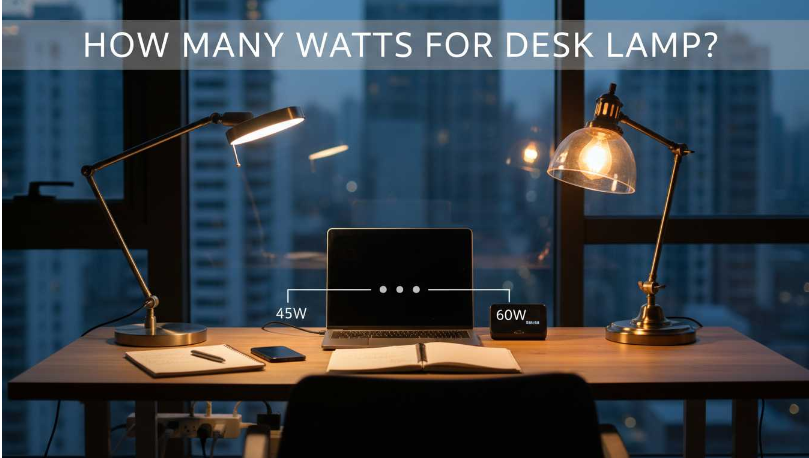
Choosing the right desk lamp can feel tricky. You want enough light to see clearly, but not so much that it hurts your eyes. A common question people ask is, how many watts for desk lamp do I really need? The answer isn’t as simple as it used to be. Today, thanks to new technology, “watts” don’t always tell the whole story about how bright your light will be.
What Are Watts and Why Do They Matter for Your Desk Lamp?
A “watt” is a unit that measures how much electricity a light bulb uses. For a long time, more watts meant a brighter light. A 60-watt bulb was brighter than a 40-watt bulb. It was a simple way to pick your light.
But things have changed. Newer light bulbs use much less electricity to make the same amount of light. This means the watt number on the box doesn’t tell you how bright the bulb will be anymore. It only tells you how much energy it uses.
> Key Takeaway: Watts tell you energy use*, not *brightness.
The Shift: From Incandescent to LED Watts
For over a hundred years, most homes used incandescent light bulbs. These bulbs made light by heating a small wire until it glowed. They used a lot of electricity, and much of that energy turned into heat, not light.
Today, LED (Light Emitting Diode) bulbs are very popular. They create light in a totally different way. LEDs use much less electricity and produce very little heat. This is why an LED bulb with only 8 watts can be as bright as an old 60-watt incandescent bulb.

Understanding Lumens: The True Measure of Brightness
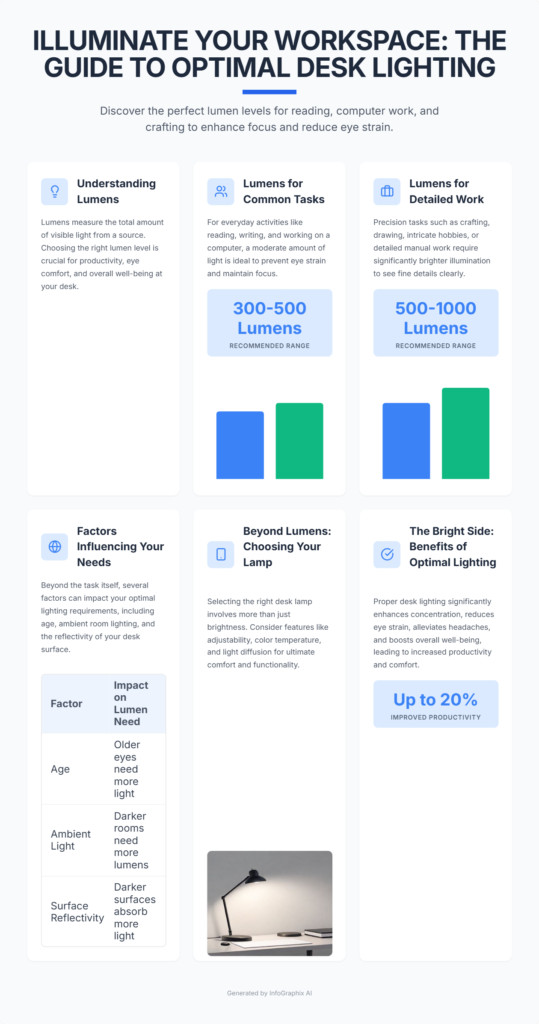
Since watts don’t tell us brightness anymore, we need a new way to measure it. That’s where “lumens” come in. Lumens measure the actual amount of light a bulb gives off. More lumens mean a brighter light.
When you shop for a desk lamp bulb now, always look for the lumen number. This number will tell you how much light you’ll get, no matter the bulb type.
Here’s a quick look at how old watts compare to new lumens for common brightness levels:
| Old Incandescent Watts | New LED Watts (Approx.) | Lumens (Approx.) |
|---|---|---|
| 40 Watts | 4–6 Watts | 450 Lumens |
| 60 Watts | 8–10 Watts | 800 Lumens |
| 75 Watts | 11–13 Watts | 1100 Lumens |
| 100 Watts | 14–16 Watts | 1600 Lumens |
This table helps you pick the right LED bulb to match the brightness you were used to.
How Many Watts for Desk Lamp: Finding Your Ideal Brightness
Choosing the right desk lamp brightness depends on what you’ll be doing. A light for reading needs to be brighter than a light for just setting the mood. Your own eyes also play a part. Some people like more light, some less.
Consider the size of your desk and the room. A small desk in a bright room might need less light. A large desk in a dim room will need more.

Task-Specific Lighting Needs
Different tasks require different amounts of light. This is where thinking about lumens, rather than just how many watts for desk lamp, becomes very helpful.
- General Reading and Writing: For most people, 450-800 lumens is a good range. This is like an old 40-60 watt bulb.
- Computer Work: You often need less direct light here. Too much light can cause glare on your screen. Around 250-450 lumens can be enough, sometimes even less if your screen is bright.
- Detailed Hobbies or Crafting: Tasks like drawing, model building, or intricate sewing need more light. Aim for 800-1100 lumens, or even higher for very fine work. * Studying: A bright, focused light is best for long study sessions. 800-1100 lumens can help keep you alert and focused.
> Expert Tip: For detailed tasks, a lamp with adjustable brightness (dimmable) is a great choice.
Energy Efficiency and Your Desk Lamp’s Wattage
One of the biggest benefits of modern bulbs, especially LEDs, is their energy efficiency. They use very few watts to produce a lot of light. This saves you money on your electricity bill.
An LED bulb can last 10 to 25 times longer than an old incandescent bulb. This means you buy fewer bulbs, saving money and reducing waste. Choosing low-wattage LED bulbs is good for your wallet and the planet.

Choosing the Right Bulb Type for Your Desk Lamp
When thinking about how many watts for desk lamp you need, the bulb type is key.
- LED Bulbs: These are the best choice today. They are very energy-efficient, last a long time, and come in many brightness levels (lumens) and color temperatures. They use very low watts.
- CFL Bulbs (Compact Fluorescent Lamps): These were popular before LEDs. They are more efficient than incandescent bulbs but less so than LEDs. They also contain a tiny bit of mercury, which makes disposal tricky. They are fading out of use.
- Incandescent Bulbs: These are the old-fashioned bulbs. They use a lot of watts, get very hot, and don’t last long. They are generally not recommended for desk lamps anymore due to their inefficiency.
> Recommendation: Always choose an LED bulb for your desk lamp.
Beyond Watts: Features to Look for in a Desk Lamp
While lumens and how many watts for desk lamp are important, a good desk lamp offers more. These features can make a big difference in your comfort and productivity.
- Dimmable Options: A dimmable lamp lets you change the brightness. This is super handy. You can have bright light for reading and softer light for relaxing.
- Color Temperature (Kelvin): This measures how “warm” or “cool” the light looks. *Warm light (2700K-3000K) is yellowish, like old incandescent bulbs. It’s cozy. *Cooler light (4000K-5000K) is whiter or even slightly bluish. It’s good for focus and tasks. * Some lamps let you change the color temperature, which is amazing!
- Adjustability: A lamp that you can move and aim is very useful. Look for flexible necks, rotating heads, and adjustable heights.
- Smart Features: Some modern desk lamps connect to your phone or smart home system. You can control them with an app or your voice. This is convenient and adds a modern touch.

Safety First: Overheating and Proper Wattage Use
Even with low-wattage LEDs, safety is important. Every lamp has a maximum wattage rating. This is usually printed near the bulb socket. For example, it might say “MAX 60W.”
This “MAX 60W” rating refers to the old incandescent watt standard. It means the lamp’s wiring and materials can safely handle the heat from a 60-watt incandescent bulb.
> Important Safety Rule: Never put a bulb with a higher incandescent equivalent wattage* into a lamp than its maximum rating. For example, if your lamp says “MAX 60W,” you *can* use an 8-watt LED bulb that *produces* 800 lumens (like an old 60W incandescent). You *cannot put an old 75-watt or 100-watt incandescent bulb into it.
LEDs use so few watts that you will almost certainly stay well below the maximum rating. They also produce very little heat, which makes them safer. Always ensure your lamp has good airflow around the bulb.

Setting Up Your Desk Lamp for Optimal Light
Where you put your desk lamp makes a big difference. It’s not just about how many watts for desk lamp you choose, but how you use that light.
- Placement: If you are right-handed, place the lamp on your left side. If you are left-handed, place it on your right. This helps prevent your hand from casting a shadow on your work.
- Avoiding Glare: Position the lamp so its light doesn’t shine directly into your eyes or create harsh reflections on your computer screen. An adjustable lamp is great for this.
- Combine with Ambient Light: A desk lamp works best when it’s not the *only light in the room. Use it with overhead lights or natural window light. This reduces eye strain by preventing harsh contrasts.

Common Wattage Questions and Quick Answers
It’s natural to have questions when you’re trying to figure out the best light for your desk. Here are some quick answers to common queries:
- Q: Can I use a higher lumen bulb than my old one?
- A: Yes, if it’s an LED bulb, you can often go brighter (more lumens) with very low watts. Just ensure the lamp itself can physically hold the bulb.
- Q: Is a 100-watt equivalent LED too bright?
- A: For many tasks, 1600 lumens (100-watt equivalent) might be too bright for a desk lamp. It’s usually better for larger areas or if you need very intense light.
- Q: What is the most common wattage for an LED desk lamp?
- A: Most LED desk lamps come with bulbs in the 5-10 watt range, which gives you 450-800 lumens of light. This is a good balance for most tasks.

The Future of Desk Lamp Lighting
The world of lighting is always changing! We can expect even more cool features for desk lamps in the future.
- Even Greater Efficiency: Bulbs will continue to use less and less electricity.
- Personalized Light: Lamps might adapt to your needs automatically. They could change brightness and color based on the time of day or what you’re doing.
- Health Benefits: Lighting is becoming more focused on our well-being. Future lamps might help regulate our sleep cycles or reduce eye strain even more.
These advancements will make choosing how many watts for desk lamp even less about the number on the box and more about the experience of light.

Making the Best Choice for Your Desk Lamp Watts
Choosing the perfect desk lamp involves a few simple steps. First, forget about the old watt numbers for brightness. Instead, focus on lumens. Think about what you’ll be doing at your desk. Will you be reading? Working on a computer? Doing crafts? This will help you decide on the right lumen level.
Look for energy-efficient LED bulbs. They save money and last a long time. Consider features like dimmability and adjustable color temperature for even better comfort. Always remember the lamp’s maximum wattage rating for safety, even if your LED bulb uses very few watts.
By following these tips, you’ll pick a desk lamp that gives you just the right amount of light. You’ll have a comfortable and productive workspace, answering the question of how many watts for desk lamp perfectly for your needs.

FAQ Section
Q1: What is the ideal lumen range for a desk lamp for general use?
A1: For most general tasks like reading, writing, or computer work, a desk lamp with 450 to 800 lumens is usually ideal. This provides good brightness without being too harsh.
Q2: Can I use any LED bulb in my old desk lamp?
A2: Yes, as long as the LED bulb physically fits the socket and the lamp’s stated maximum wattage (e.g., “MAX 60W”) refers to the incandescent equivalent. Since LEDs use very few actual watts, they are almost always safe to use in older lamps.
Q3: Does a higher wattage LED bulb mean it uses more electricity?
A3: Yes, a higher wattage LED bulb uses more electricity than a lower wattage LED bulb. However, even a high-wattage LED uses much less electricity than an old incandescent bulb with the same brightness (lumens).
Q4: What is “color temperature” and why does it matter for a desk lamp?
A4: Color temperature, measured in Kelvin (K), describes the hue of the light. Warmer light (around 2700K-3000K) is yellowish and relaxing. Cooler light (4000K-5000K) is whiter or bluish and can help with focus and alertness for tasks.
Q5: How can I tell if my desk lamp light is too bright?
A5: If you find yourself squinting, experiencing eye strain, or seeing glare on your screen or desk surface, the light might be too bright. Try a bulb with fewer lumens or use a dimmable lamp to adjust the brightness.

I’m Emily Johnson, an affiliate marketer and blogger focused on lamps and lighting. I share honest reviews, simple buying guides, and practical tips. My goal is to help readers choose the right lamp for their space, style, and budget with confidence.