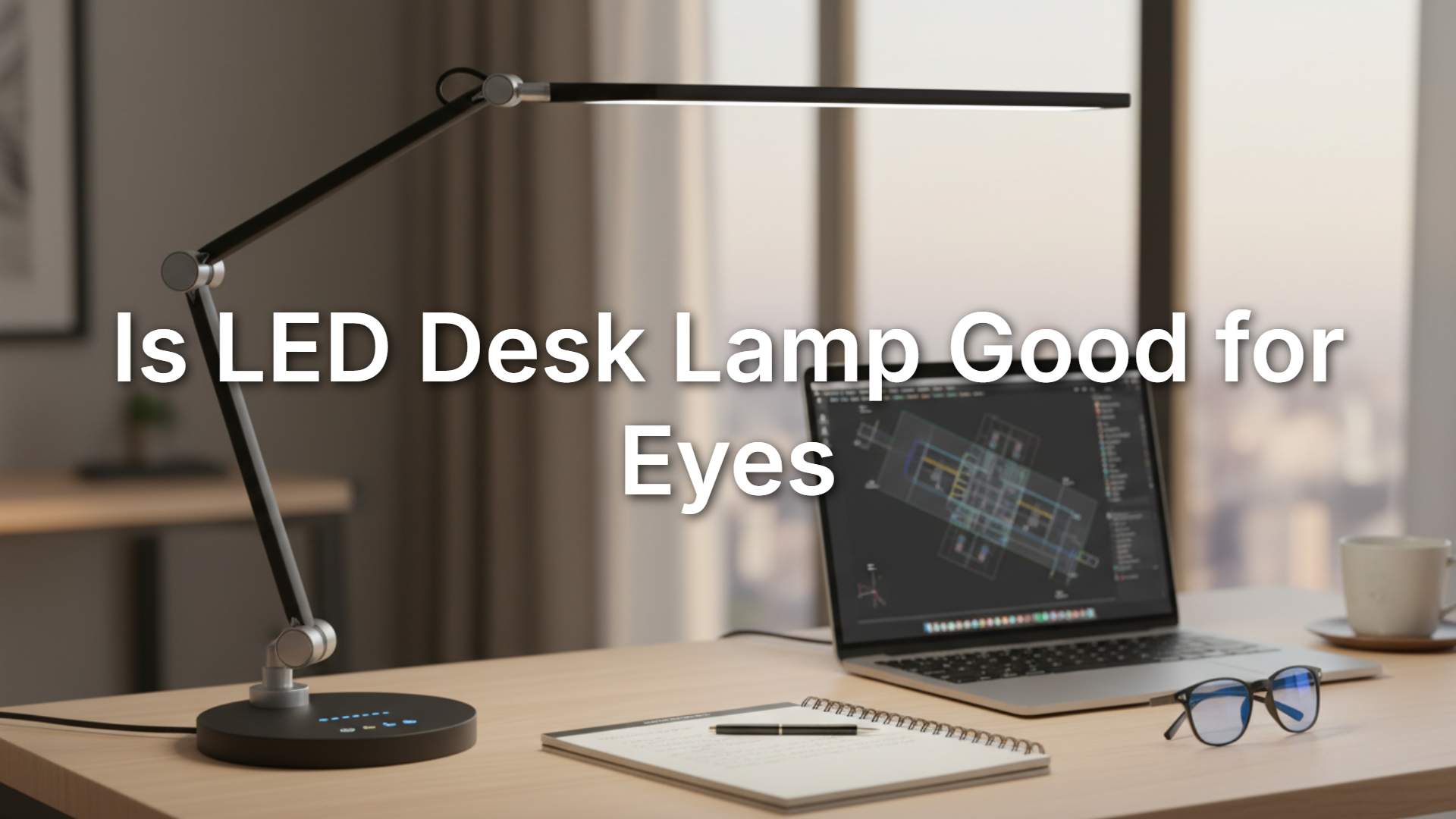
Many people ask, “Is LED desk lamp good for eyes?” This is a common and important question. We spend hours working or studying under artificial light. The type of light we use can greatly affect our eye comfort and health. Let’s explore how LED desk lamps can impact your vision.
Understanding LED Technology and Your Eyes

LED stands for Light Emitting Diode. These lamps are very popular now. They use less power and last a long time. But how do they affect our eyes?
The Basics of LED Light
LEDs produce light in a different way than old incandescent bulbs. They create light through a semiconductor. This process makes them very efficient. This efficiency is a big plus for energy saving.
“LEDs offer significant energy savings and long lifespan compared to traditional lighting options.”
Why Flicker Matters for Eyes
Old lights often flickered slightly. This flicker can cause eye strain and headaches. Good quality LED desk lamps have very little flicker. This makes them much gentler on your eyes. It helps reduce fatigue during long tasks.
Benefits of LED Desk Lamps for Eye Comfort

Modern LED desk lamps offer many features that benefit your eyes. These features help create a better lighting environment. They make your workspace more comfortable.
Adjustable Brightness (Dimming)
Many LED lamps let you change the brightness. This is called dimming. You can make the light brighter for detailed work. You can dim it for general reading. This flexibility is great for different tasks.
Color Temperature Control
LEDs can produce different colors of light. This is called color temperature. Warm light is yellowish, like old bulbs. Cool light is whiter or bluer. Adjustable color temperature helps you choose what feels best.
Popular Color Temperatures:
- Warm White (2700K-3000K): Relaxing, good for winding down.
- Neutral White (3500K-4500K): Good for general tasks, balanced.
- Cool White/Daylight (5000K-6500K): Best for focus, detailed work, mimic natural daylight.
Reduced Glare
Good LED desk lamps are designed to reduce glare. Glare can bounce off surfaces and strain your eyes. Proper lamp design directs light well. This helps keep your eyes comfortable.
Addressing Blue Light Concerns with LED Desk Lamps

One common concern about LEDs is blue light. Blue light is a part of the visible light spectrum. It is naturally present in sunlight.
What is Blue Light?
Blue light has shorter wavelengths. This means it carries more energy. Too much exposure to blue light, especially at night, can affect sleep.
Does Blue Light Harm Eyes?
Research is still ongoing about long-term blue light harm. Most experts agree that normal exposure from screens and lamps is not dangerous. However, choosing the right LED lamp is important.
How to Manage Blue Light Exposure:
- Choose Warmer Temperatures: Use warmer (lower Kelvin) light settings.
- Use Blue Light Filters: Some lamps have built-in filters.
- Take Breaks: Look away from your work every 20 minutes.
Here’s a simple diagram:
Too much Blue Light -> Eye Strain -> Sleep Disruption
(especially at night) (can be reduced with good LEDs)
Key Features to Look for in an Eye-Friendly LED Desk Lamp

When asking “Is LED desk lamp good for eyes?” the answer often depends on its features. Not all LED lamps are created equal. Knowing what to look for helps you pick the best one.
Color Rendering Index (CRI)
CRI tells you how well a light source shows true colors. A high CRI means colors look more natural. This is important for tasks like art or design. For eye comfort, a CRI of 80 or higher is good.
Uniform Light Distribution
The light should spread evenly across your desk. Avoid lamps that create bright spots and dark shadows. Even light helps your eyes work without strain.
Flicker-Free Operation
Always choose an LED lamp advertised as ‘flicker-free’. This greatly reduces eye fatigue. It makes long work sessions much more pleasant.
Feature Checklist:
| Feature | Benefit for Eyes | Recommended Value |
|---|---|---|
| CRI | Natural color perception | 80+ |
| Dimming | Adjustable brightness | Stepless or multiple |
| Color Temp. | Mood & task matching | 2700K-6500K range |
| Flicker-Free | Reduces eye strain | Essential |
Proper Placement and Ergonomics for Your LED Desk Lamp

Even the best LED desk lamp needs proper placement. Correct positioning helps maximize its benefits. It also helps prevent eye strain and discomfort.
Ideal Lamp Position
Place your lamp to avoid direct glare. If you are right-handed, put the lamp on your left. If you are left-handed, put it on your right. This prevents shadows from your hand.
Angle and Height
Adjust the lamp’s head so light shines directly on your work. It should not shine into your eyes. The height should allow the light to cover your whole work area.
Balance with Room Lighting
Your desk lamp should not be the only light source. Use it with some ambient room lighting. Too much contrast between a bright desk and a dark room strains eyes.
Comparing LED Desk Lamps to Other Lighting Types for Eye Health

To truly answer “Is LED desk lamp good for eyes?” it helps to compare them. Let’s look at how LEDs stack up against older lighting technologies.
Incandescent Bulbs
These are old-style bulbs that get very hot. They give off a warm, yellowish light. However, they use a lot of energy. They can also flicker slightly as they age.
Fluorescent Lamps
These are often seen in offices. They are more efficient than incandescent. But they are known for flicker and a harsh light. This can be very tiring for eyes.
Halogen Lamps
Halogen bulbs are bright and offer good color. They also get very hot. They are not as efficient as LEDs. And they can also cause glare if not properly shielded.
Lighting Comparison Table:
| Feature | Incandescent | Fluorescent | Halogen | LED Desk Lamp |
|---|---|---|---|---|
| Energy Use | High | Medium | Medium/High | Very Low |
| Flicker | Some | Often High | Low | Very Low |
| Heat Output | Very High | Low | High | Very Low |
| Lifespan | Short | Medium | Medium | Very Long |
| Eye Comfort | Moderate | Low (due to flicker) | Moderate | High |
Tips for Maintaining Good Eye Health with LED Lamps

Even with the best LED desk lamp, your eyes need care. Following good habits helps keep your vision healthy. These tips work for anyone using a desk lamp.
The 20-20-20 Rule
This rule is simple and effective. Every 20 minutes, look at something 20 feet away. Do this for 20 seconds. It helps your eye muscles relax.
Blink Often
When concentrating, we tend to blink less. Blinking keeps your eyes moist. Try to consciously blink more often.
Adjust Screen Settings
If you use a computer, adjust its brightness. Make it similar to your lamp’s brightness. This reduces eye strain.
Regular Eye Check-ups
Visit an eye doctor regularly. They can spot problems early. Good eye health is a continuous effort.
Choosing an LED Desk Lamp for Different Needs

The answer to “Is LED desk lamp good for eyes?” also depends on your specific use. Different tasks need different lighting. Think about your daily activities.
For Studying and Reading
Look for a lamp with high CRI and adjustable color temperature. This allows you to switch between focused work and relaxed reading. Dimmable options are also key.
For Computer Work
Choose a lamp that offers good diffusion. This means the light spreads softly. It helps reduce glare on your screen. A flicker-free lamp is crucial for long screen times.
For Hobbies and Crafts
High CRI is especially important here. You need to see true colors. A flexible neck or arm helps direct light precisely. This is great for detailed tasks.
Matching Lamp to Task:
Task: Reading -> Features: Dimmable, Warm/Neutral Temp, High CRI* Task: Computer -> Features: Flicker-Free, Diffused Light, Neutral Temp* Task: Crafts -> Features: High CRI, Flexible Neck, Bright Setting*
Conclusion: Is LED Desk Lamp Good for Eyes?

So, is LED desk lamp good for eyes? Yes, generally they are. Modern LED desk lamps offer many benefits. They can greatly improve your eye comfort. They reduce strain and fatigue.
Look for features like dimming and color temperature control. Prioritize high CRI and flicker-free operation. Proper placement and good eye habits are also key. Choosing the right LED lamp can make a big difference for your eyes.
Frequently Asked Questions
Are LED desk lamps generally good for eye health?
Yes, many modern LED desk lamps are good for eyes. They offer features like adjustable brightness, color temperature control, and flicker-free operation, which reduce eye strain and promote comfort.
What features should I look for in an eye-friendly LED desk lamp?
Look for lamps with a high Color Rendering Index (CRI 80+), adjustable brightness (dimming), changeable color temperature (2700K-6500K), and a ‘flicker-free’ certification. These features help provide comfortable and healthy lighting.
Where should I position my LED desk lamp for best eye comfort?
Place the lamp opposite your dominant hand (left for right-handers) to avoid shadows. Adjust the lamp head so light shines on your workspace, not directly into your eyes. Ensure there is also some ambient room lighting to avoid harsh contrast.
Should I be worried about blue light from LED desk lamps?
Blue light is naturally present in sunlight and LEDs. While too much blue light at night might affect sleep, normal exposure from desk lamps is generally not harmful. Many eye-friendly LED lamps allow you to adjust to warmer (less blue) light temperatures.
Besides the lamp, what else can I do to protect my eyes while working?
Follow the 20-20-20 rule: every 20 minutes, look at something 20 feet away for 20 seconds. Blink often to keep your eyes moist, adjust your screen brightness, and get regular eye check-ups. These habits complement good lighting for overall eye health.

I’m Emily Johnson, an affiliate marketer and blogger focused on lamps and lighting. I share honest reviews, simple buying guides, and practical tips. My goal is to help readers choose the right lamp for their space, style, and budget with confidence.