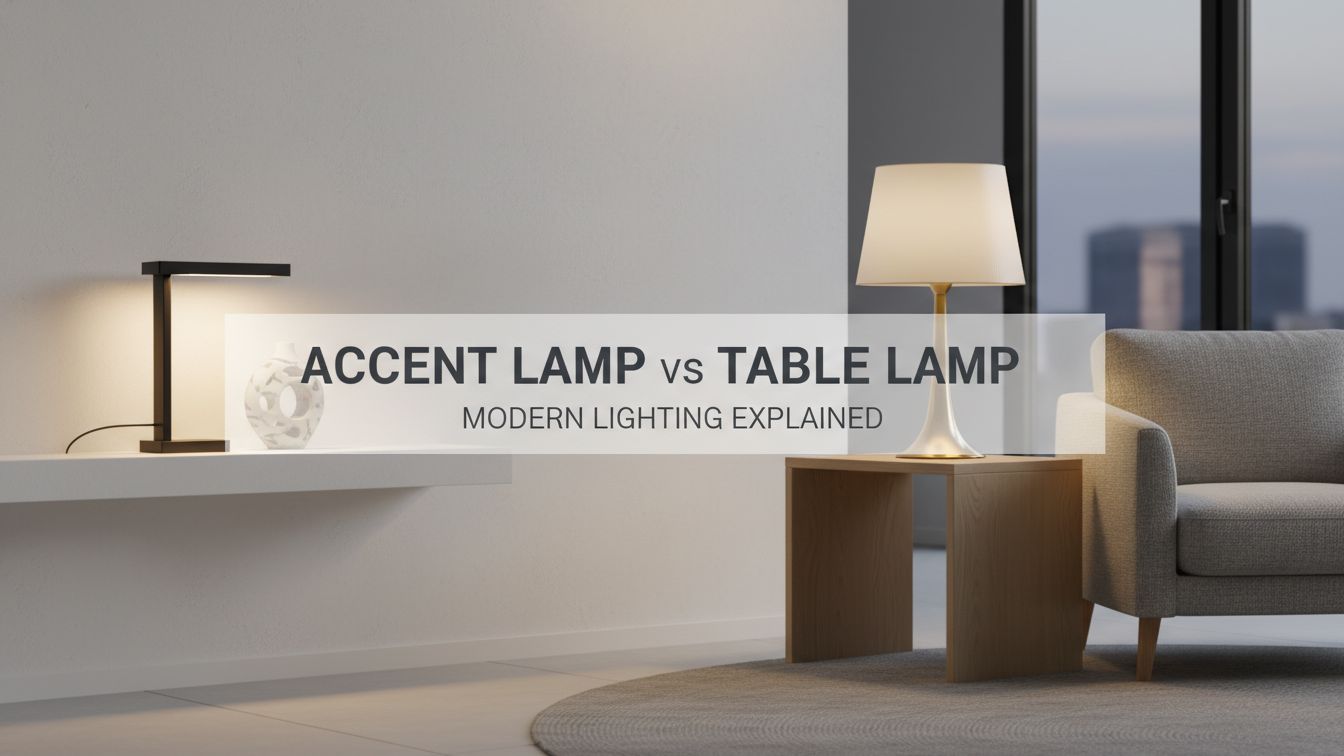

Choosing the perfect lamp for your home can be tricky. Many people wonder about the difference between an accent lamp and a table lamp. Both add light, but they serve very different purposes. Understanding these differences helps you light up your space just right. This guide will clarify the core ideas behind an accent lamp vs Table Lamps.
What is an Accent Lamp?

An accent lamp is a small light fixture. Its main job is to highlight something specific. Think of it as a spotlight for your decor. It draws attention to artwork, a plant, or a bookshelf.
Accent lamps add a touch of style and warmth. They create mood and visual interest in a room. They are not meant for bright, general lighting.
What is a Table Lamp?

A table lamp is a common light source. It sits on a table, like an end table or desk. Its main goal is to provide useful light.
This light helps with tasks like reading or working. It also adds general illumination to a room. Table lamps are often larger and more powerful than accent lamps.
Key Differences in Purpose

The biggest difference between an accent lamp vs Table Lamps is their purpose. An accent lamp creates atmosphere. It points out specific features in a room.
A table lamp, however, provides functional light. It helps you see clearly for tasks. It lights up a larger area.
Design and Style
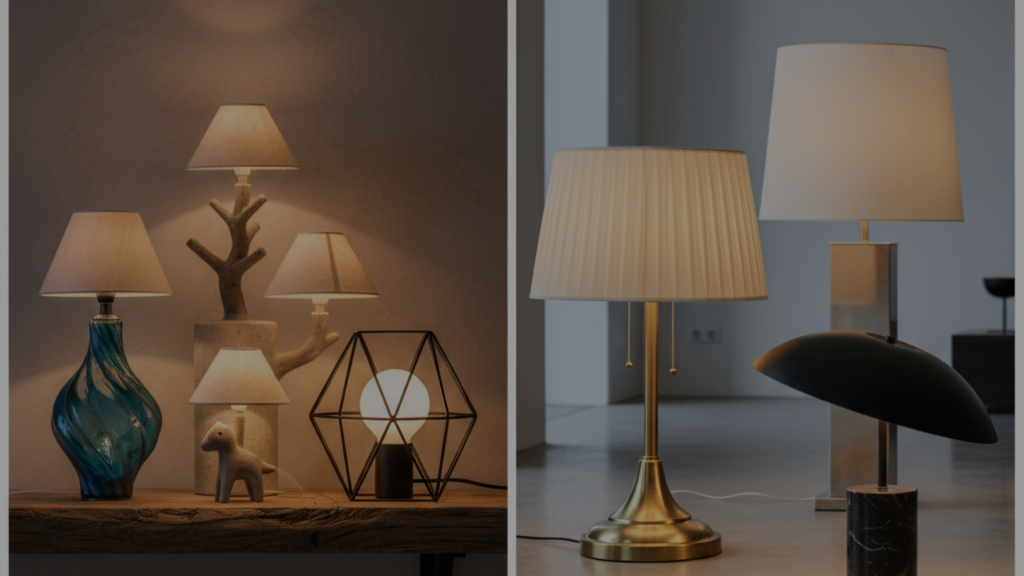
Accent lamps often have unique, artistic designs. They are part of the decor itself. Their style is key to their charm.
Table lamps can also be stylish, but their design usually supports their function. They are built to provide a steady, widespread light. The shade size and material are important for this.
Size and Placement

An overhead view of a room layout. Small circles indicate where accent lamps might be placed (on a shelf, next to a specific item). Larger circles show where table lamps would sit (on an end table by a sofa, on a desk). (16:9 ratio)
Accent lamps are typically small. You can place them on shelves, mantels, or small side tables. Their size lets them fit almost anywhere.
Table lamps are larger and more noticeable. They need more space on a surface. They are usually placed on end tables, nightstands, or desks.
Light Output and Brightness

Accent lamps give off soft, low light. They create a gentle glow. They are not meant to light up a whole room.Table lamps provide brighter, more widespread light. They can easily illuminate an area for reading or other activities. Their light output is higher and more functional.
Energy Use

Accent lamps typically use lower wattage bulbs. This means they use less energy. They are often on for longer periods to maintain mood.Table lamps often use higher wattage bulbs for more light. This can mean they use more energy. Modern LED bulbs help make both types more efficient.
Room Suitability

Accent lamps work well in any room where you want to add mood. They are great for hallways, entryways, or shelves. They enhance decorative elements.Table lamps are ideal for living rooms, bedrooms, and offices. They provide necessary light for comfort and tasks. They are very versatile for functional spaces.
Cost Comparison

Accent lamps can range in price. Many are quite affordable. Their smaller size often means lower material costs.Table lamps generally have a wider price range. Larger size and more complex designs can make them more expensive. Both types offer options for all budgets.
When to Choose an Accent Lamp

Choose an accent lamp when you want to create a specific mood. Use it to highlight a piece of art or a collection. It’s perfect for adding depth and warmth to a room. This is a key consideration in the accent lamp vs Table Lamps debate.It’s also great for adding a decorative touch. Pick one when you need very soft, indirect light. An accent lamp enhances your decor without being the main light source.
When to Choose a Table Lamp

Choose a table lamp when you need functional light. It’s perfect for reading in bed or on a sofa. It also works well for task lighting at a desk.A table lamp can provide general light for a smaller room. It fills in dark corners effectively. This is the choice when you need practical illumination.
Making the Right Choice

Deciding between an accent lamp vs Table Lamps depends on your needs. Think about what you want the light to do. Do you need focused mood lighting or bright task lighting?Often, the best solution involves both. Use accent lamps for atmosphere and table lamps for function. This creates a beautifully lit and useful space.
FAQs
What is the primary difference between an accent lamp and a table lamp?
An accent lamp highlights decor and creates mood. A table lamp provides functional light for tasks or general room illumination.
Can an accent lamp light up a whole room?
No, accent lamps are not designed to light up an entire room. They offer soft, localized light to enhance specific areas or objects.
Are table lamps only for reading?
While excellent for reading, table lamps also provide general ambient light. They can brighten a room or offer light for other tasks.
Can I use an accent lamp and a table lamp in the same room?
Yes, absolutely! Using both types of lamps creates layered lighting. This adds depth, mood, and functionality to any space.
Which type of lamp is usually larger?
Table lamps are typically larger than accent lamps. Their size helps them provide more widespread and functional light.

I’m Emily Johnson, an affiliate marketer and blogger focused on lamps and lighting. I share honest reviews, simple buying guides, and practical tips. My goal is to help readers choose the right lamp for their space, style, and budget with confidence.