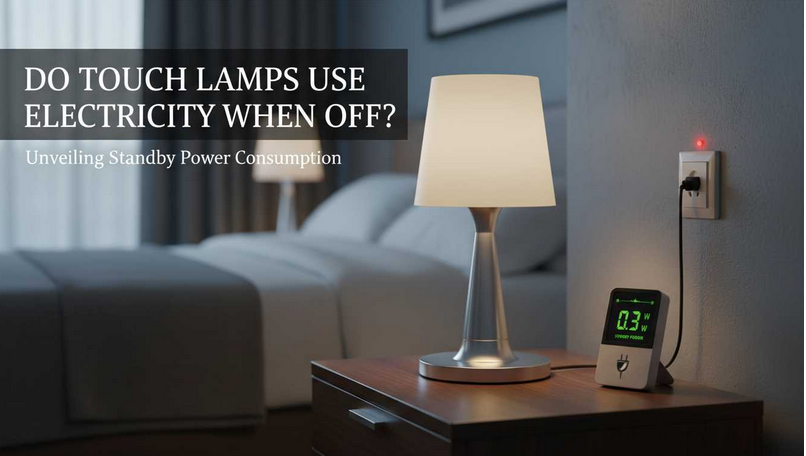
It’s a common question many people ask in their homes: Do touch lamps use electricity when off? You might think that when a lamp isn’t shining, it’s not using any power. But for touch lamps, the answer isn’t as simple as a traditional switch lamp. These modern lights have a clever secret. They use a tiny bit of power all the time, even when the light is out. This article will help you understand why. We’ll look at how touch lamps work and what this “hidden” power means for your energy bill.

How Touch Lamps Feel Your Touch
Touch lamps are smart. They don’t have a regular switch you flip. Instead, they react to your finger. This magic happens because of something called “capacitive sensing.”
Think of your body as a tiny conductor of electricity. The lamp has a special circuit inside. This circuit creates a very small electric field. When you touch the lamp, your finger changes this electric field. The lamp “feels” this change.
It then knows you want to turn it on, off, or change its brightness. This system needs to be always “listening” for your touch. And to listen, it needs a little bit of power.
The Truth About Standby Power
The small amount of electricity touch lamps use when off is called “standby power.” You might also hear it called “phantom load” or “vampire power.” It’s the power used by devices that are plugged in but not actively working.
Many electronics use standby power. Your TV, microwave, and phone charger all do it. They need this power to stay ready. For a touch lamp, standby power keeps its touch sensor active. It’s like the lamp is always waiting for your command.
Without standby power, the lamp couldn’t sense your touch. It would be completely “dead” until you unplugged and re-plugged it. This constant readiness is why touch lamps use electricity when off.
> Key Takeaway: Standby power keeps your touch lamp ready to respond, even when the light is out.
Is It A Lot Of Electricity?
You might worry this standby power will make your electricity bill jump up. Good news: it’s usually a very small amount. We are talking about milliwatts* or a few *watts at most.
To put it in perspective, a typical light bulb uses 60 watts when it’s on. A touch lamp might use less than 1 watt in standby mode. This is a tiny fraction of what it uses when fully lit.
Consider this:
- Active Use: A 60-watt bulb running for 1 hour uses 60 watt-hours.
- Standby Use: A touch lamp using 1 watt in standby for 24 hours uses 24 watt-hours.
So, while touch lamps do use electricity when off, the amount is often less than what a fully on bulb uses in just half an hour. It’s not a huge drain on your wallet.

Older vs. Newer Touch Lamps
Technology changes quickly. This is true for touch lamps too.
- Older Touch Lamps: Some older models might use a bit more standby power. Their circuits weren’t as efficient. They might have used older types of sensors that needed more energy to stay active.
- Newer Touch Lamps: Modern touch lamps are often designed to be very energy efficient. They use advanced microchips and better components. This means they can sense your touch using even less power.
Manufacturers are always trying to make devices use less “vampire power.” This is good for your bill and for the planet. So, if you have a very old touch lamp, it might be using slightly more power than a brand new one.
The Impact on Your Energy Bill
Let’s break down the real cost. Imagine a touch lamp uses 1 watt in standby mode.
| Time Period | Total Watt-Hours | Kilowatt-Hours (kWh) | | :———- | :————— | :——————- | | 1 Day | 24 Wh | 0.024 kWh | | 1 Month | 720 Wh | 0.72 kWh | | 1 Year | 8760 Wh | 8.76 kWh |
The average cost of electricity in the US is about 15 cents per kilowatt-hour (kWh).
Yearly Cost: 8.76 kWh $0.15/kWh = $1.31 per year.
As you can see, the yearly cost for one touch lamp’s standby power is very low. It’s usually just over a dollar a year. This small amount is unlikely to make a big difference to your overall electricity bill. However, if you have many devices with standby power, it can add up.
[Infographic: A pie chart showing the small percentage of home energy used by standby power compared to major appliances]
When Touch Lamps Use Electricity When Off: The Bigger Picture
While one touch lamp’s standby use is tiny, many devices together can create a “phantom load” that adds up. This is why the question, “Do touch lamps use electricity when off?” is part of a larger energy saving discussion.
Here are some other common devices that use standby power:
- Televisions: Often need power to turn on quickly or update software.
- Computers/Laptops: Even when “asleep,” they draw power.
- Game Consoles: Ready for instant play or updates.
- Phone Chargers: Plugged in without a phone, they still use a tiny bit.
- Microwaves: The clock display needs power.
- Coffee Makers: Some have clocks or pre-heating functions.
Knowing that touch lamps use electricity when off helps you understand this wider issue. It’s not just about lamps. It’s about being aware of all your plugged-in electronics.

Ways To Reduce Hidden Power Use
Even though the cost is low, you might still want to cut down on standby power. Here are some simple ways to do it:
- Unplug It: The easiest way to stop any device from using standby power is to unplug it. If you don’t use your touch lamp for a long time, simply pull the plug.
- Use a Power Strip: Plug your touch lamp and other electronics into a power strip. Many power strips have an on/off switch. When you flip the switch off, it cuts power to everything plugged into it. This is easier than unplugging each item.
- Smart Plugs: These are like power strips but smarter. You can control them with your phone or voice. You can set schedules for when devices turn on and off. This way, your touch lamp won’t use any power when you’re away or asleep.
- Energy-Efficient Models: When buying new electronics, look for “Energy Star” labels. These products are designed to use less power, both when active and in standby.
By using these methods, you can make sure your touch lamps don’t use electricity when off at all, if that’s your goal.
The Environmental Angle
Beyond your electricity bill, there’s an environmental side to standby power. Every bit of electricity used, even small amounts, adds up globally. Most electricity comes from power plants that burn fossil fuels. This releases greenhouse gases, which are bad for the environment.
Reducing standby power, even from things like touch lamps, helps. It means less demand on power plants. This can lead to less pollution. It’s a small step, but many small steps make a big difference.
Being mindful of how much power your devices use, even when “off,” helps you be a greener consumer. So, while touch lamps use electricity when off in tiny amounts, thinking about it can lead to bigger energy-saving habits.

Making Smart Choices for Your Home
Understanding how your household items work is key to making smart choices. Knowing that touch lamps use electricity when off helps you decide if that small power draw is important to you. For most people, the convenience of a touch lamp outweighs the very tiny standby power cost.
However, if you are very keen on saving every possible watt, or if you have many touch lamps, then taking steps like unplugging them or using smart plugs makes sense. It’s all about balancing convenience with energy savings.
Your home is full of devices that are always “on” in some small way. From your TV to your touch lamp, they are waiting for you. Being aware of this helps you manage your energy use better.

Final Thoughts on Touch Lamp Power
So, to answer the main question clearly: Do touch lamps use electricity when off? Yes, they do. They need a small, continuous supply of power to keep their touch-sensing circuits active. This allows them to respond instantly when you touch them.
This “standby power” is usually very low, often less than 1 watt. For a single touch lamp, the extra cost on your electricity bill is typically just over a dollar a year. While small, this hidden power use is part of a larger pattern seen in many modern electronics.
If you wish to eliminate this tiny power draw, unplugging the lamp or using a smart plug are easy solutions. Ultimately, the choice is yours. You can enjoy the convenience of your touch lamp, knowing its small power use, or you can take simple steps to cut off its power completely when not in active use.

Frequently Asked Questions (FAQ)
Why do touch lamps need power when they are off?
Touch lamps need a tiny bit of power to keep their special sensors active. These sensors are always “listening” for your finger to touch the lamp. Without this power, the lamp wouldn’t know when you want to turn it on or off.
How much electricity do touch lamps use when off?
Touch lamps use a very small amount of electricity when off, usually less than 1 watt. This is called “standby power” or “phantom load.” It’s much less than what the lamp uses when it’s fully lit.
Will a touch lamp’s standby power significantly increase my electricity bill?
No, typically not. The standby power for a single touch lamp might cost you only about $1 to $2 per year. While it adds up if you have many devices, one lamp alone won’t make a big difference to your bill.
Is it better to unplug a touch lamp when not in use?
If you want to save every bit of energy, then yes, unplugging it will stop all power use. However, for most people, the very small amount of standby power used by a touch lamp isn’t a major concern.
Do all modern electronics use standby power?
Many modern electronics use some form of standby power. Devices like TVs, game consoles, and phone chargers often draw a small amount of power even when “off” to stay ready for use or to maintain features like clocks.

I’m Emily Johnson, an affiliate marketer and blogger focused on lamps and lighting. I share honest reviews, simple buying guides, and practical tips. My goal is to help readers choose the right lamp for their space, style, and budget with confidence.