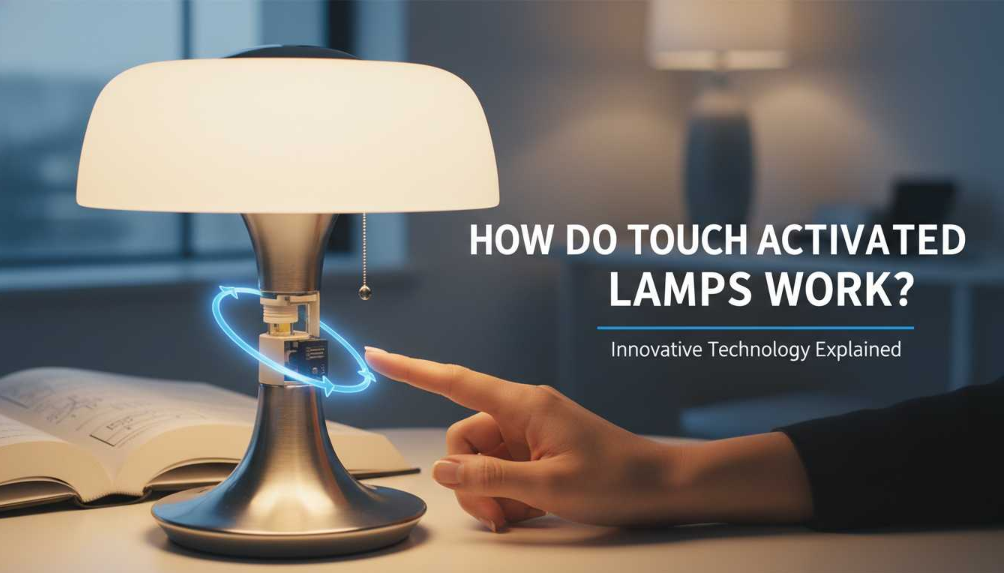
Have you ever tapped a lamp and watched it magically glow brighter or dim with just a touch? It feels a bit like magic, doesn’t it? Many people wonder, how do touch activated lamps work? These clever lights are a common sight in homes today. They offer convenience and a modern feel. But the science behind them is actually quite simple and fascinating.
This article will pull back the curtain on this everyday wonder. We’ll explore the smart technology that makes these lamps respond to your touch. Get ready to understand the simple yet brilliant engineering.

The Core Idea: What is Capacitance?
At the heart of every touch lamp is something called capacitance. Don’t let the big word scare you! It’s an easy idea to grasp.
Think of capacitance as a way for things to store an electrical charge. Imagine a tiny, invisible battery. Every object around us has some ability to hold a charge. This includes you! Your body can store a small amount of electricity.
When you touch a touch lamp, you change its electrical field. It’s like adding a tiny bit more “storage” to the lamp’s circuit. The lamp senses this change. This change is what tells the lamp to turn on or off. It’s a very tiny, safe electrical interaction.
How Our Bodies Play a Role
Our bodies are good conductors of electricity. This means electricity can flow through us easily. When you touch the lamp, your body acts like an antenna. It transfers a small electrical charge to the lamp.
This tiny electrical transfer creates a capacitive coupling. The lamp’s special sensor picks up on this. It’s truly amazing how sensitive these circuits can be. They detect even the smallest changes.
Inside Your Lamp: Key Parts
A touch lamp looks simple from the outside. But inside, a few important parts work together. Each part has a special job. They all help the lamp respond to your touch.
Here are the main components:
- Sensing Plate or Electrode: This is the part you actually touch.
- Control Circuit: This is the “brain” that detects your touch.
- Dimmer Circuit: This part controls how bright the light gets.
- Power Supply: This gives power to all the parts.
Together, these parts make the lamp work smoothly. They turn your simple touch into light.

How Do Touch Activated Lamps Work: The Sensing Plate
The sensing plate is often the metal base or stem of the lamp. It’s the part you make physical contact with. This plate isn’t just for decoration. It’s a crucial part of the electrical system.
This metal part is connected to the lamp’s control circuit. It acts like a large sensor. When you touch it, your body connects to this sensor. This completes a path for a tiny electrical signal.
The Role of the Human Touch
Your finger acts as a conductor. It changes the electrical field around the sensing plate. This change is very small. But the lamp’s circuit is designed to notice it.
Think of it like a ripple in a pond. Your touch creates a tiny ripple in the electrical field. The lamp’s “eyes” (the circuit) see this ripple. Then, they know you want something to happen. This is a core part of how do touch activated lamps work.
The Brain of the Lamp: The Control Circuit
The control circuit is arguably the most important part. It’s usually a small computer chip. This chip is often called a microcontroller* or a special *touch-sensing IC (Integrated Circuit).
This tiny chip constantly watches the sensing plate. It looks for changes in capacitance. When you touch the lamp, the capacitance goes up. The chip sees this change.
Interpreting the Touch Signal
Once the chip detects a touch, it sends a command. This command goes to another part of the lamp. It tells the lamp to do something specific.
For example, one touch might mean “turn on.” Another touch might mean “get brighter.” The chip has been programmed to understand these different signals. It’s quite clever!

Making It Brighter or Dimmer: The Dimmer Circuit
Most touch lamps don’t just turn on and off. They also let you change the brightness. This is where the dimmer circuit comes in. This circuit works hand-in-hand with the control circuit.
The dimmer circuit typically uses a special electronic switch. This switch is often called a TRIAC. A TRIAC is like a gate for electricity. It can open and close very, very fast.
How Dimming Works
When you touch the lamp to dim it, the control circuit tells the TRIAC to act. The TRIAC then quickly turns the power to the bulb on and off. It does this many times per second.
- If the TRIAC stays “on” for a longer time in each cycle, the bulb gets more power. This makes the light brighter.
- If the TRIAC stays “on” for a shorter time, the bulb gets less power. This makes the light dimmer.
Because it happens so fast, you don’t see any flickering. You just see a smooth change in brightness. It’s a very efficient way to control light.

Different Kinds of Touch Lamps
While the basic principle of how do touch activated lamps work is the same, touch lamps come in different styles. The way they sense your touch can vary slightly.
Here are a couple of common types:
- Metal-Body Touch Lamps: These are the most common. The entire metal base or stem acts as the sensing plate. Touching any part of the metal surface works.
- Invisible Touch Lamps: Some lamps don’t have an obvious metal part to touch. Instead, they might have a hidden sensor. This sensor is often under a plastic or glass surface. These lamps work by sensing changes in the electric field through the non-conductive material. They use more advanced capacitive sensing.

No matter the type, the core idea remains: they detect your body’s capacitance. This makes them respond to your command.
Benefits and a Few Downsides
Touch lamps offer many good things. But like all technology, they have a few small drawbacks too.
Here’s a quick look:
| Benefit | Downside |
|---|---|
| Easy to Use | Can be sensitive to pets or vibrations |
| Modern Look | Sometimes needs specific bulb types |
| Dimming Control | Electrical interference can cause issues |
| No Small Switches | Can be accidentally activated |
| Sleek Design | May not work with all smart plugs |
Overall, the benefits usually outweigh the downsides for most people. They add a lot of convenience to everyday life.

Common Problems and Quick Fixes
Sometimes, a touch lamp might not work perfectly. Don’t worry, many issues have simple solutions. Knowing how do touch activated lamps work can help you troubleshoot.
Here are some common problems and what to try:
Lamp Flickers:
- Check the bulb: Make sure the bulb is fully screwed in.
- Try a different bulb: Some LED bulbs aren’t compatible with older dimmers.
- Check for loose connections: Make sure the lamp is plugged in firmly.
Lamp Won’t Respond to Touch:
- Unplug and replug: This often resets the internal circuit. Wait 30 seconds before plugging back in.
- Clean the lamp surface: Dirt or grime can sometimes interfere with sensing.
- Check the bulb again: A faulty bulb can prevent the lamp from working.
Lamp Turns On/Off by Itself:
- Electrical interference: Other electronics nearby can sometimes cause this. Try moving the lamp.
- Vibrations: Heavy footfalls or nearby appliances can sometimes trigger it.
- Pet interactions: Pets rubbing against the lamp can activate it.
Most of these issues are minor. A quick check usually solves the problem.

The Future of Touch Lighting
Touch lighting is always getting better. Engineers are finding new ways to make these lamps smarter and more reliable. The basic idea of how do touch activated lamps work will stay the same. But the technology will improve.
Here are some things we might see:
- More precise control: Imagine being able to fine-tune brightness with a swipe.
- Integration with smart homes: Touch lamps that talk to your other smart devices.
- New materials: Touch surfaces made from wood, fabric, or even plants!
- Energy efficiency: Even smarter ways to save power.
The goal is always to make our lives easier and our homes more comfortable. Touch lamps are a big part of that journey.

Conclusion: Understanding the Everyday Magic
So, the next time you tap your touch lamp, you’ll know it’s not magic. It’s clever science at play. You’ll understand the role of capacitance, the smart control circuit, and the fast-acting dimmer. How do touch activated lamps work is no longer a mystery.
These lamps bring a blend of convenience and modern design to our daily lives. They show how simple principles can lead to useful, elegant solutions. It’s a great example of technology working quietly in the background. It simply makes things a little bit easier for us all.

Frequently Asked Questions (FAQ)
Are touch lamps safe to use?
Yes, touch lamps are very safe. The electrical currents involved in sensing your touch are extremely tiny. They pose no risk to people or pets.
Can I use any type of light bulb in a touch lamp?
Not always. Older touch lamps with dimming features often work best with incandescent or dimmable LED bulbs. Non-dimmable LED or CFL bulbs might flicker or not work at all. Always check your lamp’s instructions.
Why does my touch lamp turn on or off by itself?
This can happen due to minor electrical interference from other devices, vibrations, or even static electricity. Try unplugging it for a minute to reset it. Also, ensure it’s on a stable surface away from other electronics.
Do touch lamps use more electricity than regular lamps?
Not significantly. The control circuit uses a very small amount of power when the lamp is off. When the lamp is on, it uses about the same amount of power as a regular lamp with the same bulb.
Can I fix a broken touch lamp myself?
For simple issues like a flickering bulb, yes. For more complex internal problems, it’s generally best to consult an electrician or replace the lamp. Opening the lamp exposes electrical components, which can be risky.

I’m Emily Johnson, an affiliate marketer and blogger focused on lamps and lighting. I share honest reviews, simple buying guides, and practical tips. My goal is to help readers choose the right lamp for their space, style, and budget with confidence.