
Touch lamps are common in many homes. They offer a simple way to control light. You just tap them, and they turn on or off. Many people wonder what makes a touch lamp work.
It feels like magic, but it is actually clever science. These lamps use your body to complete an electrical circuit. This article will explain this exciting technology. We will break down how these lamps sense your touch.
The Science Behind Touch: Capacitance Explained

The core secret behind touch lamps is capacitance. Your body naturally stores a tiny electrical charge. It acts like a small capacitor.
When you touch the lamp, you transfer this charge. The lamp’s sensor detects this change. This is how the lamp knows you have touched it.
How Your Body Completes the Circuit
Your touch creates a path. This path allows a tiny bit of electricity to flow. The lamp’s internal circuit measures this change.
“Capacitance is the ability of a body to store an electrical charge.”
This small electrical signal tells the lamp to react. It makes the light turn on or off. It’s a very sensitive system.
Key Components: Inside a Touch Lamp

A touch lamp has several important parts. These parts work together smoothly. They allow the lamp to respond to your touch.
Here are the main components:
Touch Sensor: This is the part you actually touch. It’s usually the metal base or stem.
Control Module/Circuit Board: This is the ‘brain’ of the lamp. It processes the touch signal.
Light Bulb: The actual light source.
Power Supply: Provides electricity to the lamp.
The Touch Sensor’s Role
The touch sensor is crucial. It is connected to the control module. It senses tiny changes in electrical field.
The Control Module Explained
The control module is a small circuit board. It has specialized chips. These chips interpret the sensor’s signals. They then send commands to the light bulb.
How the Touch Circuitry Powers Up

Understanding what makes a touch lamp work involves its internal circuitry. When you plug in the lamp, electricity flows. The control module is always ‘listening’ for a touch.
From Touch to Light: A Simple Flow
Here is a simple breakdown of the process:
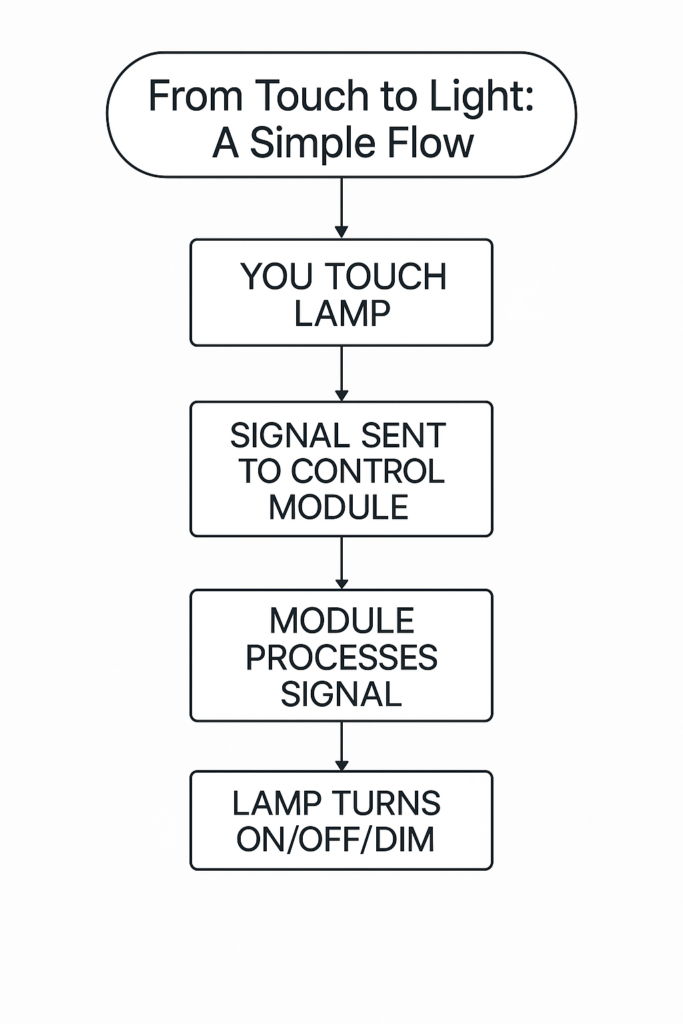
This happens incredibly fast. It creates an instant response. Modern lamps are very efficient at this.
Understanding Brightness Levels in Touch Lamps

Many touch lamps offer different brightness settings. This adds to their usefulness. A single touch might turn it on low. A second touch makes it brighter.
Different Touch Settings
This feature works by counting your touches. The control module remembers the current state. Each tap cycles through different power levels.
| Touch Action | Light Level | Electrical Signal |
|---|---|---|
| First Touch | Low brightness | Small pulse |
| Second Touch | Medium brightness | Medium pulse |
| Third Touch | High brightness | Large pulse |
| Fourth Touch | Off | Reset |
This makes touch lamps very versatile. You can set the mood with ease. It’s all managed by the tiny circuit.
Types of Touch Lamps and Their Designs

Touch lamps come in many shapes and sizes. They fit into various styles. Some are sleek and modern. Others have a classic look.
Portable vs. Stationary Touch Lamps
Some touch lamps are small and portable. They might run on batteries. Other lamps are larger and meant to stay put. They plug into a wall outlet.
“The beauty of touch technology is its adaptability to diverse designs.”
They are popular for bedside tables. And they are also great for desks or living rooms. The internal workings remain similar across designs. The core principle of what makes a touch lamp work stays the same.
Safety and Efficiency of Touch Lamps

Touch lamps are generally very safe. They use low voltage for the touch sensor. This keeps users safe from shocks.
They are also quite energy-efficient. Modern lamps use LED bulbs. LEDs consume very little power. This saves electricity.
Modern Touch Lamp Benefits
Energy Saving: LEDs use less power than old bulbs.
Convenience: Easy to turn on and off, especially in the dark.
Durability: Fewer moving parts mean less wear and tear.
Style: Many designs fit any home decor.
Always ensure your lamp is certified. Look for safety marks like UL listed. This guarantees it meets safety standards.
Common Touch Lamp Issues and Quick Fixes

Sometimes, a touch lamp might not work right. Don’t worry, many problems have easy fixes. Knowing what makes a touch lamp work helps with troubleshooting.
When Your Touch Lamp Acts Up
- Lamp doesn’t respond: Check the bulb first. Make sure it’s screwed in tightly. Try a new bulb if needed.
- Flickering light: This could be a loose bulb. It might also be a weak electrical connection. Try plugging it into a different outlet.
- Goes on/off by itself: This can happen with power fluctuations. It might also be due to static electricity nearby. Try moving other electronics away.
- No brightness levels: The control module might be faulty. Sometimes, restarting the lamp (unplugging for a minute) can help.
If problems persist, contact the manufacturer. A professional electrician can also help. Never try to open the control module yourself.
Conclusion: The Simple Genius of Touch Lamps

Touch lamps truly blend simplicity with smart technology. They rely on basic electrical principles. Your own body plays a key role.
We have explored what makes a touch lamp work. From capacitance to the control module, each part is vital. These lamps offer convenience and style.
They are a great example of everyday innovation. Next time you tap your lamp, you’ll know the clever science behind the light.
Frequently Asked Questions
How do touch lamps sense my touch?
Touch lamps work using capacitance. Your body carries a small electrical charge. When you touch the lamp’s metal base, you transfer a tiny bit of this charge. The lamp’s internal sensor detects this change and tells the light to turn on or off.
Can touch lamps have different brightness levels?
Yes, many modern touch lamps can have multiple brightness settings. Each tap on the lamp cycles through different light levels (low, medium, high) before turning off. This is managed by the lamp’s control module.
What are the main parts inside a touch lamp?
The main parts are the touch sensor (the metal part you touch), a control module (a small circuit board that processes the signal), the light bulb, and the power supply. These components work together to make the lamp responsive.
Are touch lamps safe to use?
Most touch lamps are very safe. They use low voltage for the touch-sensing part. Always check for safety certifications, like UL listed, to ensure the lamp meets safety standards.
What should I do if my touch lamp stops responding?
If your touch lamp stops working, first check if the bulb is screwed in properly or needs replacing. Also, try plugging the lamp into a different wall outlet. Sometimes, power fluctuations or nearby static electricity can affect their function.

I’m Emily Johnson, an affiliate marketer and blogger focused on lamps and lighting. I share honest reviews, simple buying guides, and practical tips. My goal is to help readers choose the right lamp for their space, style, and budget with confidence.