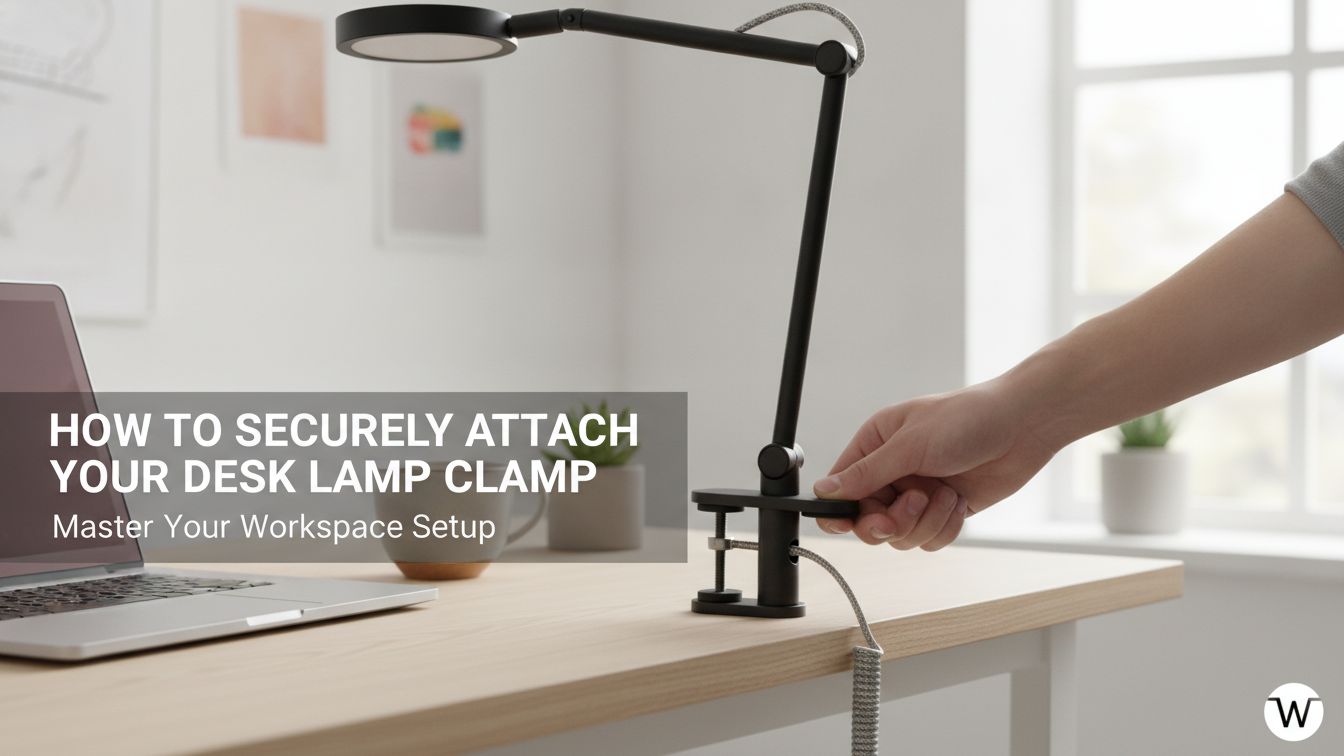

Welcome! Today, we’re going to learn all about how to attach a desk lamp clamp. This might seem like a small task. But doing it right makes a big difference. A well-placed lamp brightens your workspace. It helps your eyes feel better. It even makes your desk look tidier. We want to make sure your lamp is safe and steady. No wobbles allowed!
Why a Clamp Lamp is a Smart Choice
Clamp lamps are super popular. They save space on your desk. This is great if your desk is small. They also let you put light exactly where you need it. You can move them around easily. This makes them very flexible. We think they are a fantastic choice for any home office or study area.
Benefits We Love About Clamp Lamps
- Space-Saving: They don’t take up desk surface.
- Flexible Lighting: You can direct the light perfectly.
- Easy to Move: Change its spot whenever you like.
- Simple Setup: Most are very easy to attach.
Getting Ready: What We Need
Before we start, let’s gather our tools. We don’t need many. Most of what you need comes with your lamp. Making sure we have everything ready makes the job smooth.
Tools and Materials We Will Use
- Your Clamp Desk Lamp: This is the star of our show. Make sure all its parts are there.
- Your Desk or Shelf: This is where the lamp will sit.
- A Soft Cloth or Pad (Optional but Recommended): This helps protect your desk.
- A Screwdriver (Rarely Needed, but Good to Have): Some clamps might have a tiny screw.
 An image showing a new clamp desk lamp in its box, a desk edge, and a small soft cloth. Label the lamp, desk, and cloth.
Checking Your Desk
We need to make sure our desk is ready. Not all desks are the same.
- Desk Thickness: Most clamps fit desks between 0.5 inches and 2.5 inches thick. Check your lamp’s instructions.
- Desk Edge: Is there a good, flat edge for the clamp? Some desks have rounded edges. This can make clamping harder.
- Desk Material: Is your desk strong enough? Most wooden or metal desks are fine. Glass desks are usually not suitable for clamps. They can break.
Warning: Never attach a clamp lamp to a glass desk. It can cause serious damage or injury.
Step-by-Step Instructions: Attaching Your Lamp
Now, let’s get to the main part! We will go through each step carefully. Remember, slow and steady wins the race.
1. Unbox Your Lamp and Check Parts
First, we carefully open the box. Take out all the pieces. Lay them on a clean surface. We want to make sure everything is there. Look at the instructions that came with your lamp. They often have a list of parts.
- Find the lamp head.
- Find the arm.
- Locate the clamp base.
- Check for the power cord.
Sometimes, the arm and clamp are already together. Other times, you might need to connect them.
2. Assemble the Lamp (If Needed)
Many clamp lamps come in a few pieces. We might need to put the arm into the clamp base. Or attach the lamp head to the arm. This is usually very simple.
- Look for a slot or a screw mechanism.
- Gently push the arm into the clamp.
- Turn it until it feels secure.
Pro Tip: Don’t force anything. If it doesn’t fit easily, check the instructions again. You might be trying to put the wrong part in the wrong way.
3. Choose the Best Spot on Your Desk
This is an important step. Where do you want your light? Think about what you do at your desk.
- Reading: Place it over your book.
- Typing: Position it to light your keyboard.
- Writing: Make sure it doesn’t cast a shadow from your hand. If you are right-handed, put the lamp on your left. If left-handed, put it on your right.
We also need to think about the desk edge itself. Pick a sturdy, flat section.
4. Prepare the Clamp and Desk Edge
Now we get the clamp ready. We also prepare the spot on the desk.
- Open the Clamp: Most clamps have a screw or knob. Turn it to open the clamp jaws wide.
- Protect Your Desk (Optional): If you have a soft cloth or pad, place it on the desk edge. This goes where the clamp will sit. It stops scratches.
 A diagram showing a hand turning the screw on a clamp to open its jaws, with a small piece of fabric placed on the desk edge.
5. Position the Clamp on the Desk
Carefully place the open clamp over the edge of your desk. The bottom jaw of the clamp should be under the desk. The top jaw should be on top.
- Make sure it’s straight.
- Check that both jaws are gripping a good amount of desk material.
6. Tighten the Clamp Slowly
This is where we make it secure.
- Turn the screw or knob on the clamp.
- Turn it clockwise (to the right).
- Do this slowly.
- Watch the clamp jaws close around the desk.
7. Check for Stability and Tightness
Once it feels snug, we need to check it.
- Give the lamp a gentle wiggle.
- Does it feel firm?
- Is it rocking? If yes, tighten it a little more.
- We want it tight, but not too tight. Over-tightening can damage your desk.
Note: The goal is firm, not crushing. We don’t want to leave a dent in our desk.
8. Adjust the Lamp Arm and Head
Now that the clamp is secure, we can adjust the light.
- Move the lamp arm to the desired position. Many arms bend and swivel.
- Point the lamp head where you need the light most.
This is the fun part! You can play around until the light is just right.
9. Plug in the Power Cord
Almost done! We need power.
- Find the power cord.
- Plug one end into the lamp. (Some lamps have a built-in cord).
- Plug the other end into a wall outlet or power strip.
Warning: Always plug the lamp into the wall after it’s securely attached to the desk. This prevents accidental knocks or pulls.
10. Turn On Your Lamp and Enjoy!
Flick the switch! Your desk lamp should now light up your space. Take a moment to admire your work. You did it!
Common Pitfalls and How We Avoid Them
Even with simple tasks, sometimes things go wrong. We want to help you avoid these little bumps.
- Wobbly Lamp: If your lamp wobbles, it’s probably not tight enough. Go back to Step 7. Or, the desk edge might be uneven. Try a different spot.
- Scratched Desk: This happens if you don’t use a protector. Or if you over-tighten. Always use a soft pad if you can. Don’t overtighten.
- Lamp Falls Off: This is dangerous. It means the clamp wasn’t tight enough, or the desk edge was too thin/thick. Re-check your desk’s thickness (see “Checking Your Desk” section). Make sure the clamp is fully gripping the desk.
- No Light: Is the lamp plugged in? Is the bulb screwed in properly? Is the power switch on? Sometimes it’s just a simple switch!
 A troubleshooting flow chart infographic. Start with Problem: Lamp Not Working. Branch to Is it plugged in? (Yes/No). Branch to Is the bulb secure? (Yes/No). Branch to Is the switch on? (Yes/No). End with Check power outlet or Replace bulb.
Maintaining Your Clamp Lamp
Once your lamp is attached, we want it to stay great.
- Regular Checks: Every few months, give the clamp a gentle check. Make sure it’s still tight.
- Cleanliness: Wipe down the lamp and clamp with a dry cloth. Dust can build up.
- Cord Care: Keep the power cord tidy. Don’t let it get tangled or pinched.
Conclusion
We’ve walked through every step of attaching your desk lamp clamp. From unboxing to enjoying the light, we covered it all. It’s a simple task, but doing it right makes your workspace better and safer. Now you have a bright, secure lamp ready for all your tasks. We hope this guide was clear and helpful. Enjoy your well-lit space!
Frequently Asked Questions
Can I attach a clamp lamp to any type of desk?
A: Almost any, but not all. We recommend sturdy wood or metal desks. Avoid glass desks. Also, check your desk’s thickness. Most clamps fit desks between 0.5 and 2.5 inches thick.
My clamp lamp keeps slipping. What should I do?
First, ensure the clamp is fully tightened. If it still slips, the desk surface might be too smooth. Try placing a thin piece of rubber or felt between the clamp and the desk. This adds grip.
How do I know if I’ve tightened the clamp enough but not too much?
The lamp should feel very firm. Give it a gentle push; it shouldn’t wobble or move. If you see deep indentations on your desk, you’ve gone too far. Loosen it slightly. The goal is secure, not crushing.

I’m Emily Johnson, an affiliate marketer and blogger focused on lamps and lighting. I share honest reviews, simple buying guides, and practical tips. My goal is to help readers choose the right lamp for their space, style, and budget with confidence.