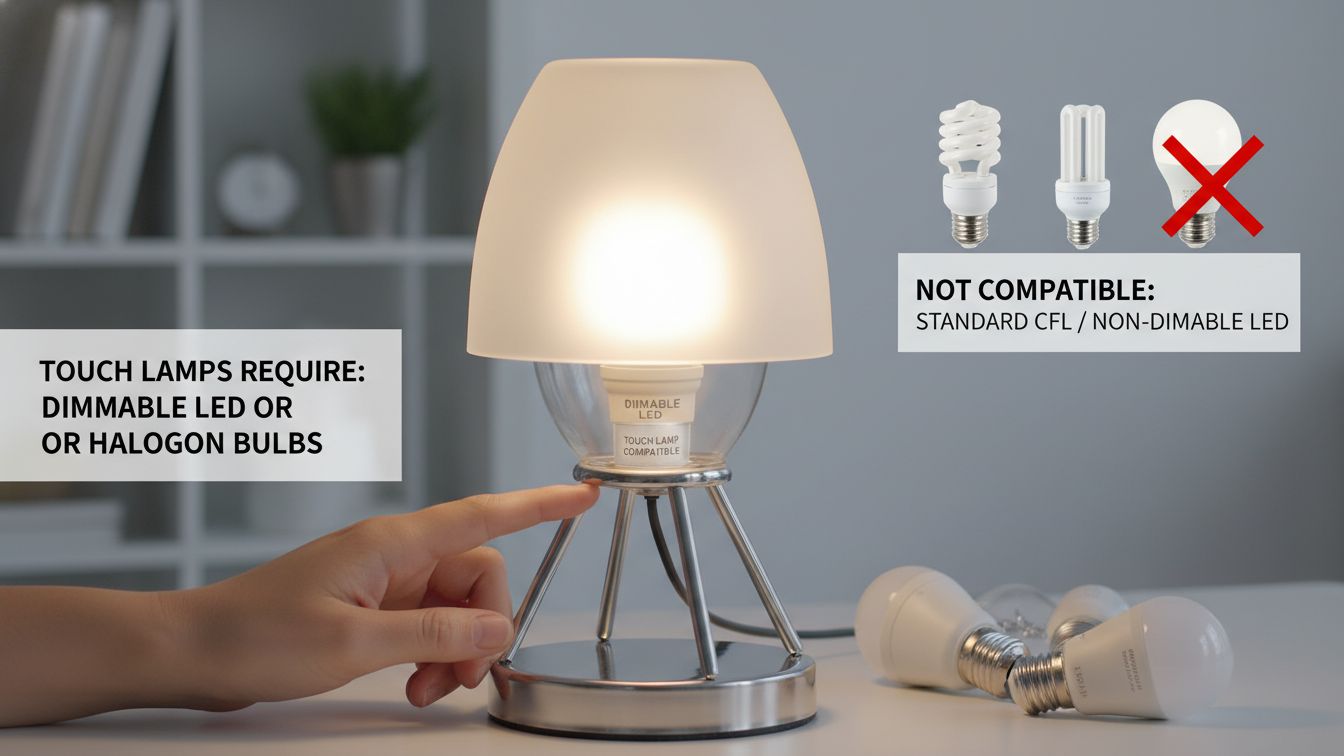
Touch lamps do not require special bulbs, but if the lamp is dimmable, it needs a dimmable bulb or LED equivalent for proper functionality. Before purchasing a touch lamp, consider the type of bulb required to avoid the inconvenience of setting up the lamp only to discover the need for an additional bulb.

Credit: www.pooky.com
Touch Lamps 101: How They Work
Touch lamps do not require special bulbs, but if you have a dimmable touch-sensitive lamp, it is recommended to use a dimmable bulb or LED equivalent. Be sure to check the requirements before purchasing to avoid any inconvenience.
Understanding The Touch-sensitive Technology
Touch lamps have become popular lighting choices in many households due to their convenience and ease of use. But have you ever wondered how they actually work? The technology behind touch lamps is quite fascinating.
The Role Of Capacitive Touch Sensors In Lamps
Capacitive touch sensors play a crucial role in the functioning of touch lamps. These sensors are located beneath the lamp’s surface and are capable of detecting changes in electrical charge when touched by a human hand.
Explaining The Basics Of Touch Lamp Circuitry
The circuitry in touch lamps is designed to respond to the electrical charge detected by the capacitive touch sensors. When a person touches the lamp, the sensors detect the change in charge and send a signal to the lamp’s circuitry. This signal triggers the lamp to turn on or off, depending on the current state.
It’s important to note that touch lamps don’t require special bulbs to function properly. You can use any standard bulb for your touch lamp. However, if you have a touch-sensitive lamp that is dimmable, it is recommended to use a dimmable bulb or LED equivalent to ensure smooth dimming functionality.
By understanding the touch-sensitive technology and the role of capacitive touch sensors in lamps, you can appreciate the engineering behind touch lamps and make informed decisions when choosing bulbs for your touch-sensitive lighting fixtures.
So the next time you’re in the market for a touch lamp, remember that they don’t require special bulbs, but dimmable touch lamps work best with dimmable bulbs or LED equivalents. Enjoy the convenience and simplicity of touch-sensitive lighting in your home!
Bulb Requirements For Touch Lamps
When it comes to touch lamps, you may have wondered if they require special bulbs. The truth is that touch lamps do not necessarily need special bulbs. You can use any standard bulb for your touch lamp. However, if your touch lamp is dimmable, you will need to consider the type of bulb you use to ensure compatibility and optimal functionality.
The Truth Behind The Need For Special Bulbs
Contrary to popular belief, touch lamps do not require special bulbs to function. You can use any standard incandescent, CFL, or LED bulb in your touch lamp. The touch-sensitive mechanism in the lamp does not discriminate between bulb types, allowing you the flexibility to choose the bulb that suits your preferences and energy-saving needs.
Compatibility With Standard Incandescent, Cfl, And Led Bulbs
Touch lamps are designed to work with a variety of bulb types, including standard incandescent, CFL, and LED bulbs. This means you can easily find a bulb that fits your touch lamp without the need for special or hard-to-find bulbs. Whether you prefer energy-efficient LED bulbs or the warm glow of incandescent bulbs, you can enjoy the convenience of touch control with any of these options.
Significance Of ‘dimmable’ Bulbs For Touch Lamps
If your touch lamp offers dimming functionality, it is important to choose a bulb that is also dimmable. Dimmable bulbs allow you to adjust the brightness of your touch lamp according to your desired ambiance. Using non-dimmable bulbs in a touch lamp with dimming capabilities may result in limited or inconsistent dimming performance. Therefore, it is recommended to opt for dimmable bulbs to fully enjoy the dimming feature of your touch lamp.
In conclusion, touch lamps do not require special bulbs. You can use any standard incandescent, CFL, or LED bulb in your touch lamp. However, if your touch lamp is dimmable, it is advisable to choose a dimmable bulb for optimal performance. By understanding the bulb requirements for touch lamps, you can ensure a hassle-free experience with your touch lamp and create the perfect lighting atmosphere in your space.
Choosing The Right Bulb: A Guide
When it comes to touch lamps, selecting the right bulb is crucial for optimal functionality and performance. Understanding the impact of bulb types, wattage, and lumens can help you make an informed decision. In this guide, we will walk you through the process of choosing the right bulb for your touch lamp, ensuring that you can easily set up and enjoy your lamp without any hassles.
Identifying Dimmable Versus Non-dimmable Bulbs
Before purchasing a bulb for your touch lamp, it’s important to identify whether your lamp is dimmable or non-dimmable. Dimmable touch lamps require a compatible dimmable bulb or LED equivalent. Using a non-dimmable bulb in a dimmable touch lamp may result in flickering or limited dimming capabilities. To avoid any disappointments, always check if your touch lamp is dimmable before selecting a bulb.
Selecting The Right Wattage And Lumens For Touch Lamps
Choosing the appropriate wattage and lumens for your touch lamp is essential for creating the desired lighting ambiance. Higher wattage bulbs produce more light, while lower wattage bulbs create a softer, more gentle glow. To determine the ideal wattage for your touch lamp, consider the size of the lampshade and the brightness level you prefer. Additionally, checking the manufacturer’s guidelines for wattage recommendations is advisable.
Furthermore, lumens are another factor to consider when selecting a bulb for your touch lamp. Lumens measure the brightness of the bulb, with higher lumens indicating brighter light output. It’s recommended to match the lumens of your chosen bulb with the lumens specified by the touch lamp manufacturer to ensure optimal performance.
The Impact Of Bulb Types On Touch Lamp Functionality
The type of bulb you choose for your touch lamp can significantly affect its functionality. While touch lamps generally do not require a special bulb, some lamps may require certain types to properly respond to the touch mechanism. Before purchasing a bulb, check the lamp’s user manual or consult with the manufacturer to determine if there are any specific bulb requirements.
Moreover, using energy-efficient bulbs, such as CFL or LED bulbs, is highly recommended for touch lamps. These bulbs not only save energy but also provide long-lasting and consistent lighting performance. When using CFL or LED bulbs, ensure that they are compatible with the lamp’s touch-sensitive function to avoid any compatibility issues.
In conclusion, choosing the right bulb for your touch lamp is crucial for optimal functionality and performance. By considering whether your lamp is dimmable versus non-dimmable, selecting the appropriate wattage and lumens, and understanding the impact of different bulb types, you can ensure a seamless and enjoyable experience with your touch lamp.
Matching Bulbs With Touch Lamp Features
Touch lamps do not require special bulbs, but if the lamp is dimmable, it is recommended to use a dimmable bulb or LED equivalent for optimal functionality. Make sure to consider the type of bulb needed before purchasing a touch lamp to avoid any inconvenience.
Analyzing Bulb Qualities For Multi-brightness Settings
When it comes to touch lamps with multi-brightness settings, it is essential to consider the qualities of the bulb you choose. These touch lamps require a dimmable bulb or LED equivalent to function properly.
By selecting a bulb with this specific feature, you can enjoy the convenience of adjusting the brightness levels with a simple touch. Without the appropriate bulb, you might find yourself disappointed when setting up the lamp, only to realize that you need to purchase a compatible bulb.
Investigating Customer Experiences With Different Bulb Types
Considering customer experiences with different bulb types is crucial in understanding which bulbs work best with touch lamps. According to lighting consultant Terry McGowan, touch lamps with a mechanical switch can work with any CFL or LED bulb. However, it is important to note that some customers have expressed dissatisfaction with the adjustability of certain light bulbs in touch lamps.
They mention that bulbs may work in the lamp but not respond to touch, which can be frustrating. Therefore, it is advisable to choose a bulb that is specifically recommended for touch lamps to ensure optimal performance.
Reviewing Brand Recommendations For Optimal Touch Lamp Performance
To achieve optimal touch lamp performance, it is beneficial to review brand recommendations for bulb selection. While touch lamps do not necessarily require a special bulb, some brands may recommend specific types to enhance responsiveness to the touch mechanism. By following brand recommendations, you can ensure that your touch lamp functions seamlessly with the bulb you choose.
Troubleshooting Common Bulb Issues
One of the common misconceptions about touch lamps is that they can turn on by themselves. However, this is not true. Touch lamps are designed to be activated by your touch, and they require a physical touch to turn on or off. Therefore, if your touch lamp seems to be turning on by itself, there might be another explanation for this behavior.
If your touch lamp fails to respond, there are a few troubleshooting steps you can try:
- Check the bulb: Ensure that you are using a compatible bulb for your touch lamp. Touch-sensitive lamps that are dimmable usually require a dimmable bulb or LED equivalent. If you are using the wrong type of bulb, the lamp may not respond to your touch.
- Verify the lamp’s connection: Make sure the lamp is securely plugged into a functioning power outlet. Sometimes, a loose connection can cause the lamp to fail to respond to touch.
- Reset the lamp: Some touch lamps have a reset function that can help resolve any issues. Check the lamp’s manual or manufacturer’s website for instructions on how to reset your specific model.
- Clean the lamp: Over time, dirt and dust can accumulate on the touch-sensitive surface of the lamp, affecting its responsiveness. Use a soft cloth or mild cleaning solution to gently clean the lamp’s surface.
- Contact the manufacturer: If none of the above steps work, it is recommended to reach out to the manufacturer for further assistance. They may be able to provide additional troubleshooting steps or offer a solution.
Some users express dissatisfaction with the adjustability of the light bulb in touch lamps. They mention that the light levels do not meet their expectations or that the bulb does not dim or brighten as desired. In such cases, it is important to understand that touch lamps do not necessarily require a special bulb, but they do require a bulb that is compatible with their dimmable feature.
To ensure optimal bulb adjustability in touch lamps, consider the following:
- Use a dimmable bulb: If your touch lamp offers different levels of brightness, it is recommended to use a dimmable bulb to achieve the desired lighting effect. This will ensure smooth and accurate adjustments of the light intensity.
- Choose the right bulb type: Not all bulbs are compatible with touch lamps. If you are unsure about which bulb to use, refer to the lamp’s manual or contact the manufacturer for specific recommendations.
- Experiment with different bulb brands: In some cases, the compatibility between the touch lamp and the bulb brand can affect the adjustability. If you are experiencing issues with bulb adjustability, try using bulbs from different brands to find the one that works best for your touch lamp.
By following these steps, you can troubleshoot common bulb issues in touch lamps and ensure a satisfying lighting experience.
Frequently Asked Questions Of Do Touch Lamps Need Special Bulbs
What Kind Of Bulbs Go In A Touch Lamp?
You can use any standard bulb for a touch lamp. There is no need for a special bulb. Just make sure to check if your touch-sensitive lamp is dimmable, in which case you will need a dimmable bulb or LED equivalent.
Why Don T They Make Touch Lamps Anymore?
Touch lamps are not as common anymore because they may not work well with LEDs or dimmable LEDs, which most people prefer to use nowadays. Trailing edge devices, like LEDs, may not be compatible with touch lamp technology.
Additionally, touch lamps may require specific bulbs to respond to the touch mechanism, although not all touch lamps have this requirement.
It is recommended to use a dimmable bulb for a touch lamp to adjust brightness levels.
Does It Matter What Bulb You Put In A Lamp?
No, it doesn’t matter what bulb you put in a lamp as long as the wattage is equal to or less than the maximum wattage specified on the fixture. Using a high wattage bulb in a low wattage fixture is dangerous and can cause a fire hazard.
LED bulbs are cool to the touch and pose less risk of fire or burn.
Are Led Bulbs Cool To The Touch?
LED bulbs are cool to the touch because they do not contain filaments that heat up like incandescent bulbs. This makes them safer and reduces the risk of fire and burn hazards.
Conclusion
When it comes to touch lamps, it’s important to choose the right bulb to ensure proper functionality. For dimmable touch-sensitive lamps, a dimmable bulb or LED equivalent is recommended. This will prevent any disappointment when setting up the lamp and realizing that a specific bulb is required.
However, for touch lamps without dimming capabilities, any standard bulb can be used. So, whether it’s a dimmable touch lamp or not, make sure to select the appropriate bulb for a seamless and satisfying touch experience.

I’m Emily Johnson, an affiliate marketer and blogger focused on lamps and lighting. I share honest reviews, simple buying guides, and practical tips. My goal is to help readers choose the right lamp for their space, style, and budget with confidence.