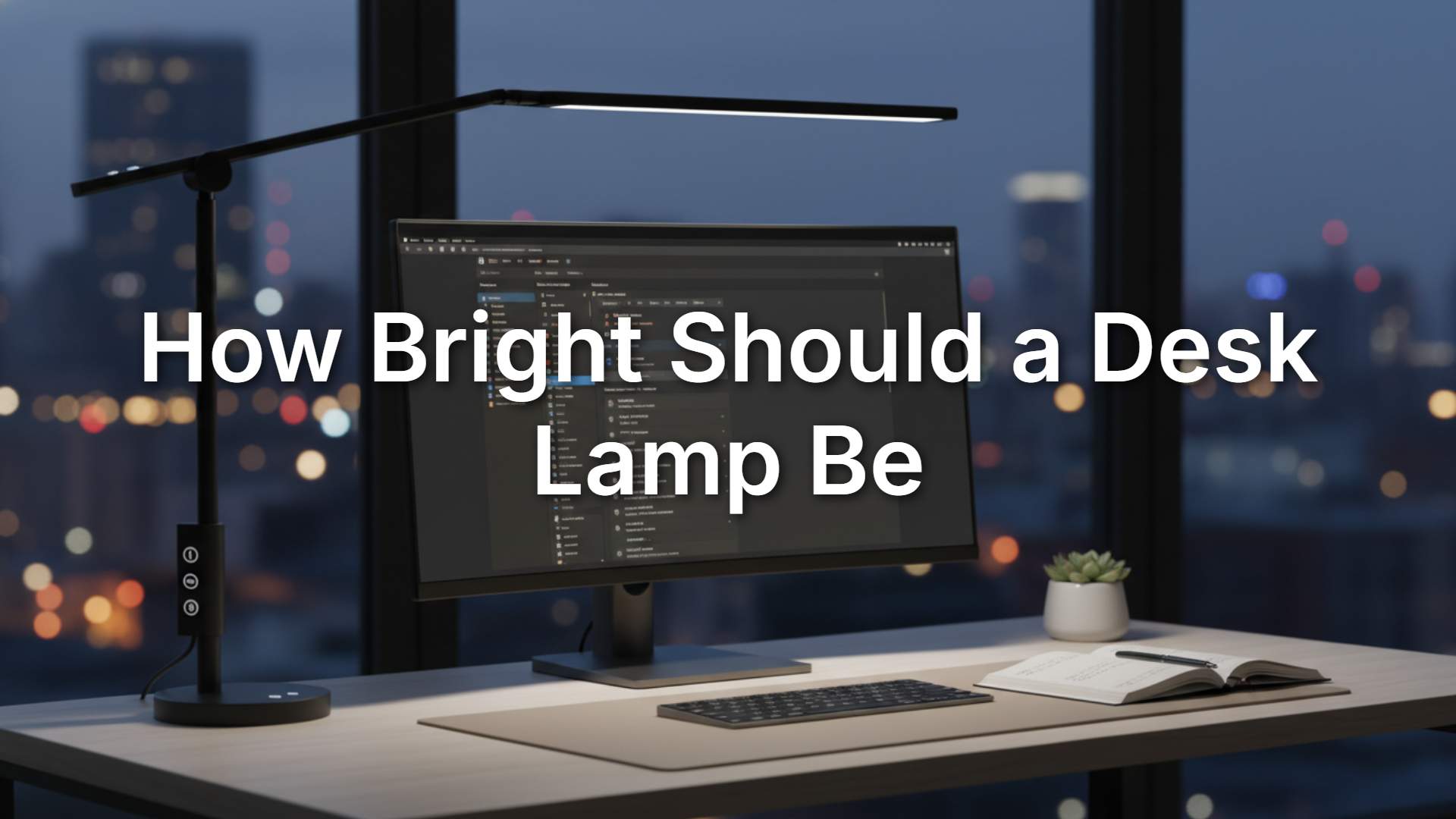
Finding the right desk lamp brightness is important. It helps you work better and keeps your eyes healthy. Many people wonder, “How bright should a desk lamp be?” The answer is not always simple.
Good lighting makes a big difference. It can boost your focus and reduce eye strain. Let’s explore how to choose the perfect light for your desk.
Lumens: Your Guide to Desk Lamp Brightness

Lumens tell you how much light a bulb gives off. More lumens mean a brighter light. It’s like measuring how much water comes from a faucet.
For a desk lamp, you want enough lumens but not too many. Too many can cause glare. Too few can make you squint.
How Many Lumens Do You Need?
General Tasks: For reading or computer work, aim for 300-500 lumens. This range is often ideal.
Detailed Work: If you do hobbies like crafting, you might need 500-800 lumens. This provides extra clarity.
“Lumens are the true measure of a bulb’s brightness, not watts.” This is a key point to remember.
Lux and Lighting Levels for Different Tasks: How Bright Should a Desk Lamp Be?

Lux measures how much light hits a surface. It’s about light intensity on your desk itself. This is different from lumens, which measure the bulb’s total output.
Different tasks need different Lux levels. Knowing this helps you pick the right desk lamp.
Recommended Lux Levels for Common Tasks
| Task | Recommended Lux Level |
|---|---|
| General Reading | 300-500 Lux |
| Computer Work | 300-500 Lux |
| Writing | 400-600 Lux |
| Detailed Hobbies | 750-1000+ Lux |
This table shows a good starting point. Adjust based on your eyes and environment. Consider how bright should a desk lamp be for your specific needs.
Color Temperature: Kelvin and Its Impact on Your Workspace

Color temperature describes the color of the light. It’s measured in Kelvin (K). This affects your mood and how you see things.
Different temperatures are good for different times or tasks. Warm light is cozy, cool light is energizing.
Understanding the Kelvin Scale
| Light Type | Kelvin (K) | Description | Typical Use |
|---|---|---|---|
| Warm Light | 2700K | Relaxing, cozy | Bedrooms, living rooms |
| Neutral Light | 3500K | Balanced, general | Kitchens, hallways |
| Cool Light | 5000K | Bright, productive | Offices, study areas |
| Daylight | 6500K | Very bright, crisp | Workshops, task lighting |
Warm White (2700K-3000K): Good for relaxing. It feels cozy.
Cool White (4000K-5000K): Best for focus and work. It mimics daylight.
Daylight (5000K-6500K): Very bright and crisp. Great for tasks needing high detail.
Glare and Eye Strain: Why Proper Brightness Matters

Wrong brightness can hurt your eyes. Too dim, and you strain to see. Too bright, and glare can be a problem. Glare is harsh, direct light or reflections.
Glare makes your eyes tired. It can also cause headaches. This is why knowing how bright should a desk lamp be is crucial.
Avoiding Eye Strain
Position your lamp: Make sure light doesn’t shine directly into your eyes.
Angle the light: Point it at your work, not at reflective surfaces.
Use diffusers: Some lamps have covers that soften the light. This reduces harshness.
“Preventing eye strain is a key benefit of choosing the right desk lamp brightness and position.”
Adjustability and Dimming Features for Perfect Desk Lamp Brightness

An adjustable desk lamp is a smart choice. You can change its height and angle. This helps direct light exactly where you need it.
Dimming features are even better. They let you control the brightness. This means your lamp can be perfect for any task or time of day.
Benefits of Adjustability
Task Versatility: Easily switch from reading to computer work.
Glare Reduction: Move the light to avoid reflections.
Personal Comfort: Adjust to your preferred lighting level.
Choosing a lamp with these features answers how bright should a desk lamp be at any moment.
Desk Lamp Placement and Coverage Area

Where you put your desk lamp matters a lot. Its position affects how well your desk is lit. It also impacts whether you get glare.
Think about the size of your desk. Consider what you usually do there. This will guide your placement.
Optimal Placement Tips
Dominant Hand: If you are right-handed, place the lamp on your left. This avoids shadows from your hand.
Even Spread: Position the lamp to cover your whole work area. Avoid bright spots and dark corners.
Avoid Screen Glare: Make sure the light doesn’t reflect off your computer screen. This is very important for eye comfort.
Personal Preferences and Environment: How Bright Should a Desk Lamp Be for You?

Everyone is different. What feels bright to one person might be dim to another. Your age can also affect how much light you need.
The overall lighting in your room also plays a role. A bright room needs less lamp brightness. A dark room needs more.
Factors to Consider
Your Vision: Older eyes often need more light to see clearly.
Room Lighting: Is your room already bright or dark? This impacts your lamp choice.
Time of Day: You might want brighter light during the day, and softer light at night.
Listen to your body. If your eyes feel tired, adjust your lamp. This is your personal answer to how bright should a desk lamp be.
Health Benefits of Optimal Desk Lighting

Good lighting does more than just help you see. It has real health benefits. It can improve your mood and energy levels.
Poor lighting can lead to headaches and fatigue. It can even mess with your sleep cycle.
Key Health Benefits
Reduced Eye Strain: Less squinting means less eye fatigue.
Improved Focus: Proper light helps you concentrate better.
Better Mood: Natural-looking light can lift your spirits.
Enhanced Sleep Quality: Avoiding harsh blue light at night helps your body prepare for rest.
Think of your desk lamp as a tool for health. It supports your well-being.
Smart Desk Lamps and Modern Features for Brightness Control

Technology has made desk lamps even better. Smart lamps offer amazing control. You can change brightness and color temperature with ease.
Many smart lamps connect to apps. Some even work with voice commands. This makes finding the perfect light simple.
Smart Features
App Control: Adjust settings from your phone.
Voice Control: Use commands like “Alexa, dim my desk lamp.”
Schedules: Set your lamp to change brightness throughout the day.
Adaptive Lighting: Some lamps can adjust based on room light.
These features make it easier to always have the right answer to how bright should a desk lamp be.
Finding Your Perfect Desk Lamp Brightness
Choosing the right desk lamp brightness is a mix of science and personal feel. You’ve learned about lumens, lux, and Kelvin. You’ve also seen how placement and personal needs matter.
Remember to consider your tasks and your eyes. An adjustable lamp with dimming is often the best choice. It allows you to fine-tune the light.
Ultimately, the perfect answer to “How bright should a desk lamp be?” depends on you. Experiment and find what works best for your comfort and productivity. Your eyes will thank you.
Frequently Asked Questions
How many lumens should a desk lamp have?
For most desk tasks like reading or computer work, a desk lamp should provide about 300-500 lumens. If you do detailed work, you might need 500-800 lumens for better clarity.
What color temperature is best for a desk lamp?
Warm white light (2700K-3000K) is good for relaxing. Cool white light (4000K-5000K) is generally best for focus and productivity at a desk, as it mimics natural daylight.
Where should I place my desk lamp to avoid shadows and glare?
Place the desk lamp on the opposite side of your dominant hand (e.g., left side if you’re right-handed) to avoid shadows. Ensure the light covers your work area evenly and doesn’t cause glare on your screen.
What happens if my desk lamp is too bright or too dim?
Too dim light makes you strain to see, causing eye fatigue. Too bright light can cause glare, leading to headaches and eye discomfort. Both can reduce focus and productivity.
Is an adjustable and dimmable desk lamp worth it?
Yes, an adjustable desk lamp with dimming features is highly recommended. It allows you to change the brightness and angle to suit different tasks, times of day, and personal comfort levels, preventing eye strain.
Meta Description

I’m Emily Johnson, an affiliate marketer and blogger focused on lamps and lighting. I share honest reviews, simple buying guides, and practical tips. My goal is to help readers choose the right lamp for their space, style, and budget with confidence.