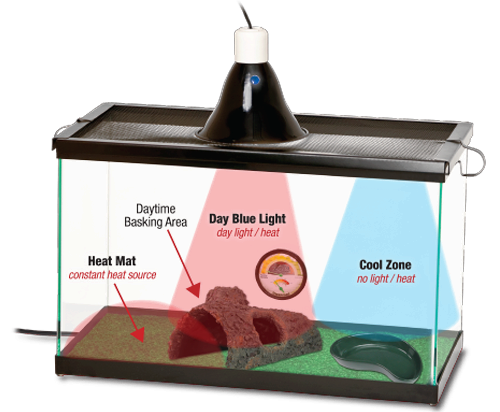
Reptile enthusiasts often debate the merits of heat lamps versus basking lamps in providing optimal conditions for their pets. The choice between these two lighting solutions can significantly impact the well-being of reptiles, as temperature regulation is crucial for their health. Understanding the subtle yet vital differences between these lamps is essential for ensuring proper husbandry.
Heat lamps, historically utilized for consistent thermal support, offer a widespread warmth ideal for creating a stable environment. Meanwhile, basking lamps simulate the sun’s natural rays, providing a focused heat spot that encourages natural basking behavior. A study revealed that reptiles exposed to basking lamps exhibit more natural activity patterns compared to those under general heat lamps.
| Feature | Heat Lamp | Basking Lamp |
|---|---|---|
| Primary Function | Provides general warmth | Creates focused heat spots for basking |
| Light Emission | Minimal visible light | Produces both light and heat |
| UVB Light | No UVB light | Often emits UVB rays |
| Energy Consumption | Generally lower energy use | Higher energy consumption |
| Durability | Varies; ceramic options last longer | Incandescent may burn out quicker; halogen lasts longer |
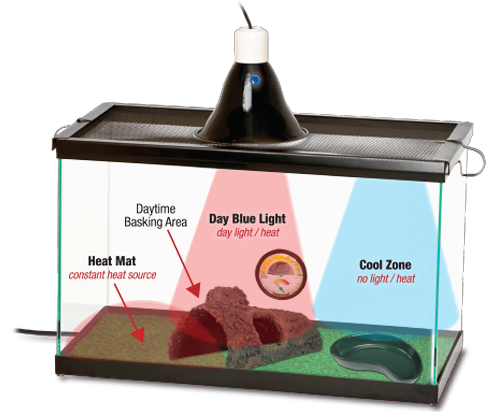
Overview of Heat Lamp and Basking Lamp
Heat lamps and basking lamps are important tools for reptile owners. They help maintain the right temperature for the animals. Each has its own features and benefits.
Overview of Heat Lamp
Heat lamps are designed to provide warmth for reptiles. These lamps emit a steady stream of heat, creating a warm environment. This helps reptiles stay healthy and active.
Many heat lamps are adjustable, allowing users to control the temperature. This feature is important for different types of reptiles. Each species has its own preferred temperature range.
Heat lamps are also available in various wattages. Some are stronger and provide more heat, while others are milder. Choosing the right wattage depends on the reptile’s needs.
These lamps can be used both day and night. Some have special bulbs that don’t disturb the reptile’s sleep. This makes them versatile for round-the-clock use.
Heat lamps need to be placed at a safe distance. This prevents overheating and burns. Proper installation ensures the reptile’s safety and comfort.
Overview of Basking Lamp
Basking lamps mimic sunlight, offering a concentrated heat spot. Reptiles naturally seek out these warm zones to regulate their body temperature. This behavior is called basking.
Most basking lamps produce both light and heat. The light is similar to the sun, which is beneficial for reptiles. It helps them produce vitamin D, which is essential for bone health.
Basking lamps are typically placed above the reptile’s basking area. This setup allows the heat to focus on one spot. Reptiles can move into and out of this zone as needed.
These lamps come in different intensities and types, like halogen or incandescent. Each type has its own advantages. Choosing the right one depends on the reptile’s natural habitat.
Basking lamps are usually turned off at night. This helps create a natural day-night cycle. Proper timing supports healthy behaviors and routines.
Key Features Compared: Heat Lamp vs Basking Lamp
Let’s compare some key features of heat lamps and basking lamps. Each has strengths that benefit reptiles in different ways. Here are five important features to consider.
Temperature Range
Heat lamps provide a wide range of temperatures. They can warm a large area in the enclosure. This creates a stable environment for reptiles.
Basking lamps focus heat in a specific spot. They mimic the sun’s natural rays. This encourages reptiles to bask and absorb warmth.
Overall, heat lamps are better for general warmth. Basking lamps are ideal for sun-like heat spots. Each serves a unique purpose in temperature control.
Light Spectrum
Heat lamps usually do not emit much visible light. They focus more on providing heat. This can be useful for nighttime use.
Basking lamps produce both heat and light. They often emit infrared and UVB rays. These rays are beneficial for a reptile’s health.
Reptiles need UVB light to produce vitamin D. This helps them absorb calcium. According to this expert opinion, UVB light is crucial for preventing metabolic bone disease.
Energy Efficiency
Heat lamps can be more energy-efficient. They use less electricity to provide warmth. This can save on energy costs.
Basking lamps might use more energy. They provide both heat and light. This dual function can be more power-consuming.
Choosing an energy-efficient lamp is important. It reduces operating costs. This is a consideration for long-term use.
Durability
Heat lamps are available in different types. Some are more durable than others. Ceramic heat lamps, for instance, last longer.
Basking lamps also vary in durability. Incandescent bulbs may burn out quicker. Halogen bulbs tend to last longer.
Choosing a durable lamp depends on the type. More durable options often mean fewer replacements. This can be more cost-effective.
Purpose and Benefits
Heat lamps provide a general warmth environment. This can be good for reptiles that need a stable temperature. It supports overall comfort.
Basking lamps encourage natural basking behavior. They help reptiles regulate their body temperature in a sun-like way. This supports their daily activities.
Each lamp has specific benefits. Choosing between them depends on the reptile’s needs. Both help maintain a healthy habitat.
Heat Lamp Vs Basking Lamp: Feature Comparison
Comparing the features of heat lamps and basking lamps helps reptile owners choose the best option. Each lamp type has unique characteristics that benefit reptiles differently. Below is a detailed comparison of 10 features.
| Feature | Heat Lamp | Basking Lamp |
|---|---|---|
| Primary Function | Provides general warmth | Creates focused heat spots for basking |
| Light Emission | Minimal visible light | Produces both light and heat |
| UVB Light | No UVB light | Often emits UVB rays |
| Energy Consumption | Generally lower energy use | Higher energy consumption |
| Durability | Varies; ceramic options last longer | Incandescent may burn out quicker; halogen lasts longer |
| Day-Night Cycle | Can be used day and night | Mostly used during the day |
| Temperature Control | Wide range of temperatures | Concentrated heat in specific area |
| Installation | Requires a safe distance | Needs to be placed above basking zone |
| Cost | Generally more affordable | Can be more expensive due to dual function |
| Natural Behavior | Supports general comfort | Encourages natural basking behavior |
The Good and The Bad about Heat Lamps & Basking Lamps
Both heat lamps and basking lamps have their own sets of advantages and disadvantages. Understanding these can help reptile owners make better decisions for their pets. Here is a table comparing the pros and cons of each type.
| Heat Lamps (Pros) | Heat Lamps (Cons) | Basking Lamps (Pros) | Basking Lamps (Cons) |
|---|---|---|---|
| Provides stable heat | May lack UVB light | Simulates sun’s natural rays | Consumes more energy |
| Cost-effective | Can be less durable | Encourages natural behaviors | Usually costlier |
| Energy efficient | Potential for burns if not placed correctly | Beneficial UVB light | Needs to be switched off at night |
| Can be used day and night | May disturb sleep if not covered | Supports vitamin D production | Shorter lifespan for incandescent bulbs |
| Easy to install | Limited to providing general warmth | Creates focused heat spots | Requires specific placement above basking area |
Price Comparison between Heat Lamps & Basking Lamps
Understanding the price differences between heat lamps and basking lamps can help make an informed choice. Below is a table that compares the costs associated with each type of lamp.
| Heat Lamps | Basking Lamps |
|---|---|
| Initial Cost: $10 – $20 | Initial Cost: $15 – $30 |
| Energy Cost: Lower | Energy Cost: Higher |
| Durability: 6 months to 1 year | Durability: 3 to 6 months |
| Bulb Replacement: Less frequent | Bulb Replacement: More frequent |
| Maintenance Costs: Lower | Maintenance Costs: Higher |
Frequently Asked Questions
Heat lamps and basking lamps play crucial roles in reptile care, impacting their health and behavior. Here are some frequently asked questions to help you better understand their differences and uses.
How do heat lamps and basking lamps differ in their functions?
Heat lamps are primarily used to create a warm ambient temperature in an enclosure. They provide a broad range of heat suitable for maintaining a stable environment for reptiles.
On the other hand, basking lamps focus on providing intense heat in a specific area. This mimics natural sunlight and encourages reptiles to engage in basking behaviors, which are crucial for their health.
Are UVB rays important in heat lamps versus basking lamps?
Heat lamps generally do not emit UVB rays; their main function is to provide heat. This makes them suitable for nighttime use when UVB light is not needed.
Basking lamps, however, often emit UVB rays, which are essential for reptiles. UVB light helps reptiles synthesize vitamin D, promoting calcium absorption and preventing metabolic bone disease.
Which type of lamp is more energy-efficient?
Heat lamps are generally more energy-efficient because they focus solely on emitting heat. This often results in lower energy consumption compared to basking lamps.
Basking lamps provide both light and heat, making them more energy-consuming. However, their dual function can be more beneficial for reptile health, despite the higher energy cost.
What about the durability of heat lamps and basking lamps?
The durability of heat lamps can vary significantly depending on the type. Ceramic heat lamps are known for their longevity, often lasting several months to a year.
Basking lamps, especially incandescent ones, tend to have a shorter lifespan. Halogen basking lamps, however, offer better durability, making them a more reliable choice.
Which lamp is more suitable for a day-night cycle?
Heat lamps are versatile and can be used both day and night, making them ideal for maintaining a stable temperature throughout the day. They generally have low light emission, which doesn’t disrupt nocturnal behaviors.
Basking lamps are typically used only during the day to simulate sunlight and encourage natural basking behaviors. Turning them off at night helps create a natural day-night cycle for the reptile.
Halogen vs Mercury Vapor | This or That?
Final Thoughts
Choosing between a heat lamp and a basking lamp ultimately depends on your reptile’s specific needs. Both types of lamps offer unique benefits that can significantly impact the well-being of your pet. Understanding their differences will help in creating a healthy environment.
Remember, proper temperature regulation is crucial for reptile health. By carefully considering the pros and cons of each lamp, you can make an informed choice. Your knowledge and attention to detail will ensure your reptile thrives.

I’m Emily Johnson, an affiliate marketer and blogger focused on lamps and lighting. I share honest reviews, simple buying guides, and practical tips. My goal is to help readers choose the right lamp for their space, style, and budget with confidence.