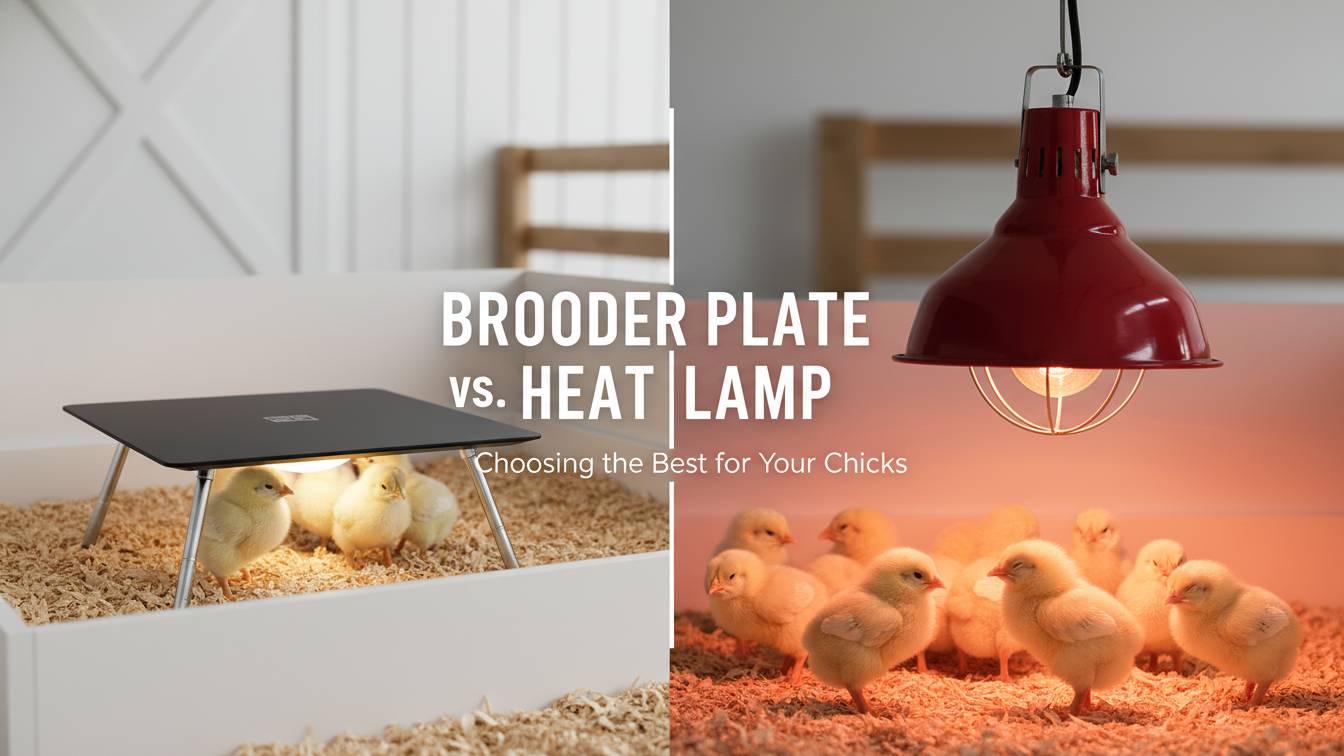

Raising baby chicks brings immense joy. But providing them with the right warmth is crucial for their survival and growth. Deciding between a brooder plate vs. heat lamp often puzzles new chicken keepers. Both options aim to keep chicks toasty, mimicking a mother hen’s warmth. Yet, they operate differently and come with distinct pros and cons. Let’s dive into which method might be best for your flock.
What is a Brooder Plate? Gentle Warmth Defined

A brooder plate is an electric warming device. It’s designed to radiate heat downwards, similar to how a mother hen sits on her chicks. Chicks huddle directly against the warm surface for comfort. This mimics a natural brooding experience. Brooder plates typically come with adjustable legs, allowing you to raise or lower the plate as chicks grow. This ensures they always have the perfect amount of contact heat.
What is a Heat Lamp? Intense Heat Explained

A heat lamp uses an infrared bulb to project warmth. These lamps usually hang above a brooder box, radiating heat over a wider area. The red light bulb is common, as it’s thought to reduce pecking issues among chicks. Heat lamps are a traditional brooding method. Many keepers have used them for generations.
Safety First: Fire Risks & Burns

Safety is paramount when brooding chicks. Heat lamps, while effective, carry significant fire risks. They get incredibly hot. If a lamp falls or comes into contact with bedding, a fire can ignite quickly. The bulbs can also shatter, potentially harming chicks. Always secure heat lamps with chains and never rely on clamps alone. Brooder plates offer a much safer alternative. They operate at lower surface temperatures. This drastically reduces the risk of fire or accidental burns to your chicks.
Energy Efficiency: Cost Over Time

Thinking about your electricity bill? Brooder plates are significantly more energy-efficient. They use far less wattage than a typical heat lamp. A heat lamp might consume 150-250 watts. A brooder plate often uses only 20-40 watts. This difference adds up quickly over several weeks of brooding. You’ll see noticeable savings on your utility bill, making them a greener choice too.
Chick Comfort & Natural Behavior

Chicks instinctively seek warmth under their mother’s body. A brooder plate mimics this natural sensation. Chicks can move in and out from under the plate as needed. This self-regulation promotes healthier, happier chicks. They learn to manage their own temperature. Heat lamps, conversely, provide ambient heat. Chicks can’t “hide” from the light or constant warmth as easily. This can sometimes lead to overheating or stress. Brooder plates also don’t emit light, allowing chicks to experience natural day-night cycles. This is crucial for their development and rest.
Durability & Lifespan: Long-Term Investment

Most brooder plates are built to last. They feature robust construction, often made from durable plastics or metals. There are no fragile bulbs to break or replace. With proper care, a good brooder plate can serve you for many brooding seasons. Heat lamps, however, rely on specialized bulbs. These bulbs can burn out, shatter, or lose effectiveness over time. You’ll need to purchase replacement bulbs regularly. This adds to the ongoing cost and hassle.
Ease of Use & Setup: Simplicity vs. Complexity

Setting up a brooder plate is often straightforward. You simply place it in the brooder, plug it in, and adjust the legs. Most designs are intuitive and user-friendly. Cleaning is usually a breeze too. Heat lamps require more careful setup. You need to ensure they are securely hung at the correct height. The distance from the chicks is critical for proper temperature. This can involve measuring and re-adjusting as chicks grow. It’s a bit more fiddly.
Temperature Control: Precision for Growth

Brooder plates offer more localized and consistent warmth. Chicks learn to seek out the optimal temperature zone under the plate. Some advanced models even include thermostats for precise temperature control. This allows for fine-tuning based on chick age and environmental conditions. Heat lamps heat the air in the brooder. Achieving precise, consistent temperatures can be harder. Ambient room temperature affects the brooder’s overall warmth. You often rely on raising or lowering the lamp to adjust the heat. This method is less exact.
Initial Cost Comparison: Upfront Expense

The initial sticker price often favors the heat lamp. A basic heat lamp setup, including the fixture and bulb, is typically less expensive upfront. You might spend $20-$40. Brooder plates usually have a higher initial cost, ranging from $50-$100 or more. However, remember the long-term savings. The energy efficiency and durability of a brooder plate can quickly offset that higher initial investment. Consider it a wise long-term purchase.
Best Use Cases: When to Choose Which

Choose a Brooder Plate if:
- You prioritize safety and fire prevention.
- Energy efficiency and lower electricity bills are important.
- You want to provide a natural brooding experience.
- You’re raising a smaller batch of chicks (up to 50, depending on plate size).
- Your brooder is indoors or in a relatively stable environment.
Choose a Heat Lamp if:
- Initial budget is extremely tight, and you need a quick, low-cost solution.
- You’re brooding a very large number of chicks that can’t fit under plates.
- Your brooder is in a very cold, drafty environment where ambient heat is critical.
- You are willing to diligently monitor and secure the lamp.
Brooder Plate versus Heat Lamp: Feature Comparison
When deciding between a brooder plate and a heat lamp, it’s important to compare their key features. This helps ensure you choose the best option for your poultry needs. Here’s a detailed comparison of both.
| Feature | Brooder Plate | Heat Lamp |
|---|---|---|
| Energy Usage | 14 watts | 250 watts |
| Safety | Low fire risk | High fire risk |
| Heat Distribution | Even, from plate surface | Concentrated under lamp |
| Maintenance | Low maintenance | Frequent cleaning needed |
| Initial Cost | $30-$70 | $10-$20 |
| Operational Cost | Low | High |
| Setup | Easy to set up | Requires careful installation |
| Comfort for Chicks | Feels like mother hen | Warm area underneath |
| Durability | Long-lasting | Bulbs may need replacement |
| Availability | Becoming more common | Readily available |
The Good and The Bad
Every product has its pros and cons. This table highlights the good and bad aspects of both brooder plates and heat lamps. This will help you make an informed decision.
| Pros | Cons |
|---|---|
| Brooder Plate: Energy-efficient | Brooder Plate: Higher initial cost |
| Heat Lamp: Lower upfront cost | Heat Lamp: High energy consumption |
| Brooder Plate: Safer, lower fire risk | Heat Lamp: Potential fire hazard |
| Heat Lamp: Covers larger area | Brooder Plate: Smaller coverage area |
| Brooder Plate: More natural for chicks | Heat Lamp: Frequent bulb replacement |
Price Comparison
Price is an important factor when choosing between a brooder plate and a heat lamp. This table compares their costs. This will help you understand the financial aspects of each option.
| Brooder Plate | Heat Lamp |
|---|---|
| Initial Cost: $30-$70 | Initial Cost: $10-$20 |
| Energy Cost: Low | Energy Cost: High |
| Maintenance Cost: Low | Maintenance Cost: Moderate |
| Long-term Savings: High | Long-term Savings: Low |
| Replacement Cost: Rarely needed | Replacement Cost: Frequent bulb changes |
Heat Lamp or Brooder Plate? You Decide!
The Verdict: Making Your Brooder Choice
When it comes to the brooder plate vs. heat lamp debate, the brooder plate often emerges as the superior choice for most backyard chicken keepers. Its safety features alone are a compelling reason to choose it. Add in the energy savings, improved chick comfort, and long-term durability, and the initial investment makes perfect sense.
While heat lamps have their place, especially for very large operations or specific cold environments, their inherent risks and higher running costs are hard to ignore. For a safer, more natural, and ultimately more economical brooding experience, consider going with a brooder plate. Your chicks, and your wallet, will thank you.
Frequently Asked Questions (FAQs)
How do I know what temperature my chicks need?
Chicks typically need 90-95°F (32-35°C) for their first week. You then reduce the temperature by 5°F (2.8°C) each week until they are fully feathered, usually around 6-8 weeks old.
Can I use both a brooder plate and a heat lamp?
Generally, no. Using both can lead to overheating and unnecessary stress for the chicks. Choose one primary heat source and ensure it’s sufficient.
How do I clean a brooder plate?
Most brooder plates can be wiped down with a damp cloth. Always unplug the plate and allow it to cool completely before cleaning. Avoid submerging it in water.
How many chicks can a brooder plate warm?
This depends on the size of the brooder plate. Smaller plates might handle 10-20 chicks, while larger ones can accommodate 50 or more. Always check the manufacturer’s specifications.
Do brooder plates require a specific type of bedding?
No, brooder plates work with most standard brooder bedding types like pine shavings. Just ensure the bedding is not piled too high, which could impede the radiant heat or cover the plate.

I’m Emily Johnson, an affiliate marketer and blogger focused on lamps and lighting. I share honest reviews, simple buying guides, and practical tips. My goal is to help readers choose the right lamp for their space, style, and budget with confidence.