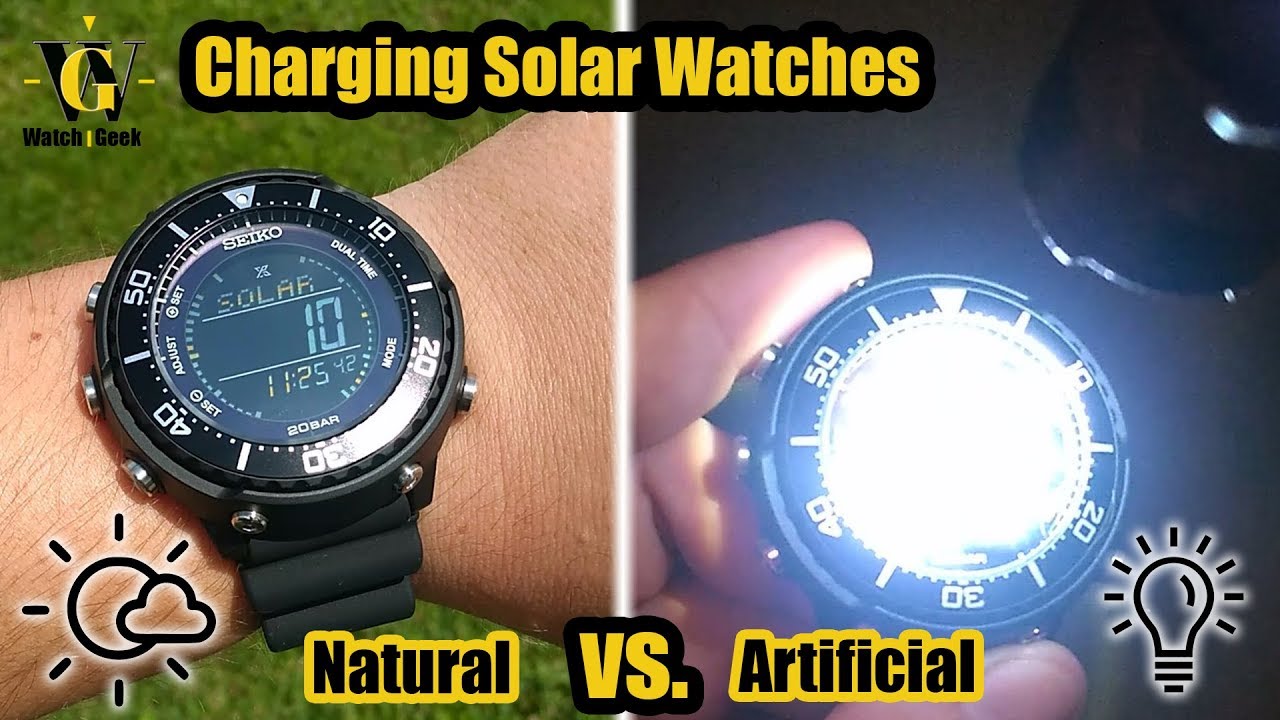
It’s fascinating to consider how light, a simple and ubiquitous natural resource, can be harnessed to power miniature marvels like solar watches. This brings to mind a question led by modern curiosity: can a lamp substitute the sun to charge a solar watch? Surprisingly, the answer isn’t as straightforward as one might assume.
Experts reveal that while sunlight is optimal, a high-intensity lamp can indeed charge a solar watch. Historically, manufacturers designed these timepieces to work efficiently under various light conditions, including artificial light. Yet, it’s essential to note that the charging efficiency under a lamp is significantly lower compared to direct sunlight, often requiring more time to reach full charge.

Can you charge a solar watch with a lamp?
Charging a solar watch with a lamp might sound like a simple task, but it’s a bit more complex. Solar watches are designed primarily to be charged by sunlight. However, many modern models can also charge with artificial light sources. The effectiveness largely depends on the type and intensity of the lamp used. According to the article, direct sunlight remains the most efficient source of energy for these timepieces.
When using a lamp, you need high-intensity light to charge the watch effectively. Desk lamps with LED bulbs tend to work well, as they can produce bright and focused light. For optimal results, place your solar watch directly under the lamp for several hours. Keep in mind though, this method isn’t as quick as natural sunlight.
Interestingly, the angle and distance of the lamp also play a crucial role. Experts recommend placing the watch about 6 inches away from the light source. This ensures that the light hits the solar panel directly without losing intensity. For more details on different light sources, here is the post explaining various charging methods.
It’s important to remember that not all artificial light is equal. Some lamps may not emit a strong enough spectrum to adequately charge a solar watch. Here, the article mentions the use of lamps with fluorescent or incandescent bulbs, which can also work but might take longer. If you’re in a pinch and need to charge your solar watch indoors, using a bright LED lamp can be a practical solution.
The Science Behind Charging Solar Watches
The technology behind charging solar watches is both fascinating and simple. Solar watches feature small solar cells located on the watch face, which convert light into electrical energy. This energy is then stored in a rechargeable battery within the watch. The type and intensity of light can impact the efficiency of this process. According to this post, different light sources can significantly affect charging times.
Natural sunlight is the most effective source for charging. It provides a broad spectrum of light that solar cells can easily convert into energy. However, artificial light sources such as LED and fluorescent lamps can also charge the watch, albeit at a slower rate. This versatility makes solar watches highly practical for both outdoor and indoor use. Yet, users should be aware of the differences in charging times.
Let’s look at a comparison between sunlight and artificial light charging times.
| Light Source | Charging Time (Hours) |
|---|---|
| Direct Sunlight | 2-3 |
| LED Lamp | 5-8 |
| Fluorescent Lamp | 8-12 |
Maintaining your solar watch’s battery involves exposing it to light regularly. Even when not in use, placing it near a window or under a lamp for a few hours can preserve the battery’s charge. By understanding the science behind it, you can ensure your solar watch remains charged and ready to use at all times.
The Role of Light Intensity in Charging Solar Watches
Light intensity plays a crucial role in the efficiency of charging solar watches. Higher light intensity means that more photons hit the solar cells, creating more electrical energy. For instance, direct sunlight offers high-intensity light, making it the optimal choice for quick charging. On the other hand, indoor lighting often has lower intensity, resulting in slower charging times. This difference highlights the importance of light intensity in the charging process.
When using artificial light sources, the type of bulb also matters. LED lights tend to have a higher intensity compared to fluorescent or incandescent lights. Placing the watch under an LED lamp can significantly improve charging times. However, even with LED lights, it’s important to place the watch close to the light source. Keeping these factors in mind ensures better and faster charging.
Here’s a table to highlight the comparison of light intensity:
| Light Source | Light Intensity (lux) |
|---|---|
| Direct Sunlight | 100,000 lux |
| LED Lamp | 1,500 lux |
| Fluorescent Lamp | 500 lux |
Incorporating regular exposure to high-intensity light not only charges the watch efficiently but also extends its battery life. For optimal performance, aim to charge your solar watch under bright conditions whenever possible. In environments where natural sunlight is limited, using an LED lamp positioned close to the watch can be an effective alternative.
Effectiveness of Various Light Sources for Charging Solar Watches
Different light sources have varying levels of effectiveness when it comes to charging solar watches. Direct sunlight remains the most efficient, providing rapid charging thanks to its high-intensity light. It can charge a solar watch in just a couple of hours. However, this isn’t always available, especially indoors or during cloudy weather. This is where artificial light sources come into play.
LED lamps are a popular choice for indoor charging. They offer bright, focused light that can charge a solar watch reasonably well. Positioning the watch close to the LED lamp can improve the charging speed. Although not as fast as sunlight, LED lights are practical for daily use. Here are some comparisons between different light sources.
| Light Source | Charging Speed (Approx.) |
|---|---|
| Direct Sunlight | 2-3 hours |
| LED Lamp | 5-8 hours |
| Fluorescent Lamp | 8-12 hours |
Fluorescent lamps are also functional but less effective. They produce lower-intensity light, meaning longer charging times. Typically, it takes about 8-12 hours to fully charge a solar watch using fluorescent light. Despite this, they are still a viable option for those without access to sunlight or LED lamps.
Incandescent bulbs, on the other hand, are among the least efficient. They emit more heat than light, which isn’t ideal for charging solar watches. This type of bulb can take even longer than fluorescent lamps to charge a watch. Therefore, if you plan to use artificial light, LED lamps are the best choice.
According to experts, combining different light sources can also help. If possible, use direct sunlight and supplement it with LED lamps when indoors. This strategy ensures that your solar watch remains charged and ready, regardless of the lighting conditions. By understanding the effectiveness of various light sources, you can maintain your solar watch’s functionality efficiently.
Expert Advice on Charging Solar Watches with a Lamp
Experts agree that while sunlight is ideal, using a lamp can be an effective way to charge your solar watch. To get the best results, choose a high-intensity LED lamp. Place the watch around 6 inches away from the light source. This ensures that the solar cells receive enough light for efficient charging. Fluorescent lamps are also usable but will take longer.
Several experts recommend adjusting the angle of the light to maximize exposure. Tilting the lamp to shine directly on the watch face can speed up the charging process. Ideally, the light should hit the watch at a 90-degree angle. This direct exposure maximizes the amount of light absorbed by the solar cells. Here are some other tips to consider.
- Use a desk lamp with a flexible neck for easier adjustment.
- Avoid covering the watch face with any objects.
- Charge the watch for a minimum of 5 hours under an LED lamp.
Maintaining a regular charging schedule is also crucial. Even when not in use, placing your solar watch under a lamp for a few hours each week can keep the battery in optimal condition. According to experts, this prevents the battery from draining and extends its lifespan. Regular maintenance ensures your watch remains reliable and functional.
While using a lamp is convenient, be cautious of overheating. Prolonged exposure to heat can damage the watch’s components. Experts suggest turning off the lamp occasionally to let the watch cool down. This practice helps in maintaining the watch’s longevity and performance. By following these expert tips, you can effectively charge your solar watch using a lamp.
Practical Tips for Charging your Solar Watch
If you want to keep your solar watch charged effectively, the first step is to make the most of natural sunlight. Position your watch in a sunny spot, like a windowsill, for a few hours each day. This can help achieve a full charge quickly. Remember to rotate the watch occasionally. This ensures all parts of the solar panel receive light evenly.
When relying on artificial light, position your watch close to a high-intensity LED lamp. Experts suggest keeping it around 6 to 12 inches away from the light source. Adjust the angle to maximize light exposure on the watch face. This strategy mimics the effectiveness of sunlight to some degree. Here are some handy tips to keep in mind:
- Use desk lamps with flexible necks for easier adjustments.
- Avoid shadows falling on the watch.
- Charge for at least 5-8 hours under LED light.
It’s wise to maintain a regular charging schedule for your watch. Ensure it gets light exposure, even on days when it’s not worn. Place it near a lamp or a window for a few hours each week. This routine helps in maintaining the battery’s health. Over time, this can extend the watch’s lifespan significantly.
Additionally, be mindful of overheating risks. Too much heat can damage the internal components of the watch. Turn off the lamp or move the watch to a cooler area if it feels too warm. Also, try to avoid placing it under direct sunlight and artificial light simultaneously. Following these practical tips will help keep your solar watch running smoothly.
Frequently Asked Questions
Explore these common questions about charging solar watches. This section covers various aspects and tips to help you understand the nuances better.
1. What is the best way to charge a solar watch?
The best way to charge a solar watch is by using direct sunlight. Place your watch on a windowsill or any spot with ample sunlight. Keep it there for a few hours each day, rotating occasionally for even exposure. This ensures efficient charging and keeps the battery healthy.
However, if direct sunlight isn’t available, an LED lamp can be used as an alternative. Position the lamp 6 inches away from the watch face and let it charge for several hours. Although it takes longer than sunlight, this method works well for indoor settings.
2. How long does it take to charge a solar watch fully?
The time required to fully charge a solar watch varies based on light source and intensity. Direct sunlight can usually charge a solar watch within 2-3 hours of exposure.
If using artificial light like an LED lamp, charging may take longer—around 5-8 hours. Fluorescent and incandescent lights generally require even more time, often between 8-12 hours for a full charge.
3. Can fluorescent lighting effectively charge my solar watch?
Yes, fluorescent lighting can charge your solar watch but not as efficiently as sunlight or LED lamps. The lower intensity of fluorescent lights means that charging will be slower.
For effective use, place the watch close to the fluorescent light source and keep it there longer—typically 8-12 hours—to achieve a decent level of charge.
4. Is it safe to leave my solar watch under continuous light?
Generally, it’s safe to leave your solar watch under continuous light for extended periods. Doing so ensures that the battery remains charged and functional over time. However, be cautious about overheating; prolonged exposure to intense heat could damage internal components.
If you notice the watch getting too warm, turn off the lamp periodically or switch its position to avoid heat damage while still maintaining adequate light exposure.
5. Do different brands of lamps affect how quickly my solar watch charges?
The brand of lamps can impact how effectively your solar watch charges due to differences in bulb quality and intensity. High-quality LED lamps are more effective at providing intense light needed for efficient charging compared to generic or low-intensity bulbs.
Selecting premium lamps with adjustable brightness settings can offer better control over your charging process, ensuring faster and more reliable results regardless of environmental conditions.
Conclusion
Charging your solar watch effectively involves understanding the nuances of different light sources. Direct sunlight remains the most efficient option, but modern lamps, especially high-intensity LEDs, can serve as suitable alternatives. Regular exposure to light, even artificial, can keep your watch in optimal condition.
Experts recommend maintaining a routine to ensure your solar watch remains charged and functional. By being mindful of light intensity and positioning, you can extend the life and performance of your watch. These practical tips and expert advice will help keep your solar watch running smoothly in any environment.

I’m Emily Johnson, an affiliate marketer and blogger focused on lamps and lighting. I share honest reviews, simple buying guides, and practical tips. My goal is to help readers choose the right lamp for their space, style, and budget with confidence.