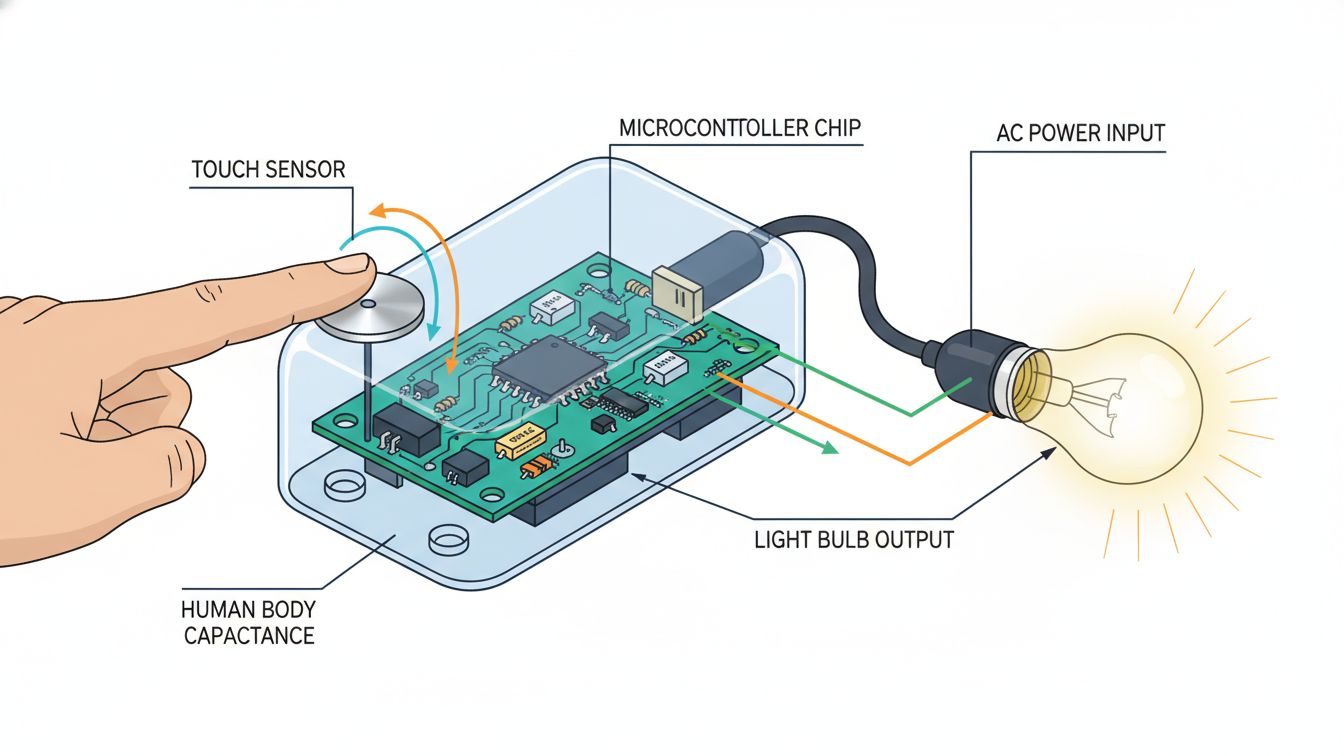
A touch lamp switch works by altering the capacitance in the circuit when contact is made with the lamp, causing it to switch on or off accordingly. This occurs through the use of components called capacitors, which store charge and are used to tune circuits or smooth out voltage fluctuations.
Touch lamps have become popular in modern homes due to their convenient and intuitive operation. Instead of fumbling for a switch in the dark, a simple touch is all it takes to illuminate a room. But have you ever wondered how a touch lamp switch actually works?
We will explore the inner workings of touch lamps and unravel the mystery behind their effortless functionality. By understanding the principles behind touch-sensitive technology, you’ll gain a whole new appreciation for these innovative lighting solutions. So, let’s delve into the fascinating world of touch lamp switches and discover the science behind their operation.
Touch Lamps: A Modern Convenience
Touch lamps are a modern convenience that works by altering the capacitance of the lamp when contact is made. This change in capacitance is detected by the lamp, allowing it to switch on or off accordingly.
Brief Overview Of Touch Lamps As A User-friendly Innovation
Touch lamps have revolutionized modern lighting by eliminating the need for traditional switches. With just a simple touch, these lamps provide convenience and functionality to users. Unlike conventional lamps, touch lamps have integrated touch-sensitive switches that respond to the capacitance of our bodies. This user-friendly innovation has made it easier than ever to control the lighting in our homes or workplaces. Let’s dive deeper into the importance of touch lamp switches in modern lighting.
Importance Of Touch Lamp Switches In Modern Lighting
Touch lamp switches play a crucial role in modern lighting systems, offering several benefits over traditional switches. These switches eliminate the need for fumbling in the dark or searching for a switch, saving time and effort.
By simply touching the lamp, users can easily turn it on or off, adjust the brightness, or even change the color temperature, depending on the lamp’s features. This level of convenience enhances the overall user experience and adds a touch of modernity to any space.
Furthermore, touch lamp switches provide an additional level of safety. With no physical switches that can break or wear out over time, the risk of electrical shock or fire due to faulty switches is greatly reduced. This makes touch lamps a safer lighting option, particularly in households with children or pets.
Transition Into How Touch Lamps Provide Functionality Without Traditional Switches
One of the striking features of touch lamps is their ability to provide functionality without the need for traditional switches. Instead, these lamps utilize a capacitance-based system that detects changes in the electrical charge when we make contact with them. This innovative mechanism allows users to control the lamp’s settings simply by touching it.
When we touch a touch lamp, our body’s capacitance alters the lamp’s electrical charge, signaling it to turn on or off. This mechanism makes touch lamps responsive and intuitive to use. Additionally, some touch lamps even offer advanced features such as dimming options or color-changing capabilities, all controlled by a touch-sensitive interface.
In conclusion, touch lamps have become a modern convenience, offering an effortless and user-friendly way to control lighting. These lamps are designed with touch-sensitive switches that respond to changes in capacitance, making them not only functional but also safe to use. With their sleek design and advanced features, touch lamps have become an essential aspect of modern lighting solutions.

Credit: www.netflix.com
Inside A Touch Lamp Switch
Description Of The Touch-sensitive Mechanism
A touch lamp switch is a type of lamp that can be turned on or off simply by touching its surface. The touch-sensitive mechanism inside the lamp allows for this convenient functionality. When we make contact with a touch lamp, we alter its capacitance, which is the ability to store an electric charge. This change in capacitance is detected by the lamp’s circuitry, triggering the switch to turn on or off accordingly.
Role Of Capacitors In Touch Lamp Circuitry
Capacitors play a crucial role in the circuitry of a touch lamp. These electronic components store varying amounts of charge and are used to tune circuits or smooth out fluctuations in voltage. In a touch lamp, capacitors are utilized to store the charge that is influenced by our touch. The change in capacitance, caused by our contact with the lamp, is detected by the circuitry and serves as the trigger for the lamp to activate or deactivate.
The Science Of Conductivity When The Lamp Is Touched
When we touch a touch lamp, our body acts as a conductor, creating a small current that flows from the conductive layer through our finger and into the lamp. This allows for the transfer of charge, altering the capacitance of the lamp’s circuitry. The circuit detects this change in capacitance, which results in the lamp either turning on or off. This conductivity characteristic is the foundation for the touch sensitivity of these lamps.
How Does A Touch Lamp Switch Work
A touch lamp switch works by altering the lamp’s capacitance when it comes into contact with an object that can store charge, like your hand. The lamp detects this change and switches on or off accordingly.
How Does a Touch Lamp Switch Work
Explanation Of The Electrical Circuit Within A Touch Lamp
When it comes to understanding how a touch lamp switch works, it’s essential to know how the electrical circuit within the lamp functions. The circuit consists of various components, including capacitors, which play a crucial role in storing varying amounts of charge.
These capacitors help tune circuits like radio receivers or smooth out fluctuations in voltage. In the case of a touch lamp, when we make contact with it, we alter its capacitance. This change in capacitance is detected by the lamp, which then switches on or off accordingly.
Essentially, the lamp’s circuit detects the alteration in capacitance caused by our touch and responds by activating the light.
The Process From Touch To Light: A Step-by-step Guide
- When we touch the lamp, our hand’s conductive properties come into play.
- As we make contact, a small current is created, flowing from the conductive layer through our finger.
- This current then activates the lamp’s internal circuitry.
- The circuitry detects the change in capacitance caused by our touch.
- Based on this detection, the circuitry either completes or breaks the circuit, allowing the light to turn on or off.
- The lamp’s response is immediate, thanks to the quick reaction of the circuitry to the change in capacitance.
Addressing Safety Concerns With Touch Technology In Lamps
While touch-sensitive lamps offer convenience and sleek design, it’s essential to address safety concerns associated with touch technology. One common question arises: are touch lamps safe? It is worth noting that touch lamps utilize a small electrical voltage through the human body. By touching the lamp, we complete the circuit, allowing the lamp to function. This usage of electrical voltage raises concern for some individuals. To ensure safety, it is crucial to follow proper electrical guidelines when using touch lamps. Here are a few tips to keep in mind:
- Ensure the touch lamp is properly grounded.
- Regularly check the lamp for any signs of electrical issues, such as frayed cords or loose connections.
- Avoid touching the lamp with wet hands to minimize the risk of electric shock.
- If you notice any unusual behavior or electrical malfunctions with the touch lamp, it’s best to have it inspected by a professional.
Troubleshooting Common Touch Lamp Issues
Troubleshooting Common Touch Lamp Issues: Discover how touch lamp switches work by altering capacitance, allowing lamps to turn on or off with a simple touch. No special bulbs are required for these convenient devices.
Reasons Why A Touch Lamp Might Malfunction
There are several reasons why a touch lamp might malfunction and not respond correctly. Here are a few common issues to troubleshoot:
1. Interference from other electronic devices:
Sometimes, other electronic devices near the touch lamp can interfere with its functionality. This can include TVs, radios, or Wi-Fi routers. Try moving the lamp away from these devices to see if it resolves the issue.
2. Faulty wiring or loose connections:
If the touch lamp’s wiring or connections are loose or damaged, it can cause malfunction. Check the lamp’s wiring and connections to ensure they are secure and in good condition.
3. Excessive dirt or dust:
Dirt and dust can accumulate on the touch sensors, preventing them from properly detecting touch. Clean the sensors with a soft cloth or a cotton swab dipped in rubbing alcohol to remove any dirt or dust buildup.
4. Low battery or power supply issues:
If your touch lamp is powered by batteries or has a power supply, check if they are running low or experiencing any issues. Replace the batteries or ensure that the power supply is functioning properly.
Solutions For Touch Lamp Switches Not Responding Correctly
1. Reset the lamp:
Turn off the lamp and unplug it from the power source. Leave it unplugged for a few minutes, then plug it back in and turn it on. This can reset the switch and resolve any temporary issues.
2. Check the settings:
Some touch lamps have adjustable sensitivity settings. Make sure that the lamp’s sensitivity is set according to your preference. Adjusting the sensitivity can help improve the switch’s responsiveness.
3. Replace the touch sensor:
If all else fails, the touch sensor itself may be faulty. In this case, you might need to replace the touch sensor. Contact the manufacturer or a professional technician for assistance in finding and installing a new touch sensor.
Tips For Maintaining Touch Lamp Switches For Longevity
1. Regularly clean the touch sensors:
Dust, dirt, and oil from our hands can accumulate on the touch sensors over time, affecting their performance. Regularly clean the touch sensors with a soft cloth or a cotton swab dipped in rubbing alcohol to remove any buildup.
2. Keep the lamp away from moisture:
Moisture can damage the internal components of the touch lamp. Avoid placing the lamp in damp areas or exposing it to liquids. Keep the lamp away from windows or open doors where rainwater can reach.
3. Avoid excessive force:
When using a touch lamp, be gentle with the touch sensors. Excessive force can damage the sensors and lead to malfunction. Use light touches and avoid pressing too hard on the touch-sensitive areas.
4. Follow the manufacturer’s instructions:
Always read and follow the manufacturer’s instructions for your specific touch lamp model. The instructions may include additional maintenance tips or specific guidelines to keep your touch lamp switches in optimal condition.
By troubleshooting common touch lamp issues, implementing solutions, and maintaining touch lamp switches properly, you can ensure the longevity and functionality of your touch lamp for years to come.
Innovations In Touch Lamp Designs
Touch lamps work by utilizing capacitors to store charge. When we make contact with the lamp, its capacitance is altered, which the lamp detects and switches on or off accordingly. This technology allows for a convenient and seamless way to control the lamp’s lighting output.
Discussion On How Touch Lamp Switch Design Has Evolved
With the advancements in technology, touch lamp switch design has undergone significant evolution. Initially, touch lamps were equipped with simple on/off switches that required physical contact with the lamp base or any metal part to activate the circuit.
However, these designs were limited in functionality and often lacked aesthetic appeal. In recent years, touch lamp switch design has become more sophisticated and user-friendly.
Manufacturers have introduced capacitive touch sensors, which utilize the human body’s ability to store charge. When a person touches the lamp surface, the capacitance of the lamp is altered, allowing the lamp to detect the touch and activate the switch accordingly.
The Integration Of Touch Lamp Technology Into Smart Homes
With the rise of smart home technology, touch lamp switches have found their way into the world of automation and connectivity. By incorporating touch-sensitive controls, these lamps can now be seamlessly integrated into smart home systems.
Smart touch lamps can be wirelessly connected to home automation hubs, allowing users to control the lighting with voice commands or through smartphone apps. This integration adds convenience and flexibility to lighting control, making it easier for users to create personalized lighting moods and schedules.
Future Outlook For Touch-responsive Lighting Systems
Looking ahead, the future of touch-responsive lighting systems is bright. As technology continues to advance, we can expect even more innovative features and designs in touch lamps. One exciting possibility is the incorporation of gesture recognition technology into touch lamp switches. This would enable users to control the brightness or color of the lamp by simply waving their hand or making specific gestures.
Imagine customizing your lighting experience with a simple flick of the wrist! Furthermore, touch-responsive lighting systems could become more energy-efficient, with sensors that adjust the brightness based on ambient lighting conditions or user preferences. This not only saves electricity but also provides a more comfortable and personalized lighting experience.
In conclusion, touch lamp switch design has evolved significantly, integrating into smart homes and promising exciting possibilities for the future. Whether it’s convenience through touch-sensitive controls or the potential for gesture recognition, touch-responsive lighting systems are set to transform the way we interact with our lamps.
Frequently Asked Questions Of How Does A Touch Lamp Switch Work
What Makes A Touch Lamp Turn On By Itself?
A touch lamp turns on by itself when we make contact with it, altering its capacitance. The lamp detects this change and switches on or off accordingly. No special bulbs are required for touch lamps, and they may not work with light timers.
How Do Touch Plant Lamps Work?
Touch plant lamps work using micro-chip technology. When you touch a leaf, the light switches on, and when you let go, it switches off. The leaves themselves act as the switches, so there are no external switches required. The lamps do not require special bulbs and may not be compatible with light timers.
Do Touch Lamps Require A Special Bulb?
No, touch lamps do not require a special bulb. You can use any standard bulb for your touch lamp.
Do Light Timers Work On Touch Lamps?
Yes, light timers can work on touch lamps. To check compatibility with a timer, plug the lamp directly into a wall socket, turn it on, unplug it, and plug it back in. If the lamp still turns on, it is compatible with a timer.
Conclusion
A touch lamp switch works through the use of capacitors that store varying amounts of charge. When we make contact with the lamp, we alter its capacitance, which is detected by the lamp and causes it to switch on or off.
This process relies on the conductivity of our bodies and the circuitry in the lamp. Touch lamps do not require special bulbs and can be operated by simply touching the base. They offer a convenient and unique way to control lighting in any space.

I’m Emily Johnson, an affiliate marketer and blogger focused on lamps and lighting. I share honest reviews, simple buying guides, and practical tips. My goal is to help readers choose the right lamp for their space, style, and budget with confidence.